
The Akira Manga Gallery
Six phone-book volumes, six painted covers, one wall.
This is the manga as a row of objects: the six collected volumes Kodansha issued between 1984 and 1993, each in the oversized B5 format, the same size as the magazine the chapters ran in, under the KC Deluxe label, with the page edges dyed as part of the binding. Katsuhiro Otomo painted every cover himself.
Each volume is named for a person, and the names are a table of contents in disguise: Tetsuo, Akira twice, Kei twice, and finally Kaneda. The dates and chapter ranges below are Kodansha’s own publishing record; the prices are the ones printed on the covers, which is where a cover gallery should get them.
THE SIX VOLUMES
Kodansha · KC Deluxe · 1984 to 1993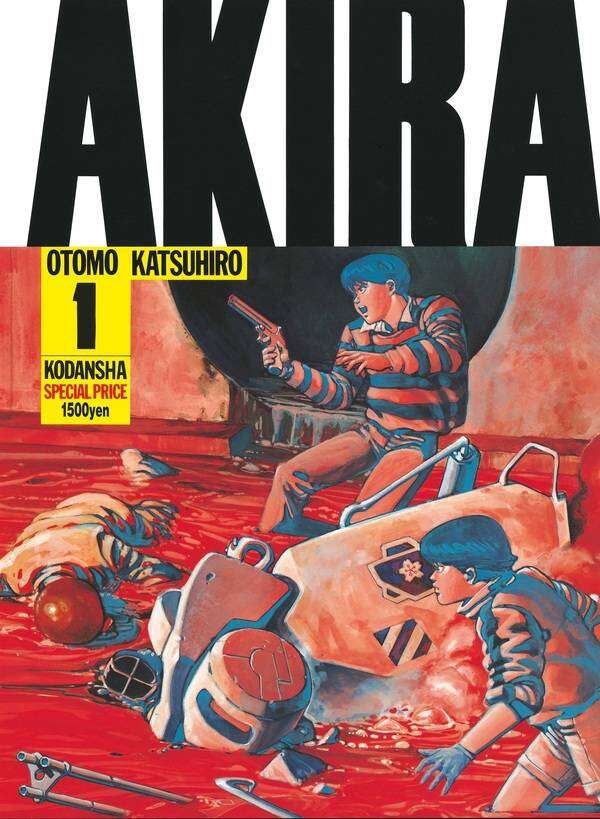
Volume 1 · Tetsuo
Kodansha · September 14, 1984 · Chapters 1–18 · Cover price ¥1,000 (about $6). Kaneda crouched over the wrecked bike on a field of red. The cover prints its own pitch: “SPECIAL PRICE 1000 yen.”
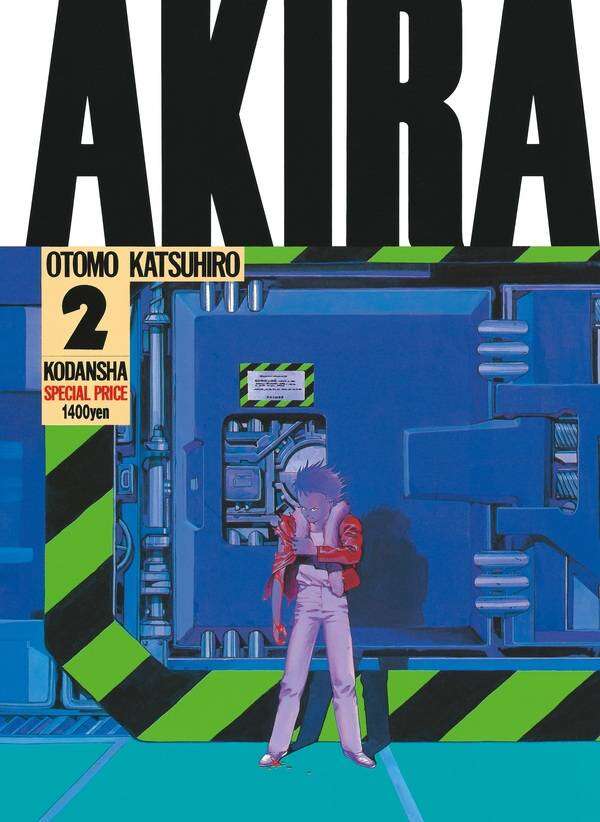
Volume 2 · Akira I
Kodansha · August 27, 1985 · Chapters 19–33 · Cover price ¥1,400 (about $9). Tetsuo small before the blue vault of the cryogenic chamber, hazard stripes at the door. The story turns from the street to the secret.
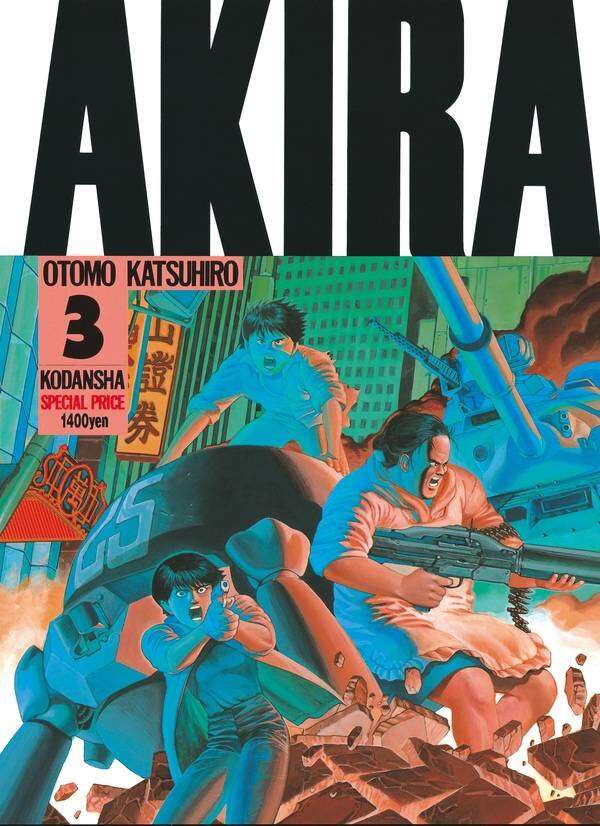
Volume 3 · Akira II
Kodansha · August 21, 1986 · Chapters 34–48 · Cover price ¥1,400 (about $9). Teal and orange combat: the chase for the boy everyone wants and nobody understands, ending with the shot that brings the sky down.
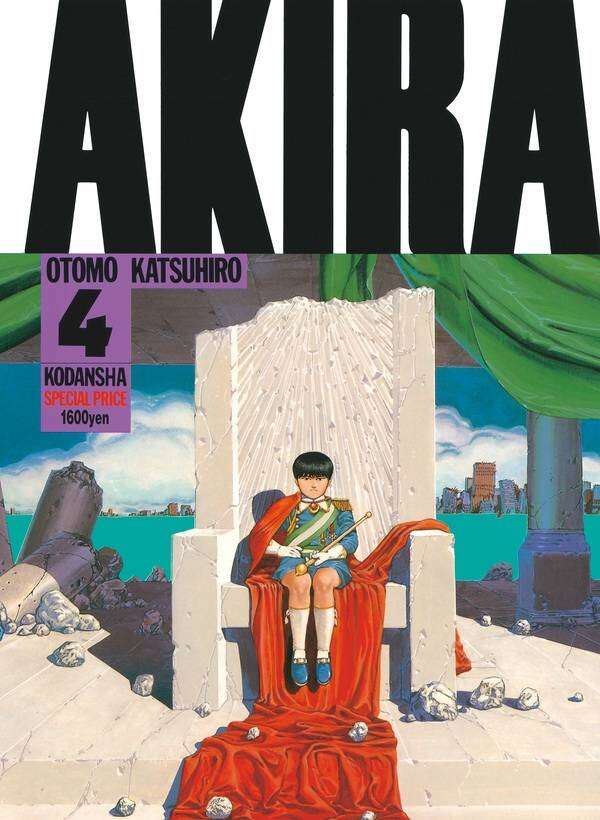
Volume 4 · Kei I
Kodansha · July 1, 1987 · Chapters 49–71 · Cover price ¥1,600 (about $10). Akira enthroned on a throne of broken concrete, red cloth spilling down the steps. Worshipped, silent, and only halfway through his own book. The film’s production began just after this volume, and the long silence followed.
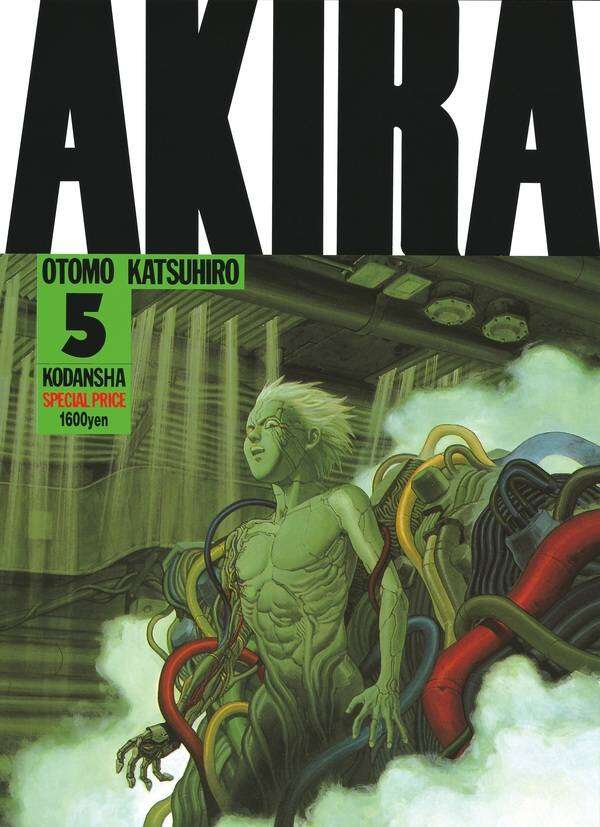
Volume 5 · Kei II
Kodansha · November 26, 1990 · Chapters 72–96 · Cover price ¥1,600 (about $10). Tetsuo’s body coming apart into cable and flesh, in greens. Readers waited more than three years for this volume while the film was made.
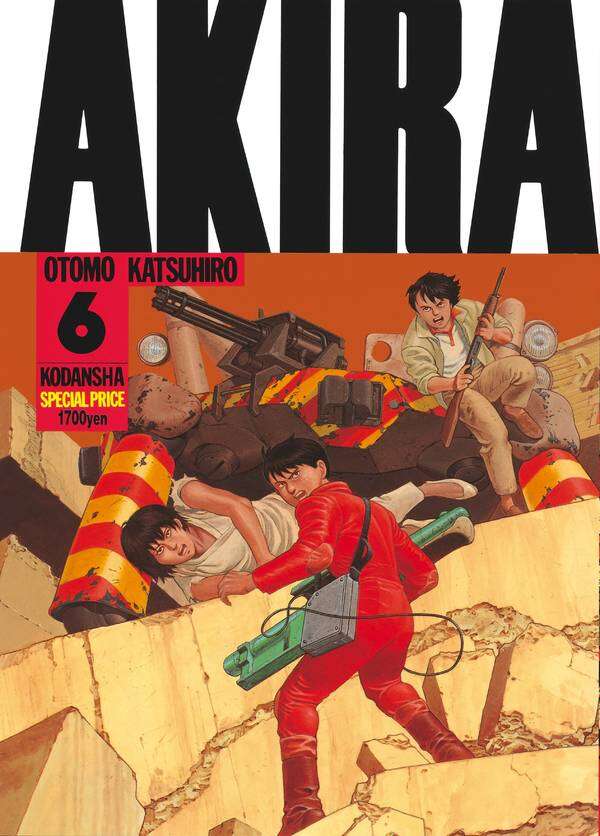
Volume 6 · Kaneda
Kodansha · March 15, 1993 · Chapters 97–120 · Cover price ¥1,700 (about $11). Kaneda standing over the fallen Tetsuo in the ruins. The final chapter had run in June 1990; the book that closes the story arrived almost three years later.
THE SET AS AN OBJECT
What the row of books is telling youBigger than manga usually is
Most tankobon are pocket-sized. Akira’s volumes were printed at B5, the trim size of Weekly Young Magazine itself, so Otomo’s dense pages were never shrunk for the book. The format is part of why the art reads like architecture.
A three-year hole in the row
Volume 4 is dated 1987 and volume 5 is dated 1990. Between them Otomo stopped the serial for about nineteen months to direct the film, and Japanese readers waited over three years for the fifth book. The gap in the shelf is the film’s shadow.
Still in print, still the same books
Kodansha has kept these six volumes in print for four decades; in 2020 the first volume became the publisher’s first manga ever to reach a 100th printing. Later editions exist, and the Library documents them, but this row is the original.