From the Library: covers, censuses, and editions, documented. Browse the Library →
SOJ Vagabond · Editions Compared
← Back to the Library

Are the Vagabond covers the same in Japanese and English?

The paintings, yes. The books built around them, no.

Side by side, the answer is visible: Viz's English single volumes reproduce Takehiko Inoue's cover paintings exactly, volume for volume, and change everything around the art: the lettering, the publisher's banner, the rating box, the credits. The Japanese tankobon and the English single are the same portrait wearing two different frames.

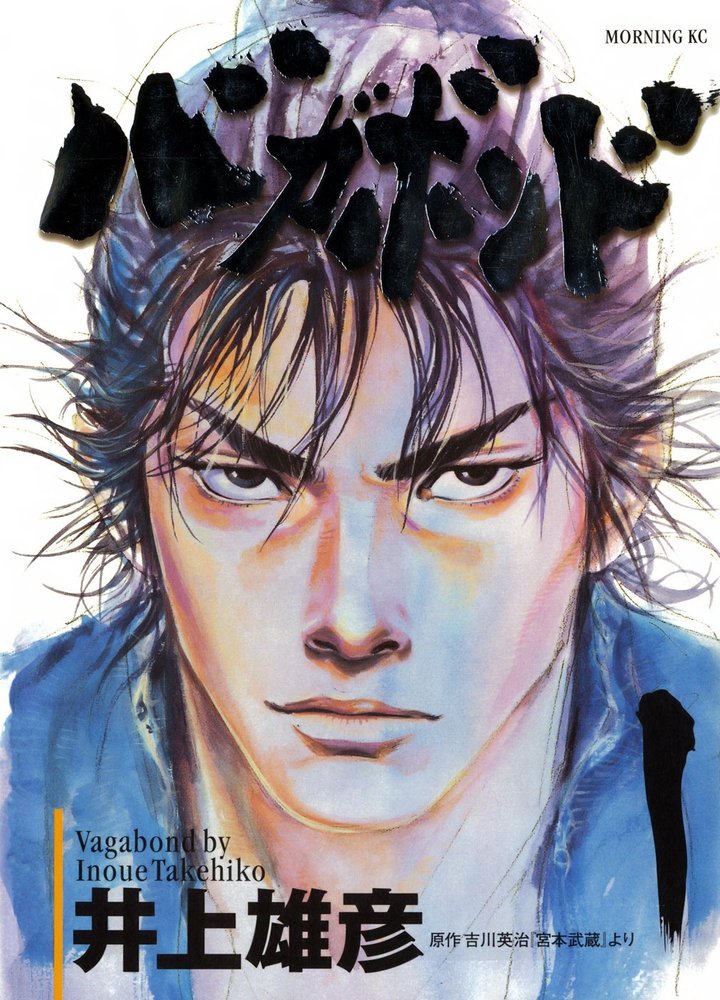
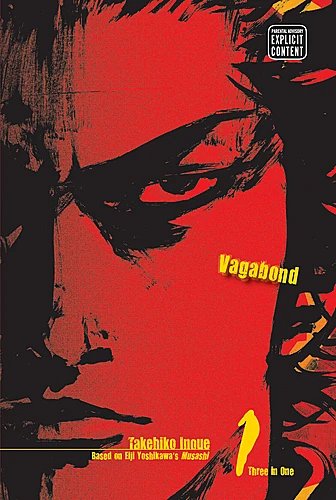
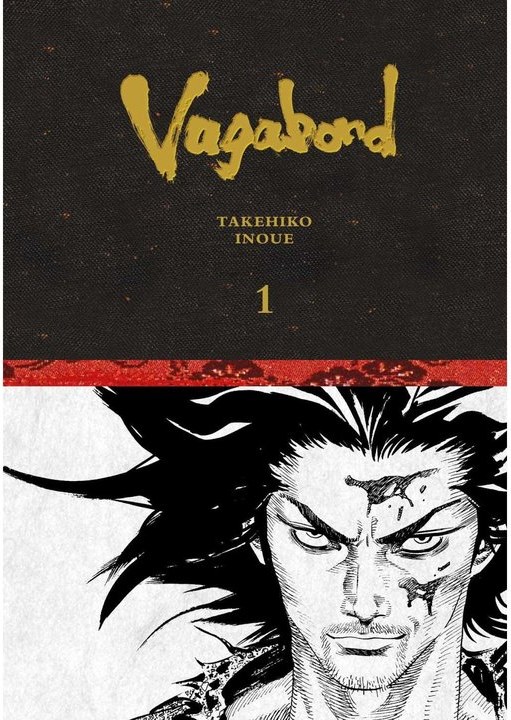
Where the markets genuinely diverge is the collected editions. Japan never redesigned the singles; English invented two new designs on top of them, the bold duotone VIZBIG omnibuses of 2008 and the cloth-and-gold Definitive hardcovers of 2025. Those are pictured at the foot of this page, three designs for the same opening volume.

VOLUME 37 · THE LAST COLLECTED BOOK

Same painting, two letterings

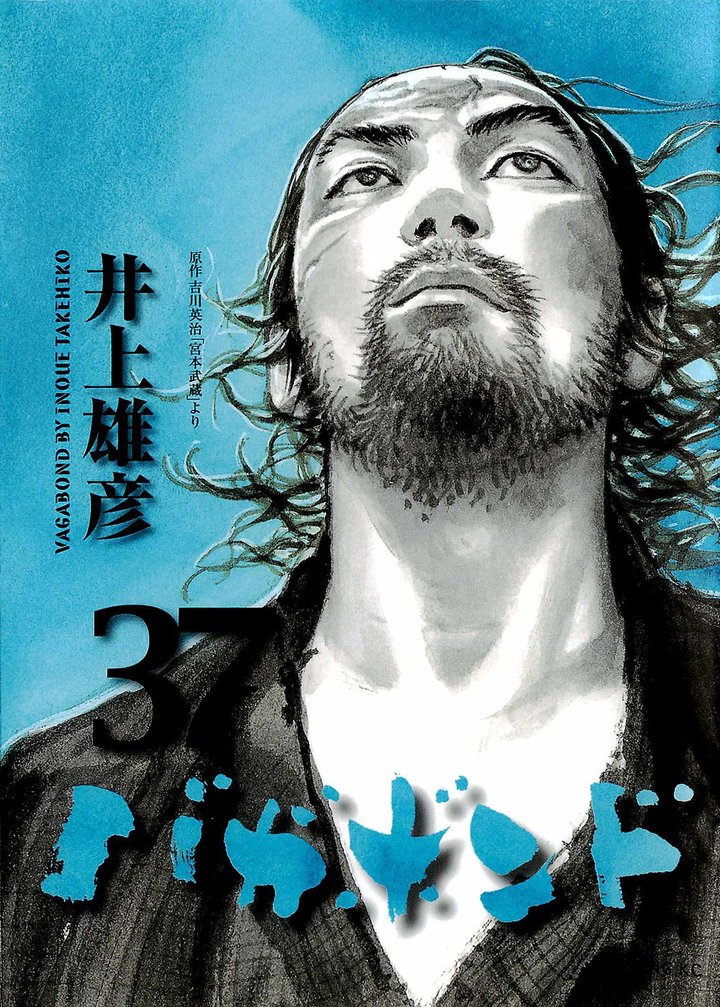
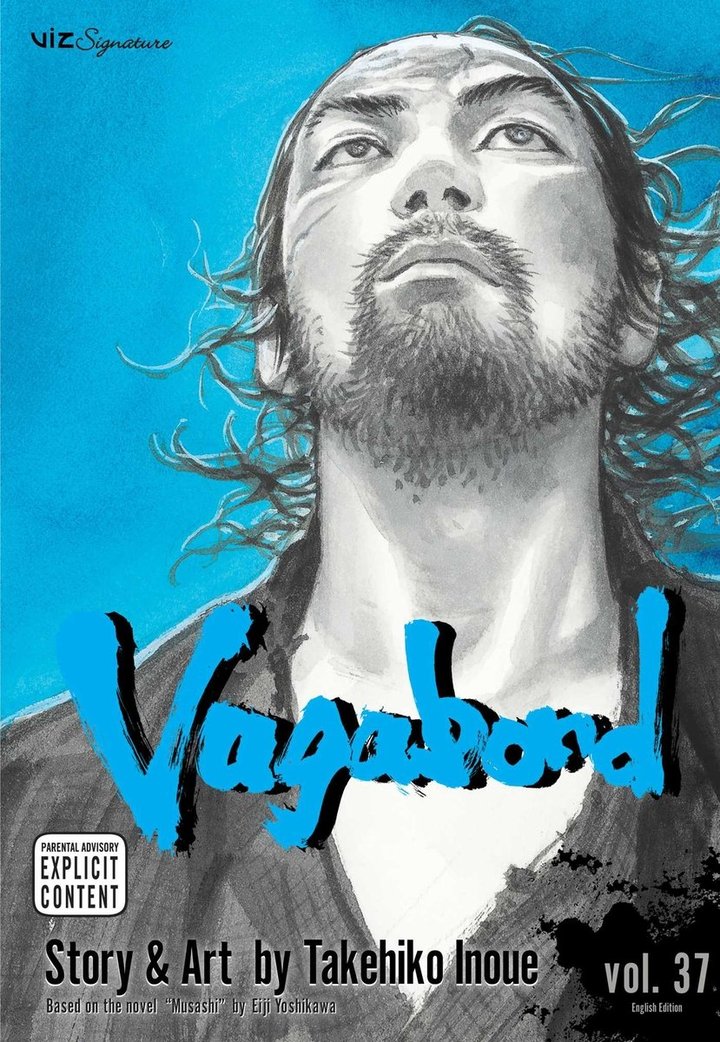
Volume 37: Musashi, looking up

Identical Inoue painting in both editions
Vagabond volume 37 Japanese cover
Japan · Morning KCThe Japanese tankobon of July 23, 2014: the painting bare, the brush-stroke title, the author's name in kanji down the left edge.
Vagabond volume 37 English Viz Signature cover
English · Viz SignatureViz's edition of April 21, 2015: the same painting, re-lettered with the English brush logo, the Viz Signature banner, and the parental advisory box.

This is the pattern for the whole single-volume line, documented here on the final book: Viz did not commission, crop, or replace a single cover painting. The English singles wear Inoue's art exactly as Kodansha printed it, with the furniture changed around it.

VOLUME 32 · THE WIND PORTRAIT

Same painting, two letterings

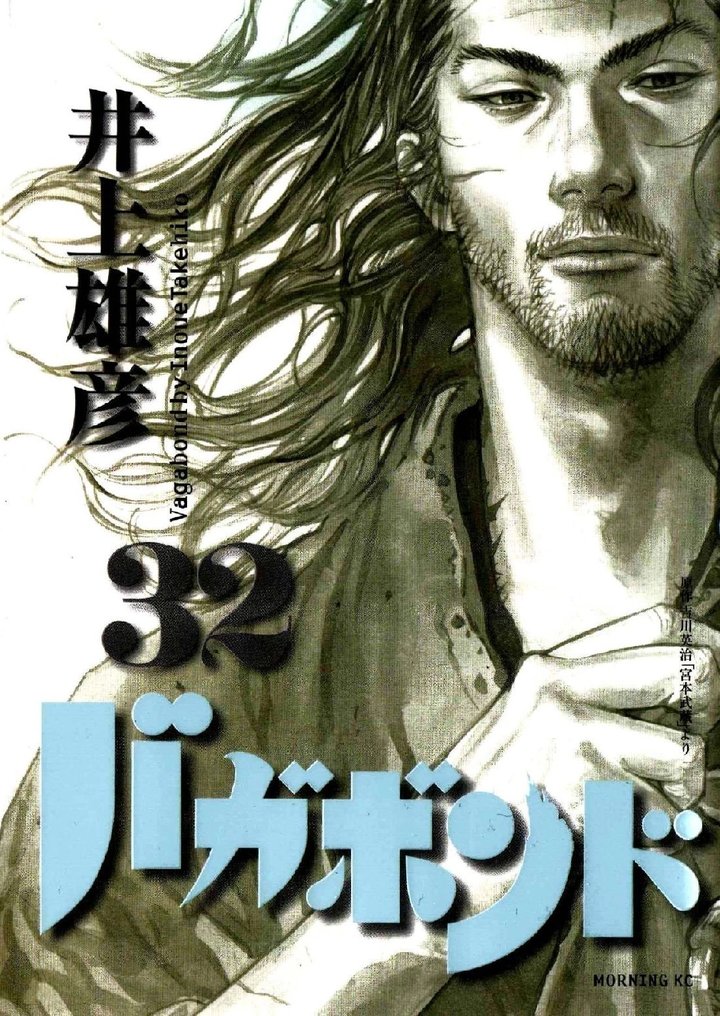
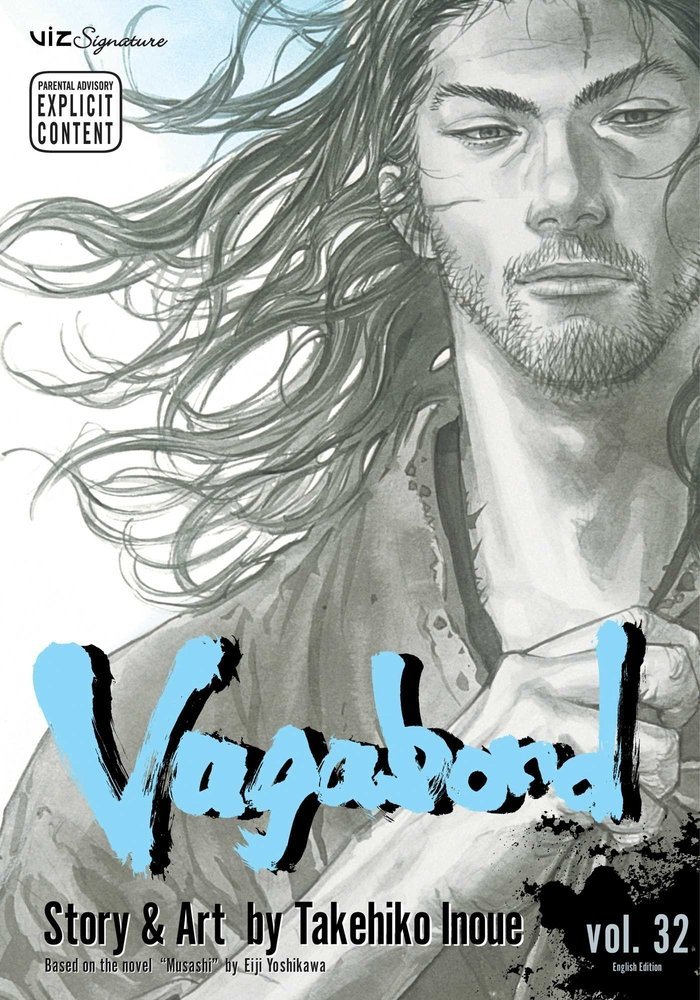
Volume 32: the wind portrait

Identical Inoue painting in both editions
Vagabond volume 32 Japanese cover
Japan · Morning KCThe Japanese tankobon of January 15, 2010.
Vagabond volume 32 English Viz Signature cover
English · Viz SignatureViz's edition of August 17, 2010: same wind-blown portrait, English lettering, seven months behind the Japanese release.

WHERE ENGLISH REALLY DID REDESIGN

The omnibus and the hardcover

Volume 1, three ways

One opening, three cover designs
Vagabond volume 1 Japanese cover
Japan · SinglesThe 1999 tankobon: the young Takezo, watercolor, brush title. The design every later edition answers to.
Vagabond VIZBIG volume 1 cover
English · VIZBIGThe 2008 omnibus abandons the painting for a duotone red-and-black close-up and a yellow numeral: a redesign, not a re-lettering.
Vagabond Definitive Edition volume 1 cover
English · DefinitiveThe 2025 hardcover answers with cloth-textured black, gold calligraphy, a red band, and an ink portrait: the most Japanese-feeling design of the three.

So the honest answer splits in two. The singles are the same art in both languages. The collected editions are where each market designed its own book, and the differences collectors actually shop for live there.

THE FURNITURE

What changes around the painting
The logo
Japan prints Inoue's own brush calligraphy as the title. English editions set a matching brush-style "Vagabond" in Latin letters, drawn to echo it, in ink blue on the late singles.
The banners
Japanese copies wear the Morning KC colophon and, on kept copies, an obi sash. English copies wear the Viz Signature banner and, being a mature-rated series, the black parental advisory box.
The credits
Both editions credit Eiji Yoshikawa's novel as the source. The English cover adds the line "Based on the novel Musashi by Eiji Yoshikawa" under Inoue's name.
The schedule
English singles trailed Japan by about three years at the start and closed to roughly nine months by the end: volume 37 crossed in April 2015, nine months after the Japanese book.
All 37 Japanese covers →
Which edition should a collector buy? →
MORE FROM THE VAGABOND ARCHIVE →
One shelf of the Library. Browse them all →

THE FIRST WORD

New pages and new pieces, first.