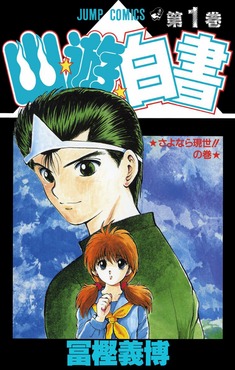
Does the Yu Yu Hakusho anime end differently from the manga?
First, a false version to clear away: the anime does not stop before the final arc. Studio Pierrot's series, directed by Noriyuki Abe and produced with Fuji Television and Yomiko Advertising, runs 112 episodes, October 10, 1992 to January 7, 1995, and covers the entire storyline of the manga, Three Kings included. The difference is concentrated where differences hurt most, in the chapters after Yusuke's Demon World Tournament.
The manga turns political. After the tournament, Koenma learns that his father, King Enma, had been falsifying reports of demon activity against humans to justify keeping the Human and Demon Worlds separated, and, in the fuller account, kidnapping weaker demons and brainwashing them into attacking humans to manufacture proof. Koenma takes his father's position, access between the worlds opens, and Yusuke's whole career as a detective is reframed: much of what he fought was a corrupt ruler's evidence. Genkai dies, leaving her estate to the main characters, and the story closes with the friends reunited at a beach, two years after Yusuke's return.
The anime ends brighter and simpler. There is no Enma revelation and Enma is not portrayed as a villain. Yusuke travels back to the Human World to keep his promise to Keiko, the tournament itself has made relations between humans and demons more peaceful, and his role as Spirit Detective is unnecessary because the worlds have calmed, not because the job was built on a lie. Same destination, opposite meaning.
THE DIVERGENCE, ITEMIZED
Same tournament, different aftermathHOW THE ANIME WAS MADE
Pierrot, with the author absentTogashi, by his own statement, was not involved in the anime's production, because of his work schedule on the manga. What reached him reached him as a viewer: he said he was greatly impressed by Shigeru Chiba's Kuwabara, admitting the actor understood the character better than Togashi himself did.
Director Noriyuki Abe's staff worked from Togashi's illustrations, and made their own calls where the manga left room: Yusuke and Kuwabara's opposite school uniforms, odd for classmates, were kept and leaned into as the look of delinquents, and Yusuke's mother's appearances around his fights were toned down. For the ending itself, the production record describes the creators shaping the close on the manga while interspersing an original screenplay, compressing the manga's epilogue chapters into the final episode's structure. The result pleased the home audience of its day: the series was voted best anime of the year in the Animage Anime Grand Prix in both 1994 and 1995.
THE BOOK ON THE SHELF
Yu Yu Hakusho · Vol. 1