How Can You Tell a First Printing of Blade of the Immortal?
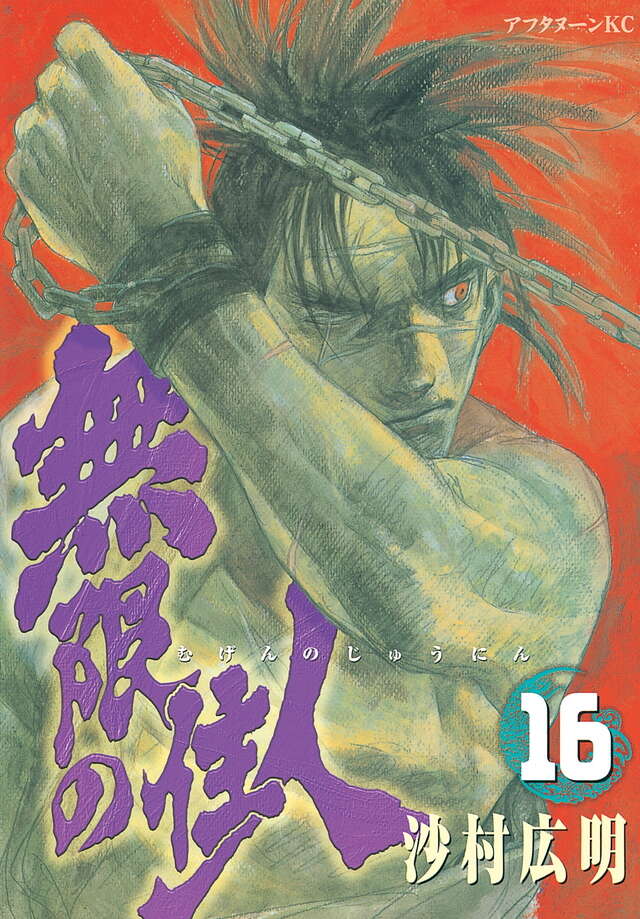
Japanese tankobon carry their printing history at the back of the book, in the colophon (the okudzuke page). A first printing of a Blade of the Immortal volume shows a single printing line dated at the volume's release; later printings add lines beneath it, one per reprint, so a collector can read a copy's age off its last page without any other reference. The full census of release dates and ISBNs is in the gallery; two details there reward attention. The ISBN blocks shift across the run, volumes 1 to 25 in Kodansha's 314 block, 26 to 28 in the 310 block, 29 and 30 in the 387 block, a fingerprint of the publisher's numbering eras. And the covers were never redesigned: the painting on a current printing is the painting from 1994 onward, so cover art cannot date a Japanese copy. Only the colophon can.
First-run Japanese copies were sold with a paper obi band, and intact obis are the first casualty of thirty years of shelving: a volume one with its obi is a materially scarcer object than the same book without. The 15-volume kanzenban of 2016 to 2017 is a separate edition entirely and should never be confused with tankobon first printings.