
From the Library: covers, censuses, and editions, documented. Browse the Library →
SOJ Rurouni Kenshin · First Printings
← Back to the Library

How can you tell a first printing of Kenshin?

The answer is printed in the back of the book: the colophon keeps the printing history.

Japanese books close with a colophon page, the okudzuke, which records the edition’s printing history in plain type. For a first printing you are looking for the first-printing line: the issue date followed by 第1刷発行, “first printing issued.” Later impressions increment the number, 第2刷, 第3刷, and a long-lived Jump title like Kenshin accumulated many. Volume 1’s story began on September 2, 1994; a colophon showing the first printing of that month and year is the collector’s copy.

Two traps to know. First, the colophon’s issue date is not the street date: the kanzenban volume 1, for instance, was released July 4, 2006, but its colophon reads “first printing issued July 9, 2006,” the publisher’s formal date. Second, pre-2007 printings carry the old ISBN-10 in the colophon (volume 13 was catalogued as 4-08-872283-3) while later impressions show ISBN-13: the identifier itself dates the impression.
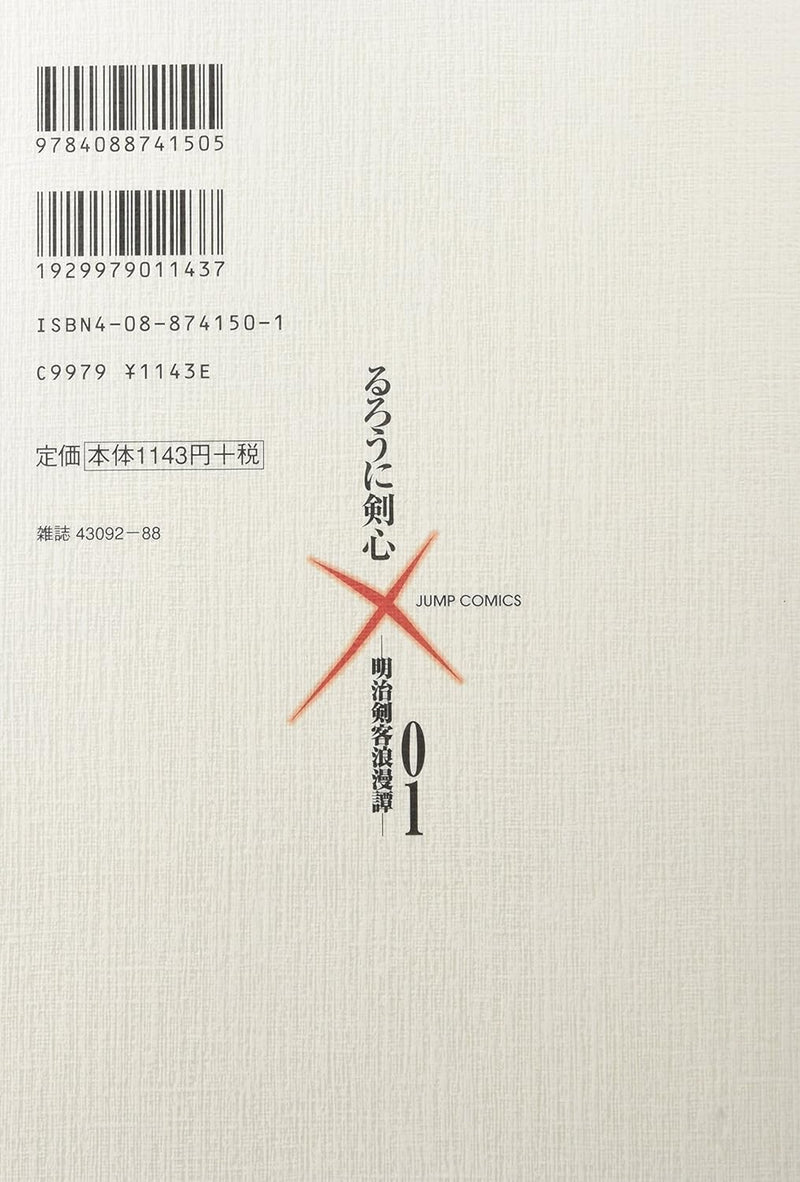
Back cover of Rurouni Kenshin kanzenban volume 1 showing its ISBN-13 barcode and ISBN-10 line
THE IDENTIFIERSThe back of kanzenban volume 1 prints both generations of identifier: the ISBN-13 barcode (978-4-08-874150-5) above the ISBN-10 line (4-08-874150-1). Printings and editions are told apart by exactly this kind of printed evidence.

THE CHECKS

In order
1 · The colophon
Last page: find the printing line. 第1刷 (first printing) with a date matching the volume’s release window is the mark.
2 · The obi
First editions shipped with their paper belly-bands, the obi, carrying the launch advertising. Surviving obi are fragile ephemera and lift a copy’s completeness, though a missing obi says nothing about the printing itself.
3 · The identifier
ISBN-10 colophons belong to the book’s early life; ISBN-13 marks a post-2007 impression. Cross-check against the volume’s first release date in this archive’s gallery.
4 · The edition
Tankōbon, kanzenban and bunkoban each keep separate printing lines: a “first printing” of the 2012 bunkoban is a first of that edition, not of 1994.

WHY IT MATTERS HERE

Printings as biography
A 1994 object
A first-printing volume 1 is a book sold while the anime did not yet exist and the series was a gamble: the printing line is the difference between that object and an identical-looking reprint from the peak years.
More from the Library
MORE FROM THE RUROUNI KENSHIN ARCHIVE →
One shelf in the Library. Browse them all →

THE FIRST WORD

New pages and new pieces, first.