
How was the 1986 Saint Seiya anime made?
A manga adaptation that out-designed its source, and a score that outlived them both.
The anime was proposed in June 1986, three months before the first manga volume even existed, and premiered on TV Asahi on October 11, 1986. Toei Animation produced 114 episodes to April 1, 1989. Kozo Morishita directed episodes 1 to 73 and Kazuhito Kikuchi episodes 74 to 114. What made it immortal, though, was a trio of collaborators who gave Kurumada’s rough force a courtly finish.
THE HANDS
Design and musicShingo Araki & Michi Himeno
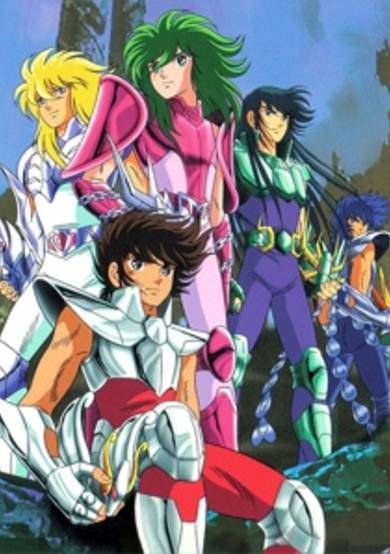
The character designers. Araki and Himeno redrew Kurumada’s cast with long lines, jewel colours and an elegance the manga only reaches for: the anime’s look, and therefore the world’s memory of Saint Seiya, is substantially theirs. Their designs also define the Myth Cloth figures decades later.
Seiji Yokoyama
The composer. Yokoyama scored the series with full orchestral writing, brass-led hero themes against strings for the tragedies, performed with the Andromeda Harmonic Orchestra. Nippon Columbia issued the first music collection on January 21, 1987, three months after the premiere.
Pegasus Fantasy
The opening: MAKE-UP’s hard-rock anthem, released as a single on October 21, 1986 with Blue Forever as its B-side. It has been re-recorded, covered by metal bands on three continents, and sung back at the franchise by its fans ever since; Kurumada even drew it into the manga.
THE RUN
1986 to 1989, and what it coveredSanctuary and Poseidon
The television series adapts the manga through the Poseidon arc, ending at episode 114 with the sea god’s fall. The Hades arc, already complete in print by 1991, was left unanimated, a loose end that took thirteen years to tie.
Exported to 75 countries
The series was broadcast in over seventy-five countries, almost all of them before the United States saw a frame. The anime, not the manga, is the text the world fell in love with, which is why this archive’s France page is really a page about television.