
How was the 1997 Berserk anime made?
Twenty-five late-night episodes, hand-drawn, scored by the composer its author listened to while drawing.
Kenpū Denki Berserk, “Berserk: Chronicles of the Wind Blades”, ran on Nippon TV from October 1997 to April 1998: twenty-five episodes from OLM, directed by Naohito Takahashi, adapting the Golden Age with a brief Black Swordsman frame. It was made in the last years of cel animation, and it wears the fact proudly: painted backgrounds, held frames, and Miura’s compositions carried to the screen as directly as a television budget allowed.
THE SOUND OF IT
Susumu Hirasawa · VAP · 1997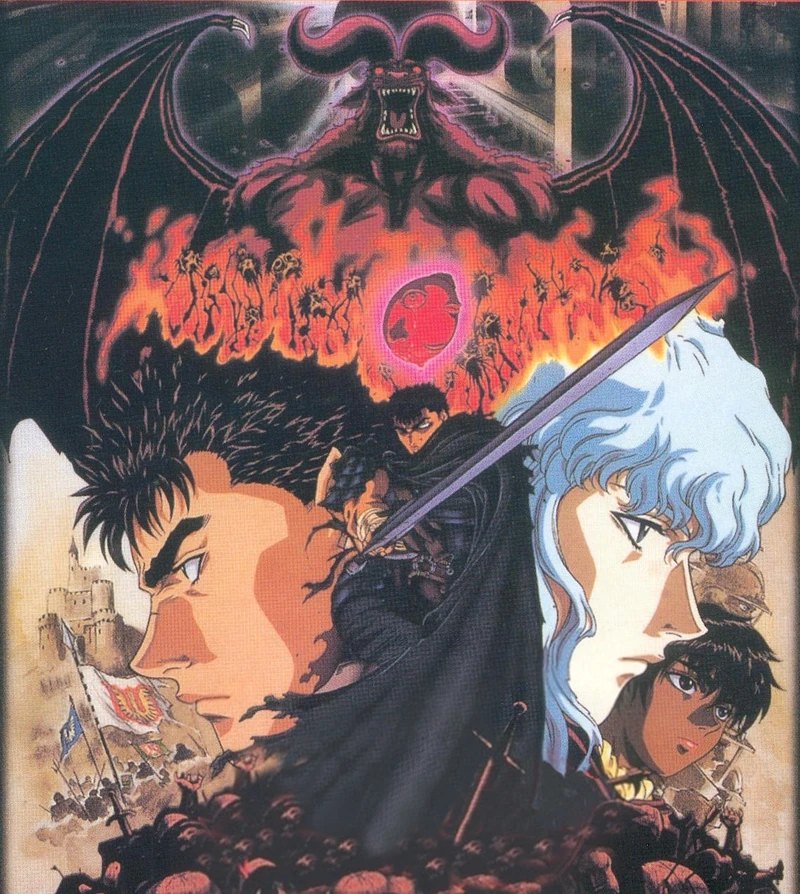
The Original Soundtrack · November 6, 1997
Released by VAP the month the series began airing. Miura himself wrote the liner notes: the fan signing off on the composer he had requested by name.
Why Hirasawa
The offer reached Susumu Hirasawa because Miura was a devoted listener who played his records while drawing Berserk. The trust ran both ways: Miura almost never requested a specific piece, and Hirasawa has said the series felt like unlocking a restraint, which is audible in every cue.
Forces and the singles
Hirasawa’s “Forces” ran over the next-episode previews and became the series’ signature sound. The bookend songs belong to two bands: PENPALS’ opening “Tell Me Why” and Silver Fins’ closing “Waiting So Long”, an indie-rock frame around a medieval nightmare.
WHAT IT COVERS, WHAT IT LEAVES
The shape of the adaptationThe Golden Age, whole
The 1997 series is the Golden Age told straight: the Band of the Hawk’s rise, in the order the manga’s flashback tells it, framed by a single episode of the older Guts. For a generation of viewers outside Japan, this was Berserk.
The craft bargain
A late-night slot and a television budget bought the show its darkness and cost it motion. The response of the animators was composition: when the picture cannot move much, every frame has to be worth holding. It is why stills from this series circulate like paintings.