
From the Library: covers, censuses, and editions, documented. Browse the Library →
SOJ Rurouni Kenshin · The Music
← Back to the Library

The music of Kenshin: Asakura, Sobakasu and Iwasaki

A shamisen-rock television score, a pop single that fed back into the manga, and an OVA score of strings and silence.

The television series sounds like Noriyuki Asakura: shamisen, electric guitar and festival drums under the sword work. The first soundtrack album arrived April 1, 1996, twenty-three tracks, and the sound became inseparable from the era’s Kenshin. Over it sits the first opening theme, “Sobakasu” (Freckles) by Judy and Mary, a pop song so identified with the show that the influence ran backwards: Watsuki has said the manga’s final scene, Kenshin returning to the dojo, was inspired by the anime’s first opening.

The OVAs changed composers with everything else. Taku Iwasaki scored Trust & Betrayal and Reflection in strings, piano and quiet: the Tsuioku-hen album came March 20, 1999, sixteen tracks, and Reflection’s on January 23, 2002, eighteen. Asakura returned for the New Kyoto Arc in 2011, so the franchise’s two sounds bookend it: Asakura for the wandering, Iwasaki for the wound.
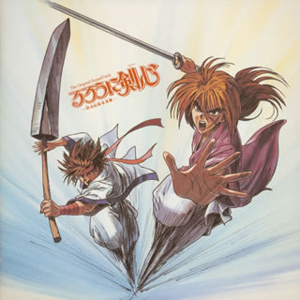
Rurouni Kenshin OST 1 album cover, Kenshin against Sanosuke
THE FIRST SOUNDTRACKRurouni Kenshin OST 1 (April 1, 1996), Kenshin against Sanosuke's zanbatō: Noriyuki Asakura's shamisen-and-rock score became the sound of the era for a generation.

THE THREE SOUNDS

1996 to 2012
Asakura (television)
Period instruments at rock tempo: the sound of Kenshin among people.
Judy and Mary (the opening)
“Sobakasu” gave the series its pop face, and, uniquely, reached back and shaped the manga’s own ending.
Iwasaki (the OVAs)
Chamber scoring for the Bakumatsu: the sound of Kenshin alone with what he did.
More from the Library
MORE FROM THE RUROUNI KENSHIN ARCHIVE →
One shelf in the Library. Browse them all →

THE FIRST WORD

New pages and new pieces, first.