The History of BioShock
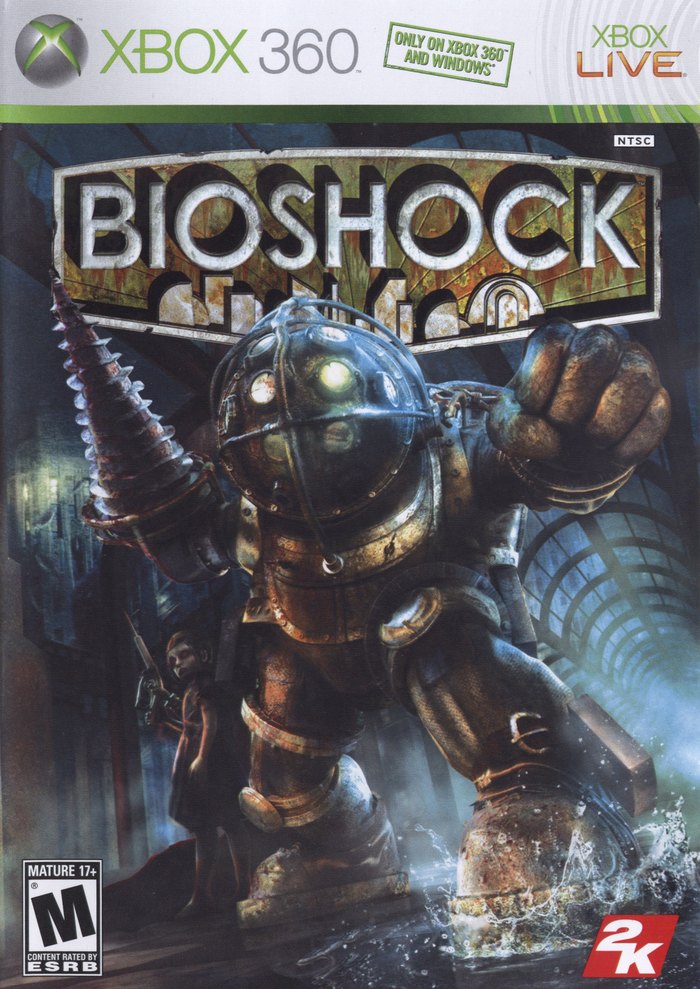
BioShock (Windows and Xbox 360, August 21, 2007) drops its player into Rapture, an underwater utopia tearing itself apart. It scored 96 on Metacritic, won the BAFTA for Best Game, and sold 4 million copies by March 2010. It is still the standard exhibit when games argue they are an art form.
THE MAKING
Irrational Games, 2002 to 2007The team was 2K Boston, the studio founded as Irrational Games, with 2K Australia; creative lead Ken Levine directed with Alyssa Finley. Many of them, Levine included, had made System Shock 2, a critical success that sold poorly. BioShock was built openly as its spiritual successor: the same free-form, narrative-first shooter, redesigned to be more accessible than the game that inspired it. Jonathan Chey, an Irrational co-founder, put the lesson plainly: things in System Shock 2 were "excessively complicated, opaque, or hard for people to understand."
The game's core was set by 2002: three groups in a loop, drones carrying a resource, protectors guarding them, harvesters trying to take it. Those became the Little Sisters, the Big Daddies, and the Splicers. The setting took longer to settle, passing through a space station and an unearthed Nazi laboratory before it became Rapture. The ideas Levine has cited on record, Ayn Rand, George Orwell, Aldous Huxley, and John D. Rockefeller Jr. among them, are documented with their labels on this Library's inspiration page. Garry Schyman composed the score.
THE GAME
Rapture, ADAM, and three wordsIn 1960, a plane crash leaves Jack the only survivor, swimming to a lighthouse that is really an elevator to Rapture. Business magnate Andrew Ryan built the city in the 1940s for society's elite, beyond the reach of governments. The discovery of ADAM, a sea slug secretion that rewrites DNA, gave its citizens plasmid powers, then addiction, civil war, and collapse. Jack crosses the ruin guided by radio, by a man named Atlas, and by a polite phrase the game spends its whole length loading with meaning. What "would you kindly" actually is, and the twist it hides, has its own page here, spoiler warning and all.
The moral choice is the game's other signature: every Little Sister Jack reaches can be harvested for maximum ADAM or rescued for less. Critics praised the choice's placement and argued about its shallowness in the same reviews, a disagreement the reception below keeps.
THE EDITIONS
Two launches, then Japan, then the CollectionTHE RECEPTION
Acclaim, with the dissent keptTHE LEGACY
The art-form exhibitBioShock is routinely placed among the greatest games ever made, and it became a case study in print for games as an artistic medium, praised for its visuals, its sound, and a story that could only be told interactively. Its sales built a franchise on the spot: a direct sequel by a new studio, a third game by Irrational, and a remastered Collection that keeps all three in print.
Its Japanese editions are their own artifacts, different publishers, a full voice dub, recomposed covers, and this Library's BioShock shelf is built on exactly that fact. The Japanese release, in full, is here.
THE GAME ON THE SHELF
BioShock · 2007