
The History of Clock Tower 3
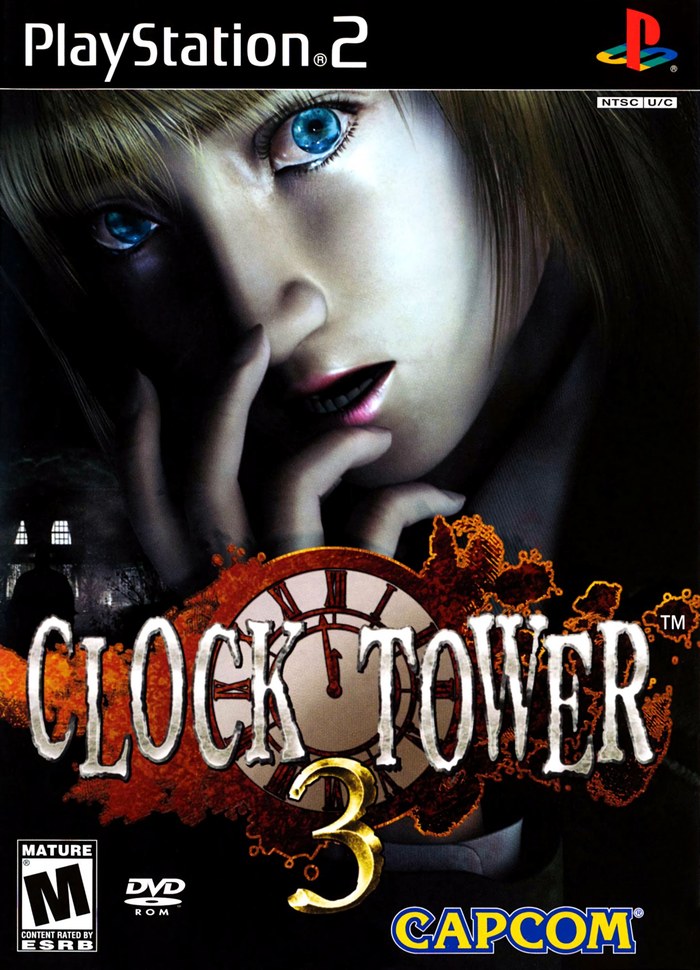
Human Entertainment went bankrupt in January 2000, and the Clock Tower name passed to Sunsoft. Clock Tower 3 (PlayStation 2, 2002), co-produced by Capcom and Sunsoft, starts almost from zero: London schoolgirl Alyssa Hamilton, fourteen, from a line of women called Rooders, travels from 2003 into the 1940s and 1960s to destroy the Entities whose possessed killers, the Subordinates, stalk each era. Scissorman survives only as one of a pair of twins. The connection to Kono's games is the shape of the fear: an unarmed girl, a pursuer, and nowhere safe to stand.
THE MAKING
Fukasaku directs, two hundred actresses auditionCapcom announced the game in April 2001. The cutscenes were directed by Kinji Fukasaku, the director of Battle Royale, making this the only video game he ever directed. Keita Amemiya designed the characters, Noboru Sugimura led the scenario writers, and Cozy Kubo composed. At announcement the game was still casting: over two hundred actresses auditioned for Alyssa's motion capture. The gameplay modernised the series, direct control replacing the cursor for the first time, a panic meter replacing the portrait, holy water as the only weapon until each chapter's end, when Alyssa's bottle transforms into a longbow and the stalkers finally have to be fought.
THE RECEPTION
Cinema praised, gameplay faulted, sales shortThe commercial record is blunt. Capcom had projected sales of at least 450,000 copies. The game sold 78,961 in Japan by the end of 2002 and 43,061 more in 2003, for a documented total of 122,022. Critics agreed it was too short, and that most players would finish it for the story rather than the play. It was the last Clock Tower game, and this shelf's last word on the series is the company that started it, whose own story ended two years before this one shipped.