
The History of Clock Tower: Ghost Head
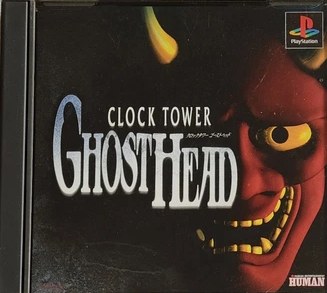
Clock Tower: Ghost Head (PlayStation, 1998) breaks from the Barrows story entirely. Seventeen year old Alyssa Hale travels to visit family friends and finds a house where her cousin has been murdered and another cousin is hunting her with a knife. Alyssa carries an amulet that holds down the other person inside her, a cruel alter ego named Mr. Bates. Take the amulet off, or be frightened enough, and Bates comes out. In Japan this was a side story, set first in Osaka, in a world where the earlier Clock Tower games are fiction. In North America, in November 1999, it was retitled Clock Tower II: The Struggle Within, because the numbering there had already been rearranged once.
THE MAKING
A series handed overThis was the last Clock Tower Human Entertainment developed, and the first its creator did not direct. Human asked Hifumi Kono for another sequel; Kono felt he was out of material and could not make it. Yutaka Hirata stepped in as director, designer, and writer, with music by Kaori Takazoe. The dual personality is the design's centre: some events can only be cleared as Alyssa, some only as Bates, and Bates, uniquely in this series, can pick up pistols and shotguns and fight. The game holds thirteen endings. Its Japanese setting moved to California for the North American edition, where Bates was voiced by Roger L. Jackson, the voice of Ghostface in the Scream films. A drama CD followed in Japan in 1998.
THE RECEPTION
The series low point, with one award on the shelfThe dissent ran the other way here, in the game's favour, and it is kept: Official U.S. PlayStation Magazine called it seriously flawed but unique, a terrible game in the conventional sense that is redeemed, like a cult film, by its willingness to stand apart, strictly for hardcore niche gamers. The Electric Playground named it their Console Adventure Game of the Year for 1999, decidedly the best of a small field. It returned once, on Japan's PlayStation Store in May 2012.