
The History of Clock Tower
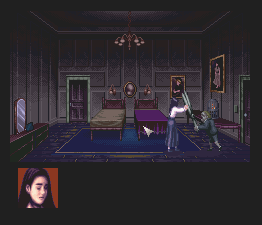
September 1995, Norway. Orphan Jennifer Simpson arrives at the Barrows family mansion with three girls from her orphanage, adopted by a recluse none of them has met. The woman who brought them goes to fetch Mr. Barrows and does not come back. Then the lights go out, and something with a giant pair of scissors starts hunting the house. Clock Tower (Super Famicom, 1995) was Human Entertainment's point and click survival horror game, directed by Hifumi Kono, and it helped invent a genre a year before Resident Evil named it.
THE MAKING
Human Entertainment, an experiment on a small budgetKono has described Clock Tower as an experimental project, made with a small budget and a small staff, his first original title at Human. His peers at the company believed a game whose protagonist runs away from the enemy would not work. He made it anyway. Resources shaped the result: there were not enough staff to include mouse support, and the mansion's map had to be shrunk significantly from the plan. The house itself was designed inside a 3D space, then rendered in two dimensions, which later reviewers would blame for some confusing navigation.
The characters were built from life. Their graphics were digitised from photographs of real people, a common technique of the era; Jennifer's movements were acted out by a woman in Human's planning division, who performed everything from hanging from a roof to stumbling in a hallway, and those performances became the animation.
THE DESIGN
Argento's colours, no weapons, and a boy with scissorsKono made the game as an homage to Italian director Dario Argento, above all Phenomena (1985). The borrowing is specific, and documented on its own page on this shelf: Jennifer herself is modelled on Jennifer Connelly's character in that film, and the game shares Argento's 1980s signatures, occult themes, distressed young women, and bright colours laid over fog. Kono wanted the game to feel like a horror film, and it is paced like one.
Against that cinema stands a design of refusal. Jennifer has no weapons. When Scissorman, the nine year old Bobby Barrows, appears, the game enters panic mode: you run, you hide, you use the traps the house offers, and if he catches you, you hammer a button and hope. Her stamina drains as she runs, returns when she sits, and shows in her corner portrait's face. The items you need are rearranged on every playthrough, so a memorised route is worth less than nerve. The game holds nine endings. The music, by Koji Niikura, is used sparingly, holding back until the stalker arrives.
THE EDITIONS
Japan kept every one of them for 29 yearsTHE RECEPTION
Famitsu screamed, then the retrospectives canonised itKono has said the game sold fairly well; the PlayStation port reached eighth on the Japanese charts on release with 54,293 copies. The reputation grew after the fact. The 2016 mook Perfect Guide to Nostalgic Super Famicom ranked it the second best horror game on the system, The A.V. Club placed it thirtieth on its 2018 list of the top 35 horror games of all time, and it is now routinely counted, alongside Alone in the Dark, as a founding work of survival horror. A 20th Anniversary Sound Collection gathered its music in 2015.
THE LEGACY
The stalker every later stalker descends fromClock Tower fixed a template the genre still uses: a pursuer who cannot be fought, who arrives on his own schedule, announced by his music, in a building you must keep searching anyway. Human followed it with a PlayStation sequel that finally left Japan, and the series' strange naming trail, sequel as debut, spin off as sequel, is part of this shelf's story too.
The 1995 game itself waited longest. Fan translators carried it across the language barrier for decades while every official version stayed in Japan, a gap this Library counts among the purest in its whole catalogue, and one that only closed in 2024.