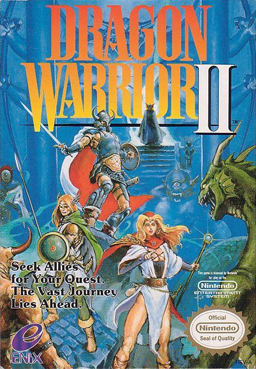
The History of Dragon Quest II
Dragon Quest II reached the Famicom on January 26, 1987, eight months after the original, and North America in September 1990 as Dragon Warrior II. Set a century later, it follows three descendants of the first hero against the wizard Hargon. It shipped 2.4 million copies in Japan and turned a hit into a cultural phenomenon.
THE MAKING
Planned before the first game even shippedPlanning began in April 1986, a month before the original Dragon Quest was released, and full development started that July. Producer Yukinobu Chida asked director and programmer Koichi Nakamura for a firm release date, and Nakamura named one offhandedly, a promise the team then had to keep.
Keeping it was rough. The staff included students new to coding and debugging, and Nakamura, leading a team for the first time, ended up hunting bugs through code he could not always trace to its author. Worse, the finished game proved too difficult, so the release slipped a month while the team rebalanced it. The balance work was only fully corrected in the early sections, which is one reason the late game kept its teeth.
THE DESIGN
The party, the ship, and the open seaThe makers found the first game's one against one combat tedious and its leveling boring, so the sequel's major goal was a more exciting battle system. Nakamura had seen the multi character parties of Wizardry and wanted the same; the Famicom's sprite limits settled the party at three. Rather than hand the player a ready made party, Horii had the hero set out alone and gather his two cousins along the way, so a player who skipped the first game was introduced to everyone.
Around that core the series grew its permanent furniture: battles against groups of monsters, a sailing ship that can land anywhere and opens the whole world, weapons that cast spells when used, individual inventories of eight items per character, multiple key types, travel doors, and the series' first game of chance, played with lottery tickets.
THE EDITIONS
The versions, documentedTHE RECEPTION
Scores, sales, and the dissentThe sequel also lifted the original with it: Dragon Quest II promoted sales of the first game, and with its success the series became, in the word the record keeps using, a Japanese cultural phenomenon.
THE LEGACY
What it left behindDragon Quest II fixed the shape of the series: a party gathered one friend at a time, a world that opens by ship, and an ending that reaches back to the first game's map, since Alefgard itself is one of the lands the cousins visit. Its three heroes close the Erdrick trilogy their ancestor opened, and its final plateau, Rhone, is still the name veteran players use for a sequel that refuses to go easy on them.
THE GAME ON THE SHELF
Dragon Quest II · NES