
The History of Ocarina of Time
Ocarina of Time (Nintendo 64, 1998) was the fifth Zelda and the first in 3D. A boy Link gathers the three Spiritual Stones, pulls the Master Sword, and wakes seven years older in a Hyrule that Ganondorf has already taken, so the quest runs in two ages at once. The systems it invented to make 3D work, Z-targeting and context sensitive buttons, became standard across the industry. It holds 99 on Metacritic, the highest score the site has ever given, and it sold 7.6 million copies.
HOW IT WAS MADE
Nintendo EAD, 1994 to 1998Development ran alongside Super Mario 64 and Mario Kart 64 inside Nintendo EAD from 1994, at a cost of more than 12 million dollars with a staff of more than 200. Shigeru Miyamoto, principal director on Mario 64, stepped back to producer and supervisor over five directors, among them Eiji Aonuma, who designed the dungeons, and Yoshiaki Koizumi. The story was created by Toru Osawa from an idea by Miyamoto and Koizumi, supported by script writer Kensuke Tanabe. Stunt performers were motion captured for sword fighting and for Link's movement, some 500 animations streamed through the game.
The game was first built for the 64DD, Nintendo's disk drive add-on. Performance problems with the peripheral moved it to cartridge, and the cartridge grew from 16 megabytes to 32 megabytes, the largest Nintendo had produced at the time. Miyamoto first imagined a first-person game, the better to show Hyrule Field, and dropped the idea when child Link entered the design and Link himself had to stay on screen. The targeting marker began as a generic icon; Koizumi turned it into a fairy so it would feel less robotic, the staff nicknamed it the Fairy Navigation System, and Navi was born from the nickname. For Hyrule Castle's market, Miyamoto traveled to Lower Franconia in Germany to study its half-timbered towns, and the swordplay was modeled on Japanese chanbara films.
Miyamoto wanted the game cinematic but distinct from film, so all of its more than 90 minutes of cutscenes render in real time on the Nintendo 64, with no prerendered video, letting a small cinematic team keep adjusting the story into the final months. Koji Kondo wrote the music around a hard limit: every ocarina song had to work on the instrument's five notes, a challenge he later said produced a natural result. The Japanese soundtrack album followed on December 18, 1998, with 82 tracks.
THE RELEASE
November 1998The Covers
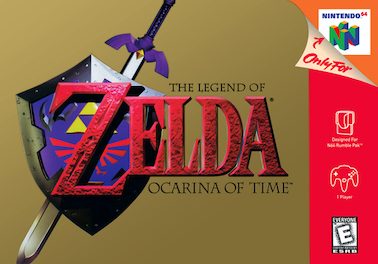
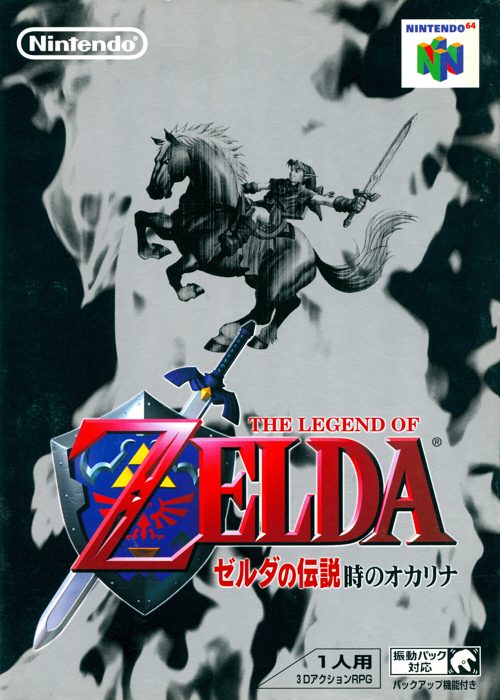
First shown as a demonstration video at Nintendo's Shoshinkai show in December 1995, the game missed its planned 1997 holiday season and landed in 1998: Japan on November 21, North America on November 23, Europe on December 11. Nintendo spent 10 million dollars on marketing. Demand ran ahead of supply: North American pre-orders passed 500,000, more than triple any previous game and a Guinness World Record, and Electronics Boutique stopped taking presales on November 3. In the United States it sold more than a million copies in under a week, and 2.5 million by year end, in only 39 days. In Japan it sold 386,234 copies in its first week and 920,000 in 1998.
HOW IT WAS RECEIVED
The perfect score wallThe perfect scores were the majority, not the exception: Edge gave 10, Electronic Gaming Monthly gave four straight 10s, and AllGame, Computer and Video Games, GamePro, GameRevolution and Next Generation all scored it at their maximum. Reviewers praised the level design, the sound, the cinematics and a control system they called one of the game's strongest elements. The reservations were about the hardware, not the design: IGN found the frame rate and textures short of Banjo-Kazooie, released the same year, and called the Hyrule Castle marketplace blurry. It won six awards at the 2nd Annual Interactive Achievement Awards, including Game of the Year.
WHAT IT LEFT BEHIND
The templateTarget locking and context sensitive buttons, built here, became common elements of 3D adventure games, and later designers kept saying so on the record. Dark Souls creator Hidetaka Miyazaki called Zelda a textbook for 3D action games, and Rockstar's Dan Houser said that anyone who makes 3D games and claims they borrowed nothing from Mario or Zelda on the Nintendo 64 is lying. Publications have named it the greatest game of all time again and again, from Edge and Computer and Video Games to Nintendo Power and IGN.
The game also left a second version of itself. After release, Nintendo finished Ura Zelda, a harder remix with reworked dungeons, for the 64DD. The add-on's small audience kept it unreleased there, and it finally surfaced on GameCube in 2002 in Japan and 2003 in the West as Master Quest, bundled with the original as a pre-order bonus for The Wind Waker. The original joined the Collector's Edition disc in 2003, and Grezzo's full remake, Ocarina of Time 3D, arrived on the Nintendo 3DS in 2011.
THE QUESTIONS
Ocarina of Time, in the archiveThe archive holds no standalone question or guide pages for Ocarina of Time yet. This history is its first door, and the gallery below holds its two boxes. The wider Zelda shelf, its books and censuses, lives in the archive at the foot of this page.