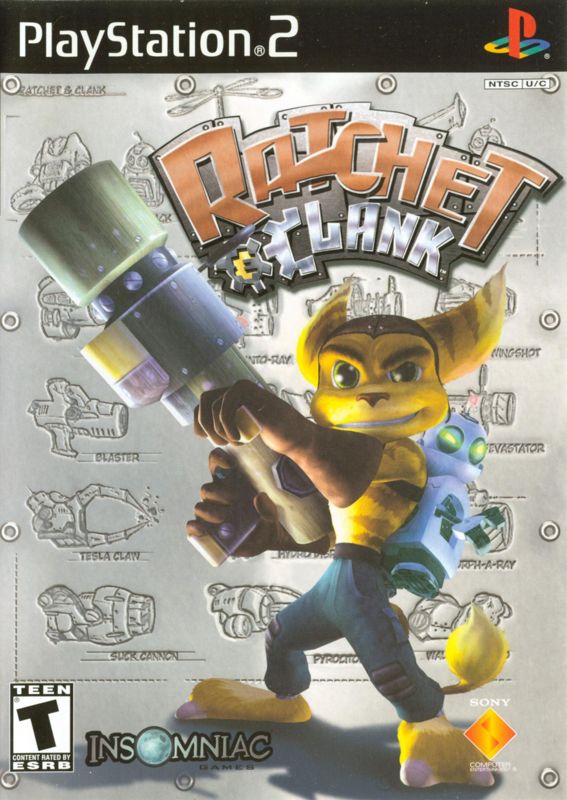
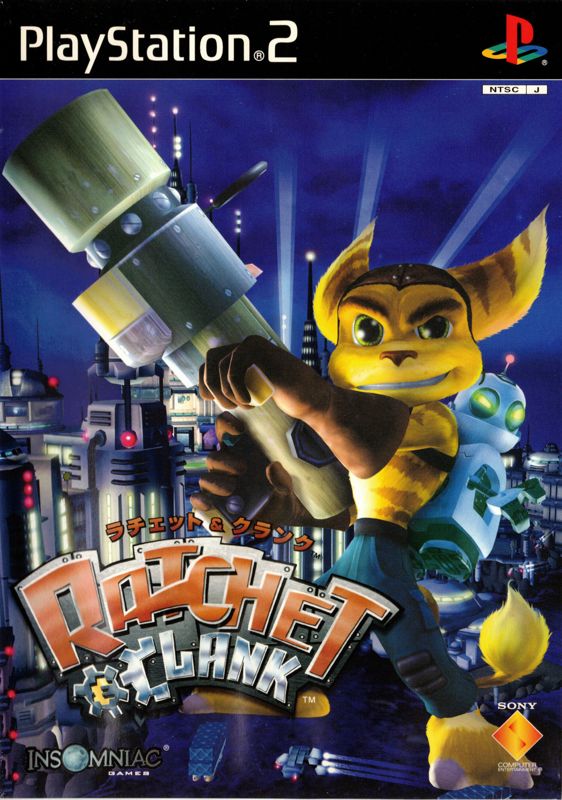
The History of Ratchet and Clank
Ratchet and Clank (PlayStation 2, 2002) was Insomniac Games' first game after the Spyro trilogy and the moment the mascot platformer grew teeth: a Lombax mechanic and a small robot crossing the Solana Galaxy with up to 36 weapons and gadgets, from a vacuum gun that fires enemies back at their friends to the wrench that never leaves his hand. It scored an 88 on Metacritic and sold more than 3.7 million copies.
THE MAKING
Six months lost, two weeks to a heroInsomniac's first PlayStation 2 concept, codenamed I5 and remembered as Girl with a Stick, a Zelda and Tomb Raider flavored adventure, never won the team's own enthusiasm and was dropped after six months. The replacement came from chief creative officer Brian Hastings: a spacefaring alien collecting outlandish weapons as he travelled from planet to planet. President and CEO Ted Price later said Hastings cited Marvin the Martian as inspiration, and that the idea clicked with everyone at once.
Pre-production began in late March 2001 with about 35 people, growing to 45 by the end. Ratchet began as a reptile, passed through designs based on dogs and rats, and landed on feline features for the agility they implied. His partner began as three small robots with separate personalities; the trio confused both the design and the silhouette, so they were condensed into one robot, Clank. Almost nothing else was cut, the studio later said, beyond weapons that failed in prototype, among them the Revolverator, a drill gun that spun impaled enemies, and the Mackerel 1000, a fish in place of the wrench.
The script, by Hastings with Gavin Dodd, John Lally, and Oliver Wade, took its worldview from The Hitchhiker's Guide to the Galaxy: a galaxy run by corporations rather than governments, a wild west of consumerism where a vendor selling conveniently sized atomic weaponry on the street is simply normal, and a washed up superhero hawks gadgets on television.
THE SHARED ENGINE
Two studios, one corridor of ideasShortly after the project changed from I5 to Ratchet and Clank, Naughty Dog offered Insomniac the technology behind Jak and Daxter, asking only that Insomniac share back any improvements it made. Insomniac agreed. Most of the Ratchet engine was built in house, but some important renderers came from Naughty Dog, and Price credited the gift plainly: Naughty Dog's generosity gave the team a huge leg up and made the game's enormous vistas possible. The traffic ran both ways for years; Jak II, in turn, used Insomniac's polygon occlusion code from Ratchet and Clank. The two mascot series on the neighboring shelves of this gallery were, underneath, partly built out of each other's tools.
The score was composed by David Bergeaud. Mikey Kelley voiced Ratchet and David Kaye voiced Clank, the beginning of one of the longest running partnerships in the genre.
THE EDITIONS
Four regions inside one monthTHE RECEPTION
Praise, with the dissent keptBy July 2006 the game had sold 1.1 million copies in the United States, and by June 30, 2007 more than 3.7 million worldwide. Insomniac, which had made its name on a purple dragon for the first PlayStation, now owned the PlayStation 2's defining shooter platformer, and Ratchet has headlined Insomniac games on every Sony console since.
THE GAME ON THE SHELF
Ratchet and Clank · PlayStation 2