The History of Silent Hill
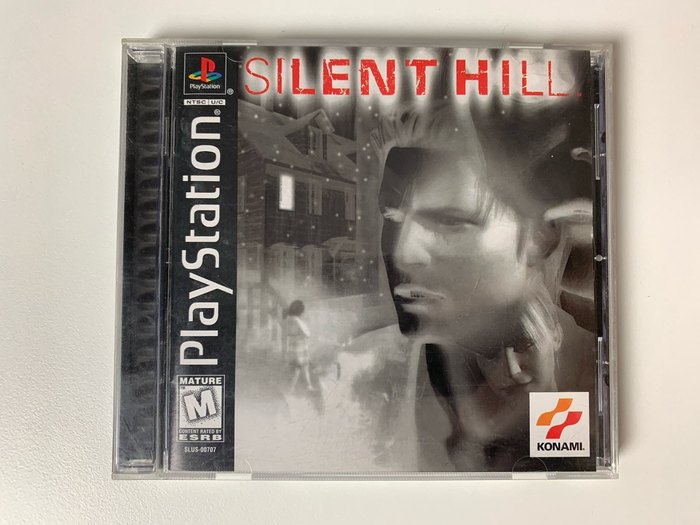
Harry Mason drives to a foggy American resort town on vacation and loses his adopted daughter Cheryl in the mist. Silent Hill (PlayStation, 1999) follows his search into a cult rite built around a girl named Alessa, and it did it in real-time 3D while its rivals still used pre-rendered backdrops. It sold over two million copies and reset what survival horror was for.
THE MAKING
Team Silent, 1996 to 1999Development began in September 1996 and ran about two and a half years, starting with some fifteen people inside Team Silent at Konami Computer Entertainment Tokyo. Keiichiro Toyama directed and wrote the scenario; Hiroyuki Owaku wrote the riddle texts. Konami wanted a game that would succeed in the United States, with a Hollywood-like atmosphere.
By the team's own account, the project nearly lost the company's faith: personnel and management drifted away, and Team Silent increasingly felt like outsiders. Because the game was made in an era of lower-budget titles, the developers kept considerable artistic freedom, and they used it to disregard Konami's initial plan and build a game that would appeal to players' emotions instead. Takayoshi Sato estimated the budget at US$3 to 5 million and said the team intended a masterpiece rather than a traditional sales-oriented game, a story built to endure the way successful literature endures.
The gamble showed early. The game debuted at the 1998 Electronic Entertainment Expo in Atlanta, where its presentations drew applause, and the response convinced Konami to give the project more people and more promotion. Konami also bundled a demo with the Japanese release of Metal Gear Solid.
THE DESIGN
Fog, an everyman, and Yamaoka's noiseThe team built its horror on a stated principle: a "fear of the unknown." The plot was left intentionally vague and occasionally contradictory, so players would sit with what the game refused to explain. The real-time 3D engine could not draw far on PlayStation hardware, so fog and darkness hid the pop-in, and the cover became the atmosphere: low visibility is the game's signature, and its flashlight and static-bursting radio are its two instruments.
Harry was designed as an everyman, not a trained fighter. He gasps for breath after sprinting and his aim is unsteady, because he has never done this before. Sato, who designed the characters and cinematics, started as a junior staffer limited to font design and file sorting; he won the 3D work by rendering a short demo and telling management he would withhold his technical knowledge unless he got it. For two and a half years he lived in the office and rendered the cinematics alone after hours on the studio's roughly 150 Unix computers.
Composer Akira Yamaoka asked for the job after the original musician left. He chose industrial music to give the game a cold, rusty feel, working independently of the visuals; when he first played his compositions for the team, they mistook the sound for a bug in the game. Toyama, who had little horror film experience, drew on UFOs, the occult, and the work of David Lynch, influences documented in the development record and covered on this Library's inspiration page.
THE EDITIONS
One game, a shelf of versionsTHE RECEPTION
Acclaim, with the dissent keptThe dissent is part of the record. GamePro's Bobba Fatt called it a "shameless but slick Resident Evil clone," and the voice acting was widely judged poor, its pauses breaking the atmosphere the sound design built. The 3D freedom also cost control: maneuvering in tight areas was called an exercise in frustration. Against that, Edge named it "a near-perfect sim nightmare" and made it runner-up for its Gameplay Innovation award, for using the PlayStation's draw-distance weakness as a chilling effect instead of hiding it.
THE LEGACY
The genre moved, and stayed movedSilent Hill is routinely counted among the greatest games ever made, and in 2005 it was credited with moving survival horror away from B-movie shock toward the psychological style of arthouse and Japanese horror film. GameTrailers ranked it first on a 2006 list of the ten scariest games ever made; Time put it on its 100 greatest video games list in November 2012.
Its story kept generating work: Christophe Gans' 2006 film drew on this game and its sequels, Silent Hill 3 continued Alessa's story directly in 2003, and Konami has announced a full remake by Bloober Team, the surest sign the first trip into the fog is still treated as load-bearing.
THE GAME ON THE SHELF
Silent Hill · PlayStation