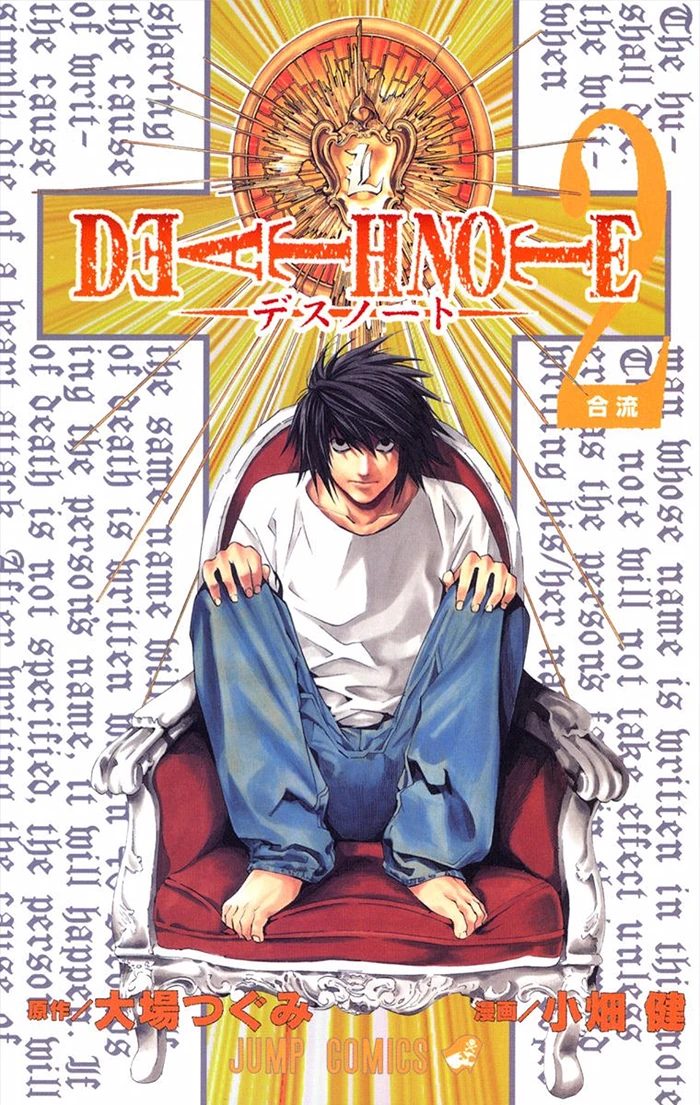
What inspired Death Note?
Asked what inspired Death Note, Tsugumi Ohba has never pointed to a single source, and this page prints the answer that is actually on the record. The concept, in Ohba's description, derived from a rather general idea involving shinigami and specific rules: death gods are old Japanese folklore, and a notebook governed by strict, printed rules gave that folklore the machinery of a thriller. The formal choice came next, and it was a refusal: Ohba felt they could not create a conventional fight style manga for Weekly Shonen Jump, and chose a suspense conflict instead, a battle fought with information rather than fists.
The record also names the storytellers Ohba grew up on. In interview, Ohba has cited Shotaro Ishinomori, Fujiko Fujio, and Fujio Akatsuka as creators they are heavily inspired by, and described a diet of films over books, with a particular love of Akira Kurosawa and Charlie Chaplin and of comedy above other genres. The working method became part of the machine: Ohba drafted thumbnails with dialogue and panel layouts, an editor reviewed them, and Takeshi Obata, granted wide artistic license, turned even the design of the notebook itself into the gothic object readers know. The two men rarely met; for most of the run they communicated through their editor, and did not speak to each other about the final chapters at all.
What you will not find in the record is the occult notebook anecdote or the single eureka moment that fan retellings prefer. The pilot chapter was the test: it did well enough that a series nobody, including its writer, expected to be approved was greenlit, and Ohba has said they could not quite believe it. Death Note was inspired the way it was written: generally, stubbornly, and one ruled page at a time.
THE STATED RECORD
Tier one onlyTHE BOOK ON THE SHELF
Death Note, in print