What inspired Slam Dunk?
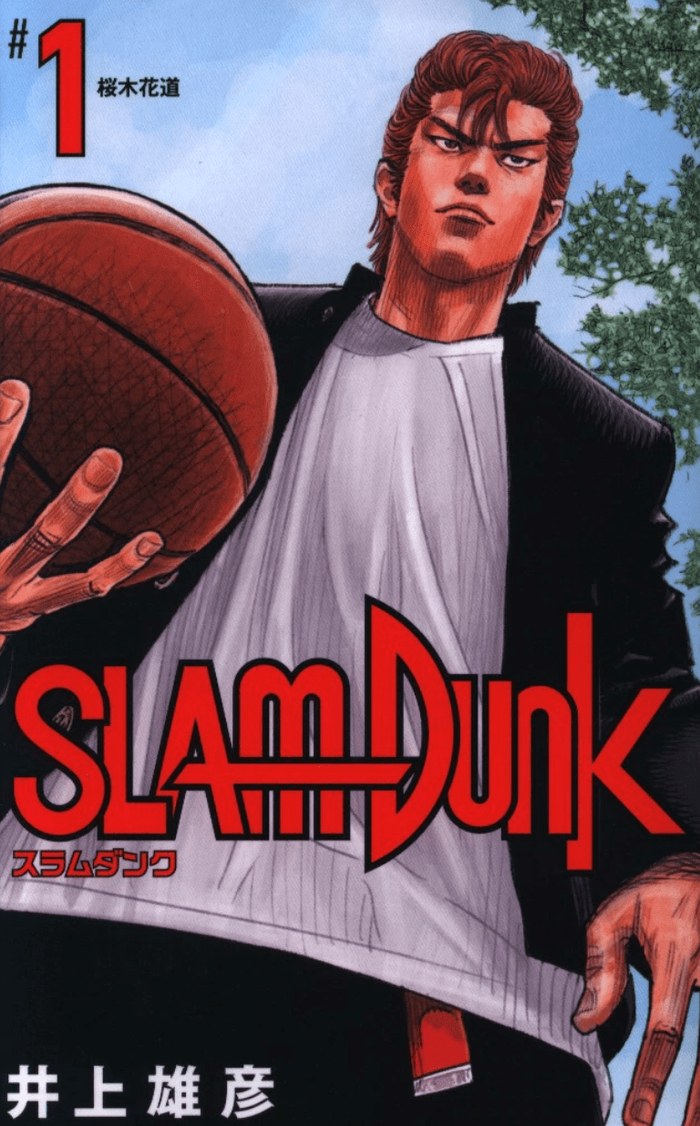
This page exists under a strict rule: a Slam Dunk inspiration page only where Takehiko Inoue has stated the inspiration himself, in interviews or his own notes. The core answer comes from an interviewer asking him, directly, what the initial motivation for each of his series was. His answer for this one: "For Slam Dunk, I was in a basketball club in high school, and there were no manga about basketball at the time, so I thought I had to do it." The sport was his, the shelf was empty, and the series is what filled it.
The personal root goes one level deeper, and it is inside the hero. Inoue has recounted that as a youth he began playing basketball to become popular with girls, and only later developed a real interest in the sport itself. That experience is mirrored in Hanamichi Sakuragi, who joins the Shohoku team to impress Haruko and grows to truly love the game. The most famous character arc in sports manga is, by the record, the author's own adolescence with the names changed.
Asked who influenced his work when he first started, Inoue named names, and they are printed here exactly as he gave them: "Dokaben, and I liked Ikegami Ryoichi-san's art, I liked his Otoko-gumi. Besides that, Kobayashi Makoto-san. Those three are the ones that influenced my work style the most." Dokaben, Shinji Mizushima's baseball epic, is the giant of the sports manga shelf Inoue grew up on; the basketball shelf he found empty was empty partly because the genre's masters, himself included, had been formed by baseball. He has also been clear about the limit of outside influence on his stories: the backbone of a work, he says, is mostly already inside the work itself, in its first volumes, and he hardly looks to movies or books for story.
The bridge between the boy in the basketball club and the series is a single short story. Before Slam Dunk, in the Weekly Shonen Jump Summer Special in 1990, Inoue published the one shot Aka ga Suki, featuring an early prototype of Sakuragi and of Haruko Akagi, with the story and character dynamics that laid the groundwork for the series. His craft research for the real thing was firsthand: he attended the NBA Finals in the United States and the 1992 Summer Olympics in Barcelona as research for the manga. And his stated aim for readers completes the loop: with the series, he wanted readers to feel achievements and love for the sport, the same conversion, from not caring to caring, that he had lived himself in high school.
What is not on this page matters as much as what is. Fans have long matched Slam Dunk's characters and plays to specific NBA players and moments by resemblance. Inoue has not claimed those matches in any source opened for this page, so they are not printed here as inspirations. The record he actually left is better anyway: a teenager joined a basketball club to impress girls, found no manga about the game he came to love, and decided he had to be the one to draw it.
THE INFLUENCES, ON HIS OWN SAY-SO
Interview answers onlyTHE FIRST VOLUME
Slam Dunk, in print