
From the Library: covers, censuses, and editions, documented. Browse the Library →
SOJ Rurouni Kenshin · The Real Hitokiri
← Back to the Library

Who was Kawakami Gensai?

The historical assassin behind Battōsai: a Kumamoto swordsman the new era executed.

Kawakami Gensai (December 25, 1834 – January 13, 1872) was a retainer of Kumamoto domain and one of the four hitokiri of the Bakumatsu, the era’s named assassins. Watsuki has documented the debt directly: the model is credited to Gensai in the manga’s own first volume. The parallels are structural: a swordsman of slight, almost delicate build whose speed made him lethal in daylight, in an age that then had no use for him.

Gensai’s one confirmed assassination was famous: on August 12, 1864, in broad daylight in Kyoto, he killed the scholar-statesman Sakuma Shōzan with a single stroke, and is recorded telling his confederates afterward that it was the first time he had truly felt he had killed a man, because Shōzan was the greatest man of the time. He fought for Chōshū in Takasugi Shinsaku’s Kiheitai, survived the revolution, and was then arrested by the Meiji state he had helped create, on a harbouring charge, and executed in Tokyo in 1872, aged 37.
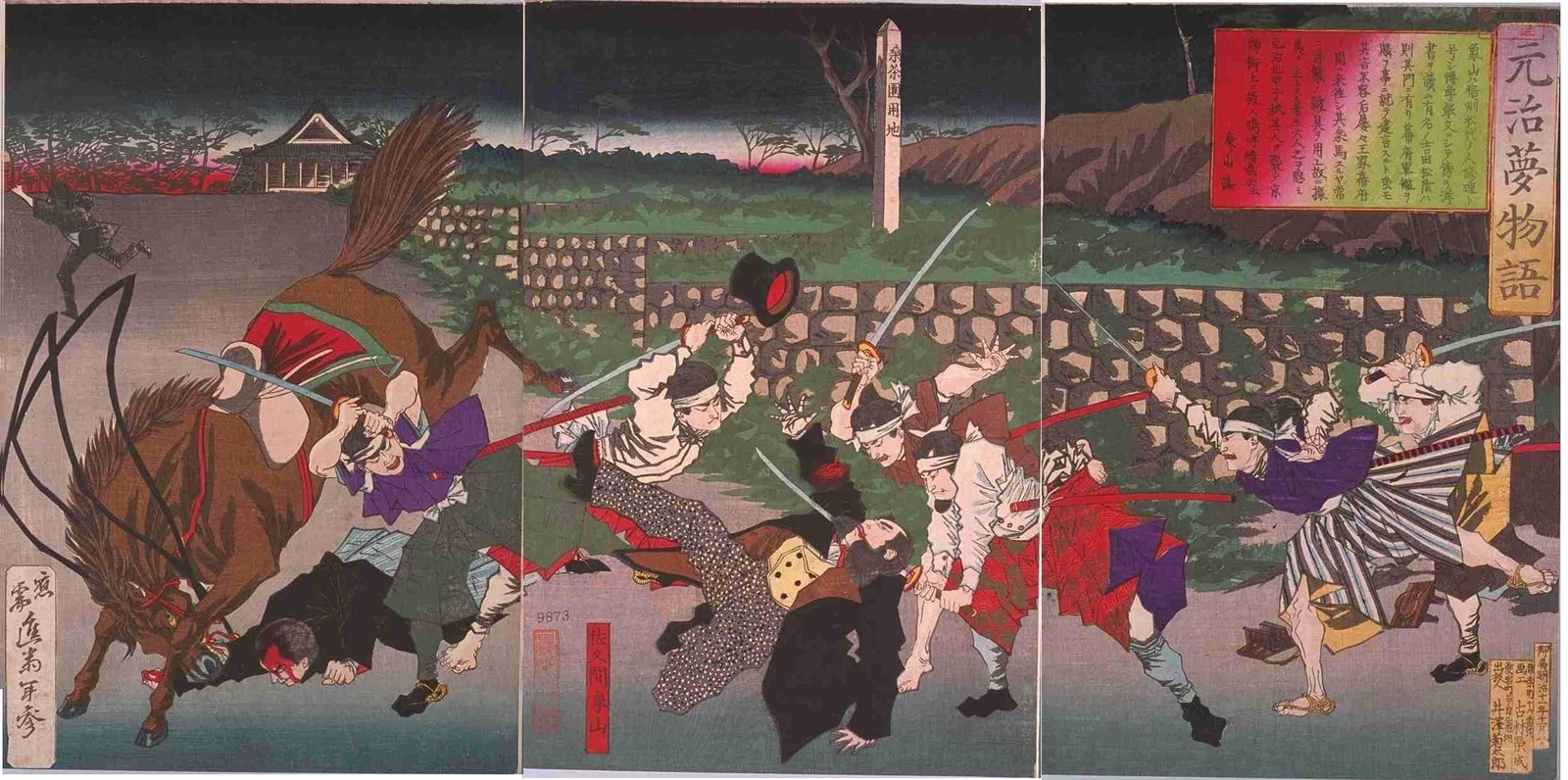
Genji Yume Monogatari 1878 nishiki-e print depicting Kawakami Gensai assassinating Sakuma Shozan
GENSAI IN PRINTGenji Yume Monogatari (1878), Shinsai Toshimitsu's nishiki-e of Gensai's daylight assassination of Sakuma Shōzan. No confirmed photograph of Gensai exists; this period print is how his own era pictured him.

THE LIFE IN BRIEF

1834 to 1872
The schoolboy retainer
Born Komori Genjiro, adopted into the Kawakami house at eleven, educated at the domain school Jishūkan while working as a castle cleaning attendant: the assassin began as a servant who studied in his free hours.
The loyalist
Imperial-loyalist philosophy at Hayashi Ōen’s academy turned a domain swordsman into an Ishin Shishi activist between Edo and Kyoto.
The end
Released after the Restoration, he served briefly as a military official and sword teacher, was arrested in 1870 for sheltering old comrades, and beheaded at Kodemmachō prison in 1872. He is buried at Ikegami Honmon-ji.

GENSAI INTO KENSHIN

What Watsuki kept, and what he reversed
Kept
The build, the speed, the daylight reputation, and the tragedy of the assassin discarded by his own revolution.
Reversed
The ending. Gensai was executed by the new era; Kenshin is allowed to outlive his, which is the manga’s whole argument stated as a biography.
More from the Library
MORE FROM THE RUROUNI KENSHIN ARCHIVE →
One shelf in the Library. Browse them all →

THE FIRST WORD

New pages and new pieces, first.