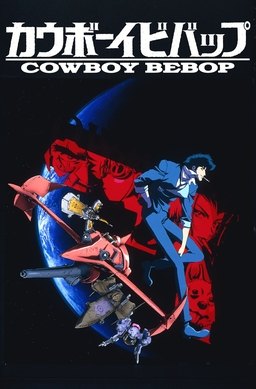
Why are Cowboy Bebop's episode titles all music references?
Start with the direct lifts, because there are more than most viewers catch. The Rolling Stones alone account for three sessions: Honky Tonk Women (session 3), Sympathy for the Devil (6) and Wild Horses (19), plus the band's orbit contributes Jamming with Edward (9), titled after the 1972 album by Jagger, Watts and Wyman with Ry Cooder and Nicky Hopkins. Around them: Aerosmith's Toys in the Attic (11), Queen's Bohemian Rhapsody (14), KISS's Hard Luck Woman (24), Herbie Hancock's album Speak Like a Child (18), the standard My Funny Valentine (15), Stray Dog Strut (2) after the Stray Cats' Stray Cat Strut, Black Dog Serenade (16) after Led Zeppelin's Black Dog, and the two-part finale The Real Folk Blues (25 and 26), named for Chess Records' 1960s blues album series and for the show's own ending theme.
The titles that are not specific records are musical forms and genres, every one of them doing double duty as a plot label: Asteroid Blues, Gateway Shuffle, Ballad of Fallen Angels, Heavy Metal Queen, Waltz for Venus, Ganymede Elegy, Jupiter Jazz, Mushroom Samba, Boogie Woogie Feng Shui and Cowboy Funk. Count them and the pattern is total: across all 26 sessions, every title carries a music reference of one kind or another.
Two footnotes keep the record honest. Pierrot le Fou (20) bows to Godard's 1965 film instead, the one title borrowed from cinema, and Brain Scratch (23) is the single session with no documented music source behind its name. Even the feature film joined in: its Japanese title, Knockin' on Heaven's Door, is Bob Dylan's. The references were not decoration. They were the filing system of a series that calls its episodes sessions and means it.
THE DIRECT LIFTS
Twelve titles, twelve recordsTHE REST OF THE SET LIST
Standards, albums, and formsTHE SERIES
Cowboy Bebop