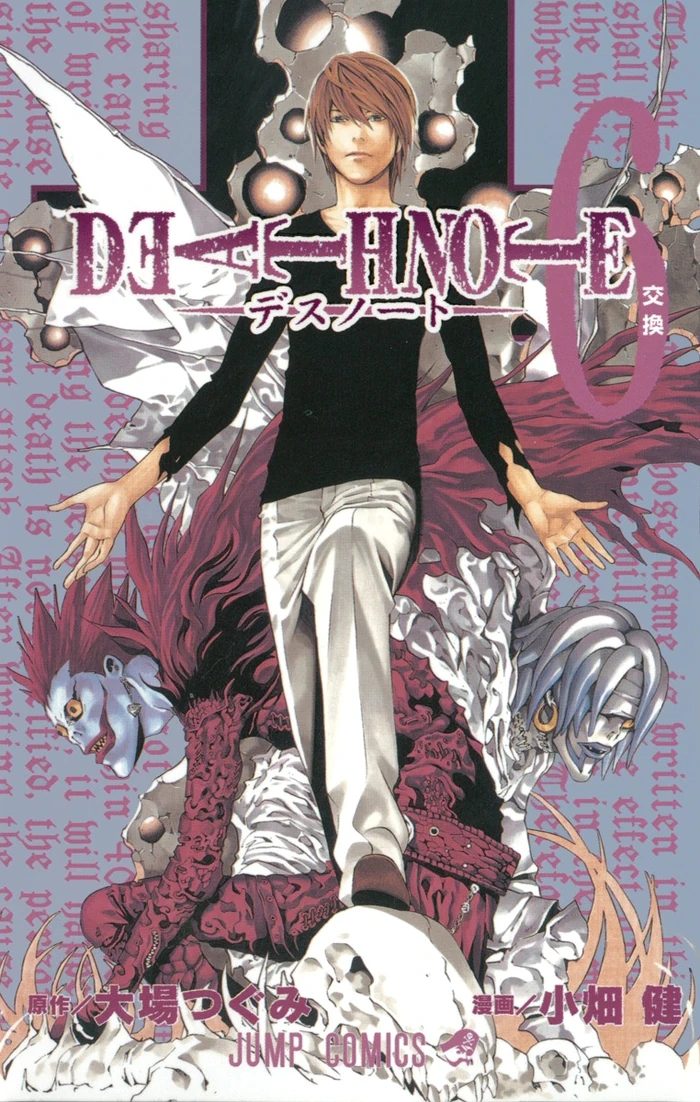
Why are the Death Note's rules written in English?
The strangeness is real and easy to miss: a notebook dropped by a Japanese death god, found by a Japanese schoolboy, opens with its rules written in English, in the original Japanese manga just as in every translation. Light's first act in chapter one is to read them, translating in his head, amused that the prankster bothered with English at all. The series' guidebook supplies Ryuk's reasoning, the closest thing to an official word: English is the most widely used language in the human world, so a shinigami writing instructions for an unknown human finder writes them in English. It is not a note for Light. It is a note for anyone.
The choice does real work in the story. Because the rules are in English, the pilot chapter's Taro Kagami, whose English is poor, cannot read them at all and mistakes the notebook for a diary, the misunderstanding the entire pilot runs on. In the series, the English rules let Ryuk stay honest and sinister at once: everything the finder needs is printed, in the world's common tongue, and the finder still cannot say they were not warned. Ryuk wrote five rules, in the language of maximum readership, and trusted boredom and human nature to do the rest.
There is a production elegance to it as well, which the Japanese edition makes visible: printed English on the page signals instantly to a Japanese reader that this object is foreign even among the supernatural, a legal document from a bureaucracy of death that files its paperwork in the world's language. The translations keep it, so an English reader sees the rules exactly as a Japanese reader did, one of the few pages of the manga that needed no translation at all.
THE NOTE AT THE FRONT
What the English doesTHE BOOK ON THE SHELF
Death Note, in print