
Why are Vagabond's covers painted in watercolor?
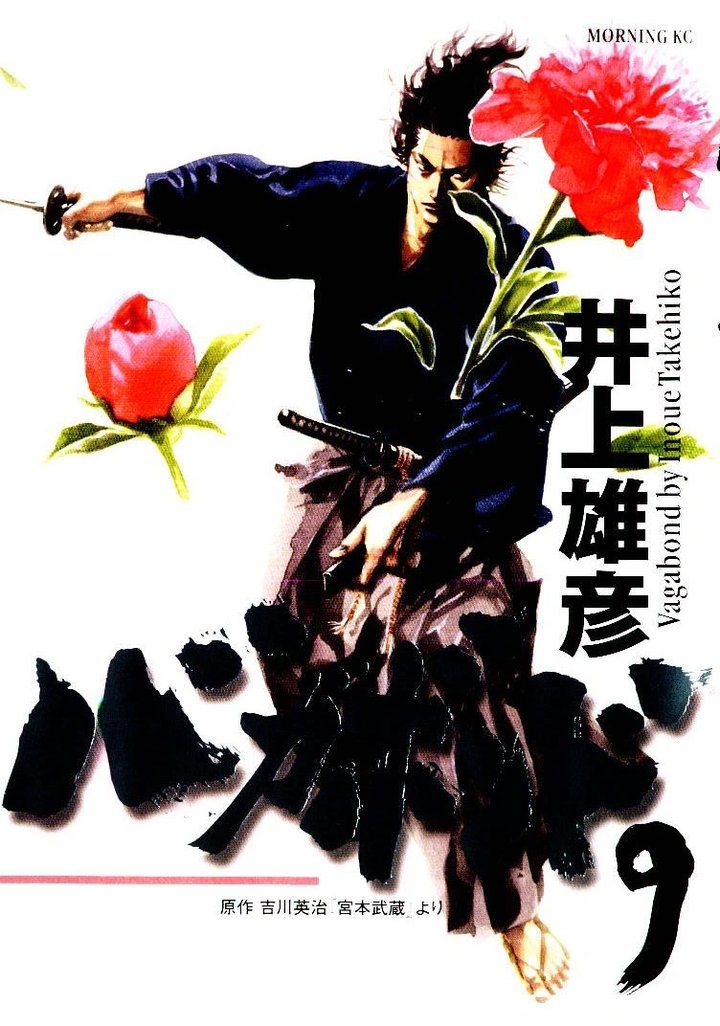
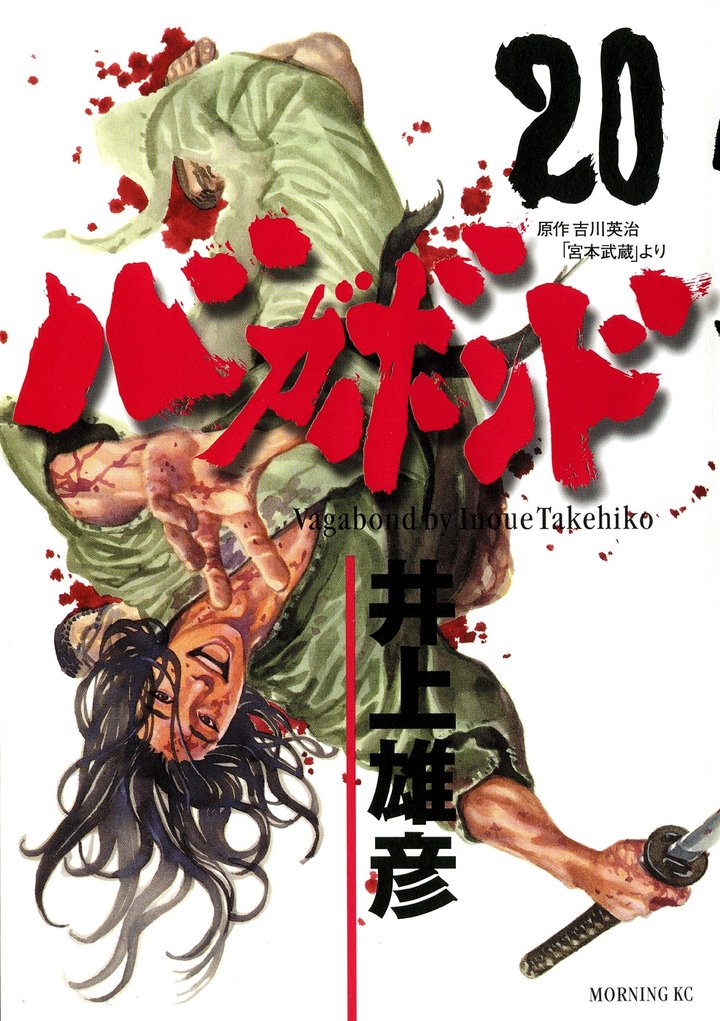
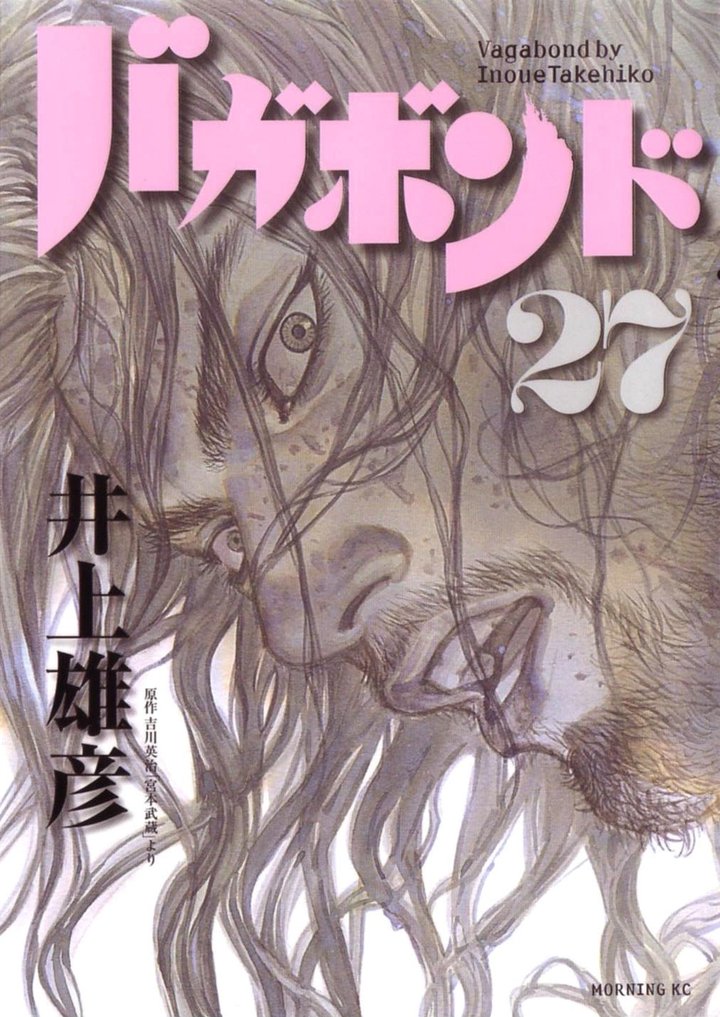
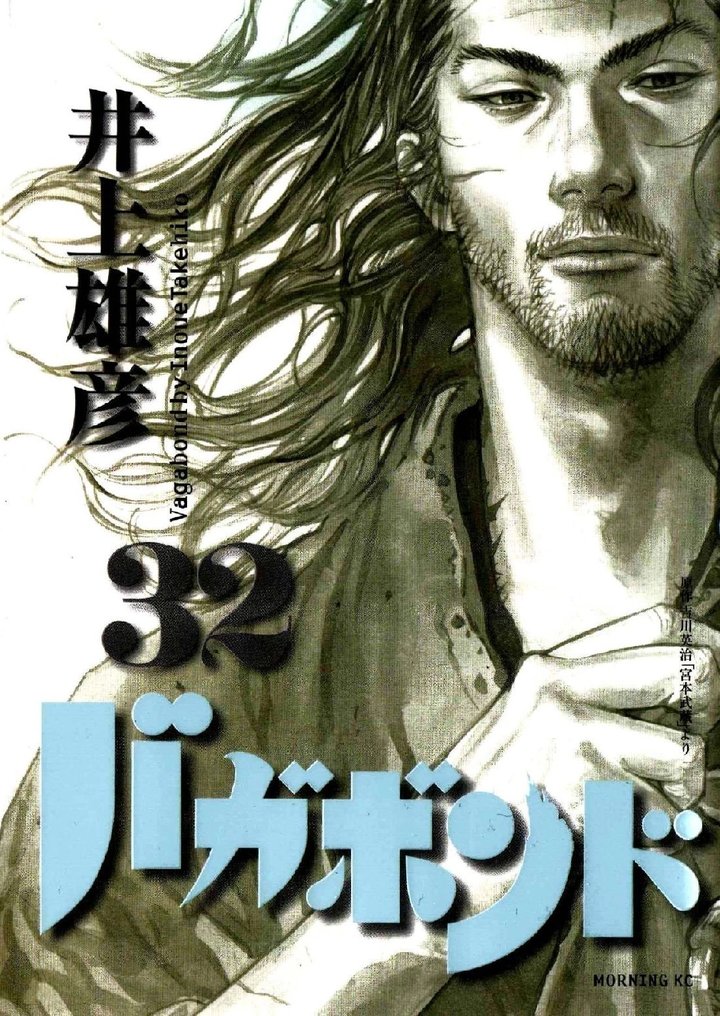
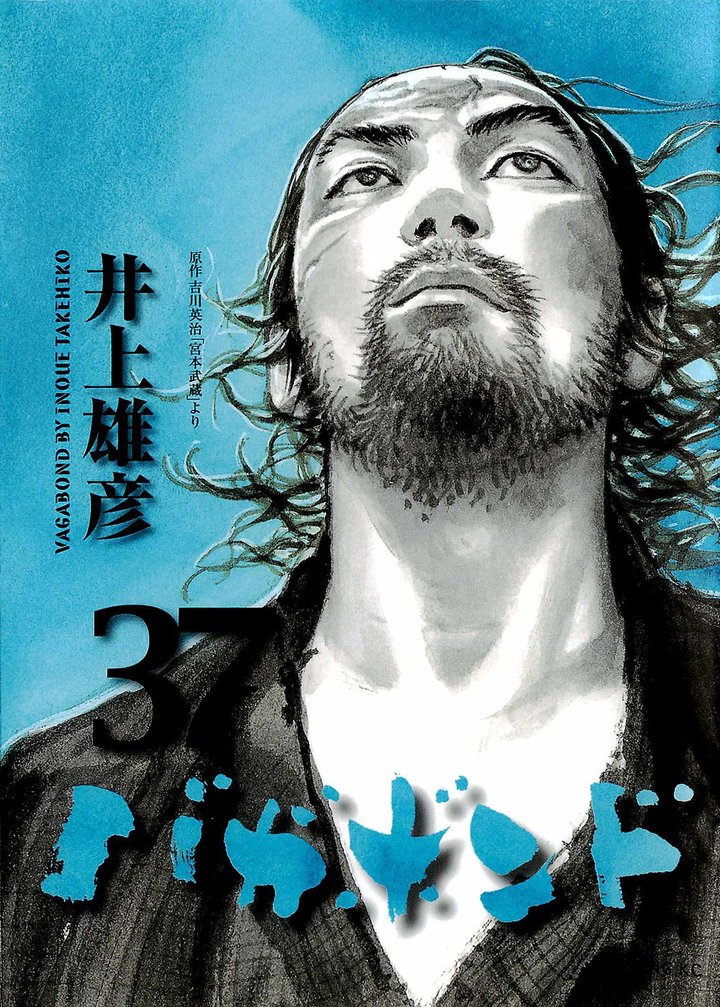
A Vagabond cover is not an advertisement for the chapters inside. It is a sitting: Musashi, painted fresh for every volume, growing older in public across fifteen years of publication. Volume 1's Takezo is seventeen and feral. Volume 37's Musashi is weathered, bearded, looking up at something out of frame. The story of the manga is legible on the covers alone, which is why this archive gives them a gallery of their own.
The choice of watercolor is the method in miniature. Inoue paints the way his swordsman is meant to learn to fight: committed, unrepeatable, at the mercy of the medium's own behavior. Ink for the line, water for the wash, and no taking a stroke back.
SIX OF THIRTY-SEVEN
The face, aging in paint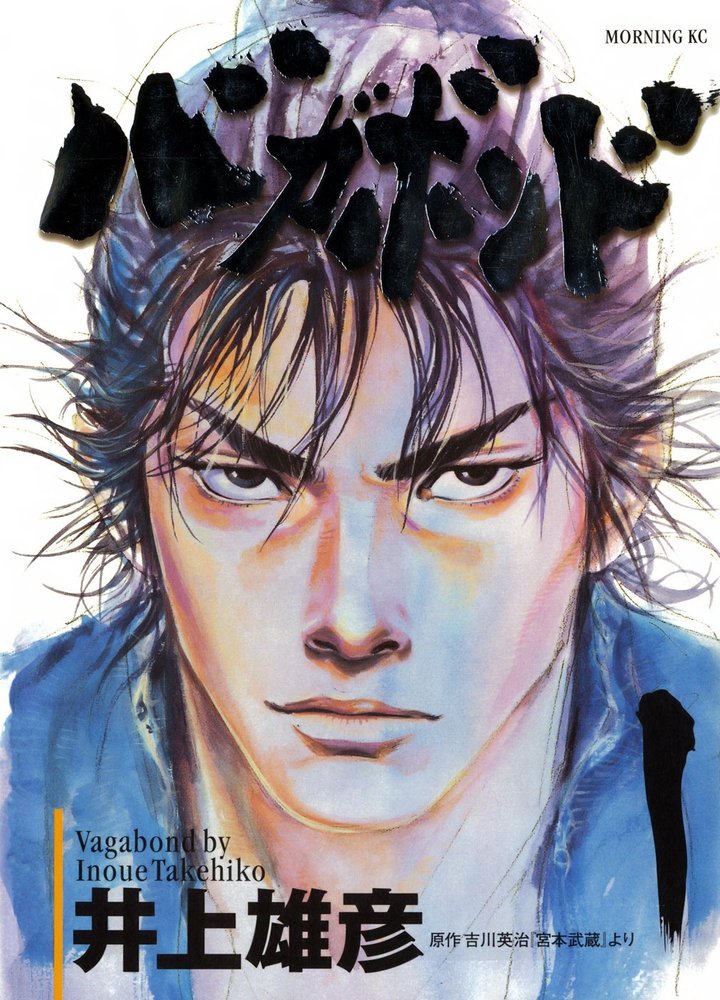
WHY PAINT AT ALL
The reasoningMost manga covers are illustrations of the contents. Inoue's Vagabond covers are portraits of a life in progress, painted in watercolor because watercolor cannot be fully controlled, and a manga about a man learning to stop forcing the world needed a medium that resists force. The washes bleed, the ink sits where it lands, and the face on volume 37 is the face on volume 1 after fifteen years of weather.
There is a practical strand too: the covers, the magazine color pages, and the exhibition murals are one continuous body of painting, collected in the Water art book in 2006 and hung at the Ueno Royal Museum in 2008. Vagabond is unusual among manga in having a second career as a painting oeuvre, and the covers are where that career is easiest to collect: thirty-seven small originals, reproduced on the books themselves.