
Why did Sonic's Japanese and Western stories differ?
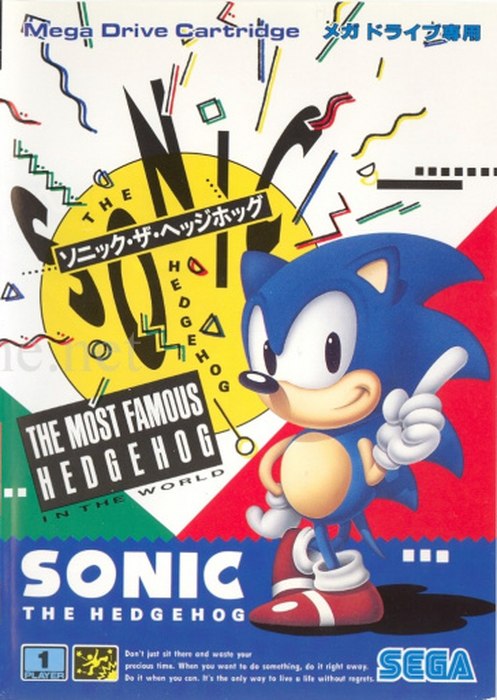
Read the Japanese starting point first, in the manual Sega actually shipped. The Japanese Sonic the Hedgehog manual, in translation, opens mid rivalry: the evil scientist Doctor Eggman is hatching another plan, South Island is a moving island where the Chaos Emeralds lie dormant, and Eggman has turned the island's animals into robots. There is no origin story. Eggman was always the villain, Sonic was always fast and blue, and the island was never given a planet to sit on. The American manual was shorter still, a few paragraphs under the headline "Crush Dr. Robotnik!" The games themselves, on both sides of the Pacific, told almost nothing.
The West filled the vacuum on paper. In 1991 Sega of America produced an internal document, the Sonic Bible, in an attempt to give the brand a consistent backstory for non Japanese regions. It was never published, and it surfaced only in 2009, when former Sega of America staffer Dean Sitton revealed the documents and they were scanned and posted online. Reporter CBR, working from the documents themselves, describes three drafts that disagree with each other as much as with Japan, which is why the Western Sonic story never settled into one version.
The first draft is the strangest. Sonic begins as Sonny, a poor brown hedgehog living with his mother and five sisters beside a burger joint in Hardly, Nebraska, dreaming of Olympic gold. He befriends a kind scientist, Dr. Ovi Kintobor, becomes his assistant, and breaks the sound barrier on Kintobor's treadmill, which turns him blue and earns him the name Sonic. Then radiation strikes Kintobor's machine, the evil stored in the Chaos Emeralds hits the doctor head on, fusing him with that evil and the hard boiled egg he was eating, and Kintobor becomes Robotnik. Later drafts rebuilt the story again: Sonic as an orphan on the planet Mobius, with animal friends including Sally Acorn and Johnny Lightfoot, hanging around Kintobor's lab rather than assisting him, in a world where the game's item monitors were secretly personal computers on a bulletin board system. None of this, in any draft, exists in the Japanese record.
What happened next explains the fractured Western canon of the 1990s. American media largely took a broad version of the premise and went its own way, keeping elements such as Mobius while building separate continuities around them, including the freedom fighter premise of the Saturday morning cartoon and the Archie comics. Britain went further: per CBR's account, the Bible's later drafts became the accepted backstory for most British Sonic media, and Fleetway's Sonic the Comic used it almost beat for beat. Japan, meanwhile, kept shipping games whose manuals needed none of it. The two stories differed because only one side had ever needed to invent one.
TWO PAPER TRAILS
The manual Japan shipped, and the bible America wroteSouth Island vs Mobius

A note on evidence: the Bible was an internal, unpublished document, and this page reports it as what it is, a leaked piece of 1991 brand paperwork, documented from the documents themselves, not as game canon.