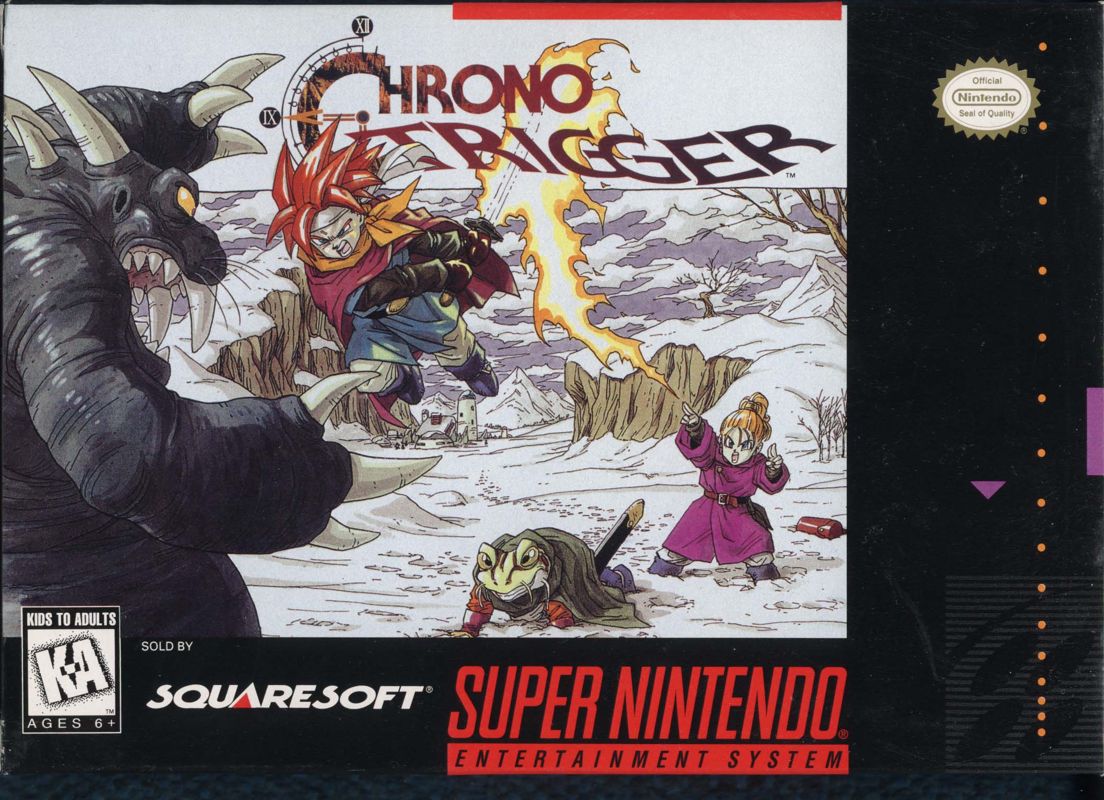
Why does Chrono Trigger have so many endings?
The design reason is on the record. Story planner Masato Kato devised the system of multiple endings because he could not branch the story itself into different paths. A time travel game promises that when things happen matters. Chrono Trigger keeps that promise at the one point it fully controls: the final battle. From the moment the party reaches the End of Time, Lavos can be challenged at almost any point in the plot, and the ending you receive depends on when, and how, you go.
The spread is the reward schedule. Finish at the story's appointed hour and you get the canonical ending. Go early, at points where the plot says you cannot possibly be ready, and the game answers with endings that range from the elegiac to the comic, including the famous developers' ending, where the Dream Team itself thanks you. New Game Plus is the hunting license: finish once, and you restart with your levels, techniques, and equipment intact, strong enough to knock on Lavos's door at the very first opportunity and collect the endings a first run cannot reach.
Later versions added one more: the DS release of 2008, and the versions that follow it, carry a thirteenth ending behind an extra dungeon and an optional final boss. Sakaguchi described the philosophy behind it all when he noted how unusual it was that testers wanted to play again, to 'travel through time again', and how the team built small behavioral differences into every era to make that second trip worthwhile. The endings were not padding. They were the point: a game about time should be finished more than once.
THE NUMBERS
Endings, counted precisely