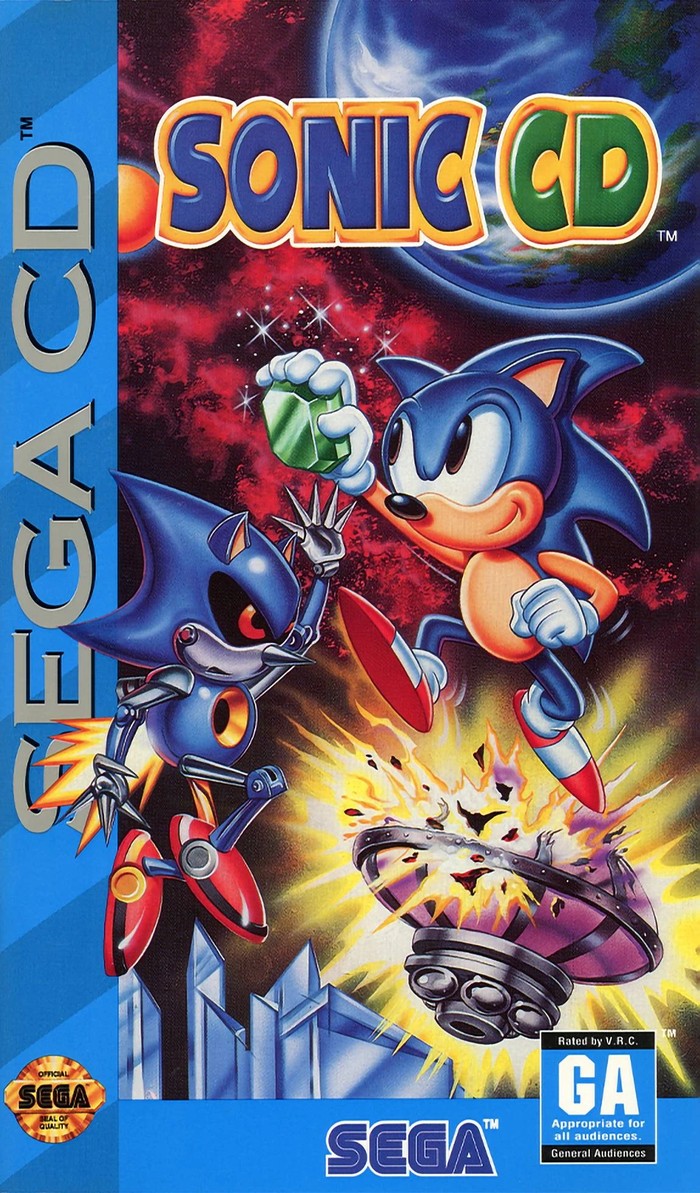
Why was Sonic CD's music different in America?
The original score was a showcase. Sonic CD, directed by Sonic's co creator Naoto Ohshima, was built to demonstrate the Sega CD, and Sega gave composers Naofumi Hataya and Masafumi Ogata a large audio budget to deliver true CD quality music. Their first demos were rejected by Ohshima, who wanted a bolder, more experimental sound. What they delivered drew on the house and techno then rising in Japan, citing acts such as C+C Music Factory, Frankie Knuckles, and the KLF, with vocals by Keiko Utoku, and a full set of variations for each stage's past, present, and future. Japan and Europe heard this score on the Mega CD in 1993.
America did not. Sega of America delayed the North American release by two months to have a new soundtrack composed, principally by Spencer Nilsen and David Young, with Sterling Crew contributing the boss music and the Collision Chaos and Metallic Madness themes. Nilsen explained the brief afterward: Sega of America "wanted something a little more musically rich and complex," including a theme song it could use in marketing. That theme, "Sonic Boom," composed by Nilsen and performed by the vocal trio Pastiche, became the American game's signature. One part of the original survived in every American copy: the Past stage tracks, which could not be easily altered because of how they were programmed, stayed Japanese, so American players heard Hataya and Ogata every time they ran into the past. Den of Geek's comparison describes the American score as more orchestral, more epic, and almost mournful, against the Japanese score's bounce and joy, and Nilsen himself called the two "completely different musical philosophies and approaches."
The replacement made the game a permanent argument. GameFan, which had scored the Japanese version at 100 percent, lambasted the change in its American review, and editor Dave Halverson was still calling it in 2009 "an atrocity that remains the biggest injustice in localization history." Nilsen answered that the criticism was "blown out of proportion," as if they had replaced the music for Star Wars after release. The split then propagated through the ports: the 1996 Windows version used the North American soundtrack in every region, while the 2005 Sonic Gems Collection used the original score in Japan and the American score everywhere else. Which Sonic CD you owned depended on where, and increasingly when, you bought it.
The argument was settled the only way it could be, by shipping both. Christian Whitehead's 2011 remake, released that December, included both the Japanese and North American soundtracks, selectable, and that version carried into the Sonic Origins compilation in 2022. The game underneath had been a hit all along: over 1.5 million copies, the best selling Sega CD title ever. America had not rejected the game in 1993. It had simply never been allowed to hear it the way Japan did.
ONE GAME, TWO SCORES
The credits are the story