Did Zelda and Castlevania debut on floppy disks?
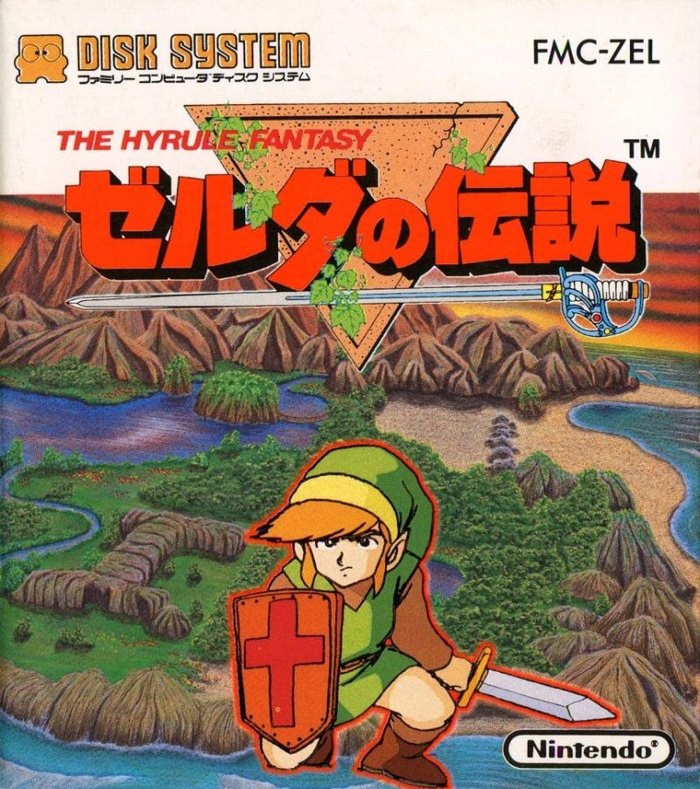
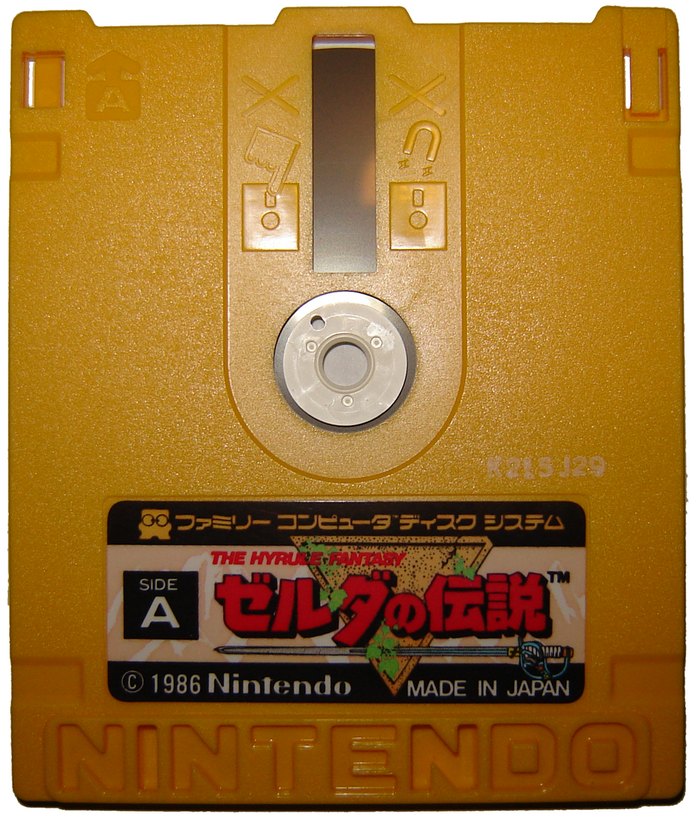
The Legend of Zelda was a launch title for the Disk System on February 21, 1986. The disk held the save files, three of them, written directly to the media. The extra sound channel carried part of its music. And the disk version used the Famicom's strangest feature: the microphone in controller two. The Pols Voice enemies, the manual said, hated loud noise; in Japan you killed them by shouting into the controller. When Zelda became an American cartridge in 1987, the battery inside the gold cartridge took over saving, the microphone was gone, and Pols Voice were made weak to arrows instead, while the American manual kept the line about loud noise, a fossil of a feature its readers did not have.
Castlevania, Akumajo Dracula in Japan, followed on disk in September 1986. The disk version let you register your name and save progress in three slots, and it put your name in the ending: the credits close by honoring the hero, by the name you entered. The American NES cartridge has no saving at all; the name, the slots and the personalized ending were all cut with the format.
They were not alone. Metroid and Kid Icarus also debuted on the Disk System in Japan, and their cartridge versions abroad fell back on the password systems the disks had made unnecessary at home.
THE DISK ORIGINALS
Yellow media, first editions