
From the Library: covers, censuses, and editions, documented. Browse the Library →
SOJ FromSoftware · Demon’s Souls
← Back to the Library

Why did Demon’s Souls become a cult hit in the West?

Sony declined to publish it in the West. Western players imported it anyway, and talked until the West had to listen.

The Tokyo Game Show demo in 2008 was received negatively, and the game’s difficulty gave Sony its reason: it would publish Demon’s Souls in Japan only. Sales there started slowly. What happened next is the founding legend of the whole genre: the Japanese release carried enough English that determined importers could play it, word of mouth crossed the Pacific, and the game began selling in the West before it was sold in the West.

Publishers came to it. Atlus released it in North America on October 6, 2009; Namco Bandai Partners followed in PAL territories on June 25, 2010. It exceeded sales expectations in both, won several awards, and is now routinely cited among the greatest games ever made, a trajectory its own publisher had voted against.
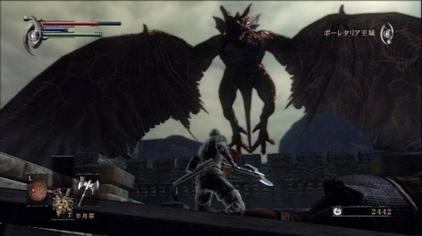
Demon’s Souls (2009) gameplay, a knight facing a winged demon in Boletaria
THE IMPORT HIT The 2009 original in play: a lone knight facing a winged demon in Boletaria. Screenshots like this one travelled by forum post and import review while the game still had no Western publisher.

THE SNOWY ROAD

Where the phantoms came from
Silent cooperation
Miyazaki has told the story many times: driving a hillside road after heavy snow, he watched cars ahead slip back and get bumped uphill by the cars behind, strangers helping strangers wordlessly, gone before thanks could be given. The phantoms, the bloodstains, the messages on the ground: that traffic jam, made into a system.
Messages like texts
The messaging system was designed to be nonintrusive; Miyazaki compared the messages to the brevity of a text or email against a phone call, and used the same comparison to finally get the idea across to Sony’s executives.
More from the Library
MORE FROM THE FROMSOFTWARE ARCHIVE →
One shelf of the Library. Browse them all →

THE FIRST WORD

New pages and new pieces, first.