
How can you tell a first printing of Akira?
A book printed a hundred times is dated by its printing line, not its cover.
Akira volume 1 is the extreme case of a general Japanese rule. Its first printing, in September 1984, was a cautious run of about 30,000 copies; demand forced the run up to nearly 300,000 within two weeks, on the way to roughly half a million. The book never stopped: in 2020 it became Kodansha’s first manga ever to receive a 100th printing. A first printing and a fiftieth wear the same famous cover. What separates them is printed inside.
Japanese books carry their biography on the copyright page, the okudzuke at the back: the dates of issue and the number of the printing. That page, not the cover, is where an Akira is dated.
WHAT TO CHECK
The four witnesses on any copyThe printing statement
Open the back of the book. The copyright page records the issue date and the printing, first printings marked as the first impression of that edition. On a title reprinted for forty years, this single line is the difference between a 1984 artifact and a bookstore copy from last spring.
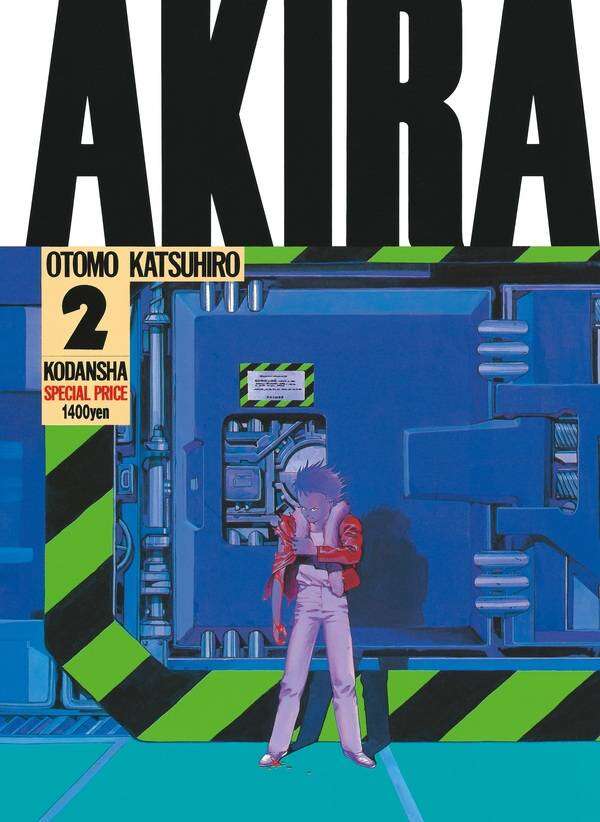
The cover price
The original covers print their prices as part of the design: volume 1 reads “SPECIAL PRICE ¥1,000” (about $6), and the set climbs to ¥1,700 (about $11) by volume 6. A cover whose printed price disagrees with the volume’s first-edition price is telling you it belongs to a later impression or a different edition.
The format
Originals are B5, the magazine’s own size, in the KC Deluxe line, with dyed page edges. Smaller trim or cleaner, whiter paper points to the later Complete Works edition; hardcover and right-to-left text points to the 2017 anniversary set. The wrong size is the fastest tell in a shop.
The edition furniture
Slipcases and extras belong to specific editions: clear plastic cases for the 2003–04 full-color set, a pill patch only in the 35th Anniversary box (ISBN 9781632364616). Loose pieces offered as original to other editions are a story to check, not a bonus.
WHY THE FIRST RUN IS SMALL
30,000 copies of a legendA seinen gamble
In 1984 Akira was a critical success in a grown-up magazine, not yet a phenomenon, and Kodansha printed like it. The two-week scramble from 30,000 toward 300,000 is the sound of a publisher discovering what it had. First printings of volume 1 come from that first, small, surprised run.