
How did Naruto end, and how did Boruto begin?
Naruto ran in Weekly Shonen Jump from September 21, 1999 to November 10, 2014: 700 chapters, 72 volumes, fifteen years. It did not drift to a stop. From the outset, Kishimoto planned to conclude the series with a final battle between Naruto and Sasuke, and the last arcs are built to deliver it: a world war, the truth about the Uchiha clan, a goddess, and then, with every larger threat settled, the two boys on the same battlefield where their story's argument could finally be finished. Sasuke admits defeat and reforms; years later, the epilogue shows Naruto as Seventh Hokage, raising the next generation.
Two films closed Kishimoto's own telling: The Last in 2014 and Boruto: Naruto the Movie in 2015, which he has said was inspired in part by his relationship with his sons. Then the publisher asked the obvious commercial question. When Naruto concluded, Shueisha asked Kishimoto to create a sequel, and he declined to draw it himself. His account of it, given to Weekly Shonen Jump in 2016, is blunt: 'When I ended Naruto, Shueisha asked me if I was interested in continuing the story. I had done everything I wanted to with the series, so I wasn't up for it.' What changed the answer was a name: 'I was fine with ending it at that point, but if Mikio-kun was drawing the sequel, then I was okay with it. I told them it had to be him.' Mikio Ikemoto had been Kishimoto's assistant since Naruto's early chapters.
So Boruto: Naruto Next Generations began in May 2016 with a split of duties no Naruto chapter ever had: Ukyo Kodachi, who had helped write the Boruto film, on the story; Ikemoto on the art; Kishimoto as editorial supervisor. It moved from Weekly Shonen Jump to the monthly V Jump in 2019, and in November 2020 Kodachi stepped down and Kishimoto took over the writing himself. The story's first part closed in 2023 and resumed as Boruto: Two Blue Vortex. And the handover has since gone further than the 2016 credits suggest: in an August 2024 interview, Kishimoto said Ikemoto is completely in charge of Boruto's story and main illustrations, adding, 'It really is Ikemoto's manga.' The sequel's shape, a father's finished story continued by the student he trusted, is not an accident of licensing. It is the condition on which it was allowed to exist.
THE LAST VOLUME AND THE FIRST
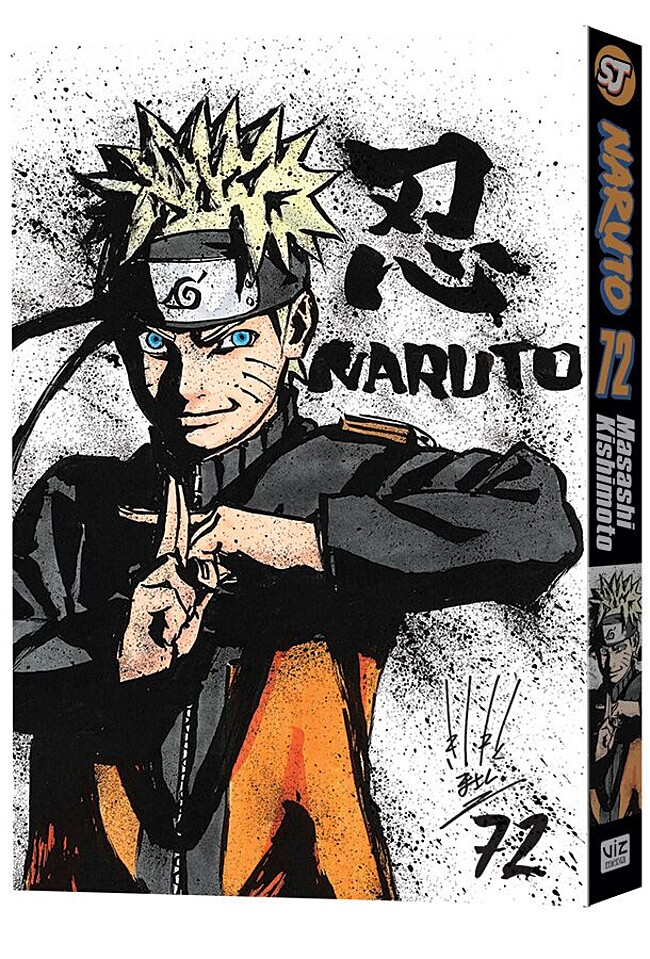
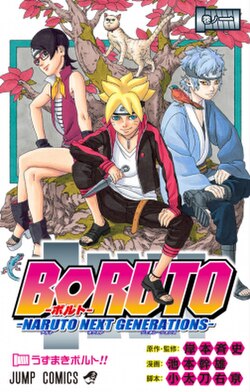
Same world, two different hands. Kishimoto wrote and drew every chapter of the first book's series; the second is drawn, and now largely steered, by the assistant he insisted on.