
How do Metroid releases differ between Japan and the West?
Japan got a floppy disk in a plastic case; the West got a grey box, a password book, and different art instincts.
Metroid is a Japanese game that the West received a year late and slightly re-engineered. The differences begin with the object itself: a rewritable Disk Card for the Famicom Disk System in August 1986, against an NES cartridge in August 1987, and they run through the packaging, the manuals, and the game inside.
THE OBJECTS
Disk against cartridgeJapan · 1986
The Disk System original came as a Disk Card in its clear case, with the character manual the era’s disk games carried. The card was the save file: three slots, written at home, and the same medium Nintendo’s in-store Disk Writer kiosks could rewrite entirely.
North America · 1987
The NES release arrived in the grey Adventure Series box line. The printing shown in this archive’s gallery is the later sprite-art edition; the box was revised across the game’s long print life, and the 1992 Classic Series reissue changed the cartridge label to yellow.
THE ART INSTINCTS
What each region sold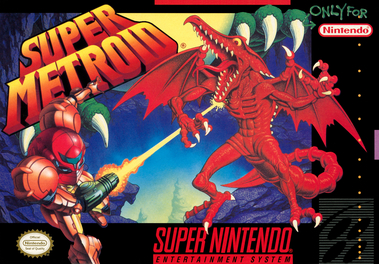
North America · Super Metroid
The Western Super Metroid box sells the confrontation: Samus firing up at a scarlet Ridley. Action first, atmosphere implied.
Japan · the same years
Japanese packaging of the era typically foregrounded the lone figure and the logo, and the Super Famicom Super Metroid box is a different composition from the Western fight scene. The archive shows the Western art it has verified and documents the Japanese counterpart in text until a verifiable copy joins the shelf.
The manuals
One bridge crossed the Pacific intact: the English Metroid manual shares its artwork and creature descriptions with the Japanese original. The bestiary that haunted Western childhoods, Metroids, Zebetites, the works, was drawn in Japan and simply translated.