
From the Library: covers, censuses, and editions, documented. Browse the Library →
SOJ Dead or Alive ยท Vintage Fighting Games
← Back to the Fighting Games Gallery

How Do the Saturn and PlayStation Versions of Dead or Alive Differ?

They are not the same port twice. The Saturn game is a close, Japan only conversion of the arcade original. The PlayStation game is a rebuild, with two new fighters, new stages and music, and no ring outs.

Dead or Alive reached home players twice, and the two versions are different enough that collectors treat them as different games. The Sega Saturn version came first, in Japan in October 1997, and never left Japan on that system. The PlayStation version followed in March 1998 in Japan, North America, and Europe, and changed the roster, the stages, the engine, and the rules of the ring itself.

Here is the difference, point by point, as documented in the versions themselves and the contemporary record.

THE DIFFERENCES

Point by point
WHERE YOU COULD BUY IT
Saturn: Japan only, released October 1997, with Acclaim's planned UK release cancelled and no North American Saturn release at all. PlayStation: Japan on March 12, 1998, North America on March 31, and Europe on July 1, the version the West actually played.
THE ROSTER
Saturn: the arcade's eight fighters, with the boss Raidou unlockable. PlayStation: two additions. Bass Armstrong, Tina's wrestler father, is playable from the start, and the kunoichi Ayane is unlockable, both arriving a year before Dead or Alive 2 made them regulars.
THE ARENAS, AND THE RING OUTS
Saturn and arcade: finite rings, ring outs, and explosive danger zones around the edges. PlayStation: the stages, still built from 2D bitmaps, now extend infinitely, in the manner of Tekken. Ring outs are eliminated, and stepping outside the starting square puts you in an endless danger zone instead.
THE LOOK
Saturn: lower polygon character models than the arcade, with Gouraud shading added, a technique the Model 2 board itself lacked, to compensate. Backgrounds became bitmap and parallax layers, as in Saturn Virtua Fighter 2, and some stage details were removed outright, including the roof of L's Castle and the swaying bridge in Hayabusa's stage. PlayStation: a different graphics engine, also using Gouraud shading, with new stages. IGN judged that the Model 2 graphics had ported to PlayStation better than they ever had on Saturn.
THE SOUND AND THE EXTRAS
Saturn added a rendered FMV intro, Time Attack, Survival, Training, and Kumite modes, unlockable costumes, and Kasumi's system voice. PlayStation answered with new background music, more unlockable costumes, system voices for both Kasumi and Ayane, and additional voice clips. Its North American and European releases did drop one thing: the text only epilogues that ended Arcade Mode in Japan.
THE FIGHT ITSELF
The PlayStation version runs a slightly revamped fighting engine alongside its new graphics engine. Tecmo then based a new arcade revision, Dead or Alive ++, on the PlayStation version in 1998, with gameplay changes that pointed ahead to Dead or Alive 2. The rebuild, in other words, became the future of the series.

THE TWO PLAYSTATION COVERS

Both covers on this page are the PlayStation rebuild
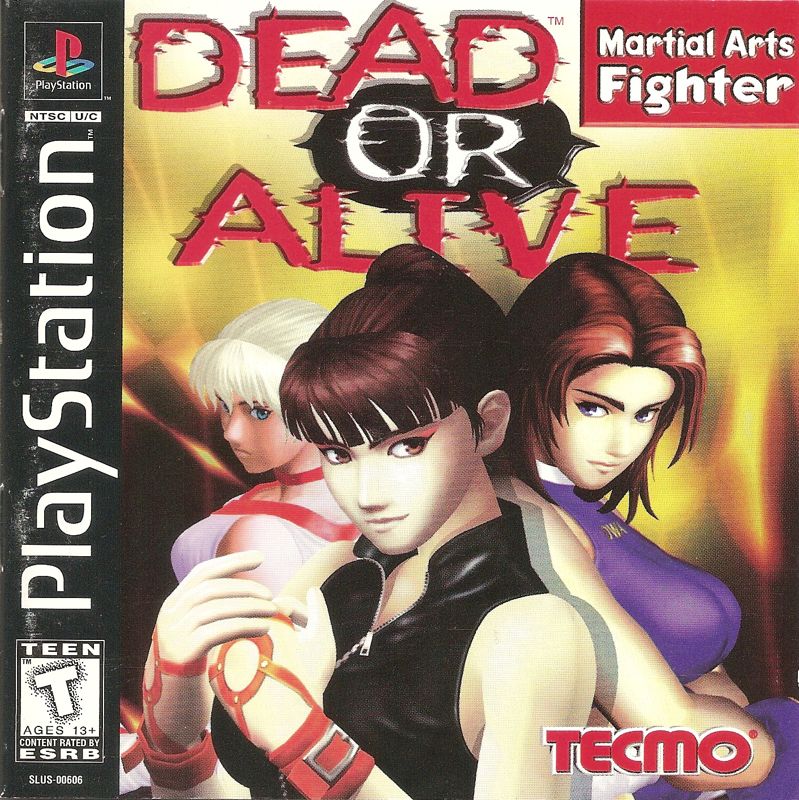
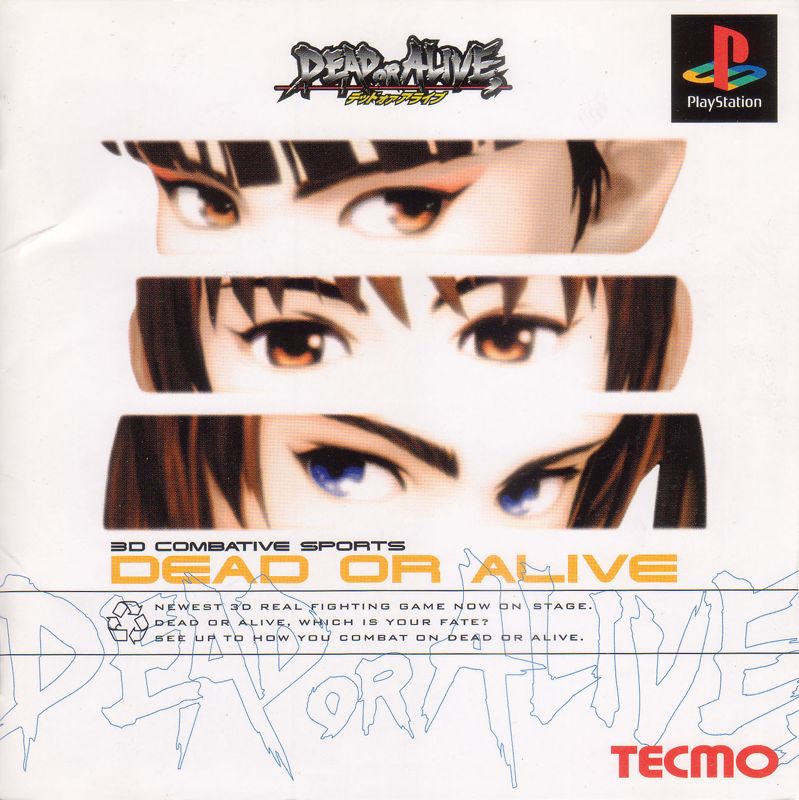
US box art
United States
The American PlayStation cover: Leifang in front, Kasumi behind her with white hair the game never gave her, Tina beside them, and a Martial Arts Fighter banner doing the explaining.
Japanese box art
Japan
The Japanese PlayStation cover is the opposite instinct: white space, three cropped strips of eyes, and the English tagline 3D Combative Sports. Same rebuild, two entirely different ways of selling it.

WHICH ONE WON?

Critics picked one, its creator picked the other

Contemporary reviewers mostly sided with the rebuild. Reviews of the PlayStation version hailed it as even better than the Saturn game, with enhanced graphics and enjoyable new content adding to the replay value, and its scores ran higher: IGN gave it 8.5 of 10 against the Saturn import's coverage, and GameSpot scored the PlayStation version 7.3 of 10 to the Saturn version's 6.8.

Tomonobu Itagaki sided with the conversion. When Tecmo built Dead or Alive Ultimate for the Xbox in 2004, the enhanced version of the first game was based on the Sega Saturn version, described in the record both as his preferred version and his personal favorite, updated with smoother graphics, surround sound, and Xbox Live online play. The PlayStation version supplied the series' future, Bass, Ayane, and the road to Dead or Alive ++. The Saturn version is the one its creator kept.

More fighting games →

THE FIRST WORD

First word on new listings, plus a subscriber promo code for the eBay store.