
How does Eiichiro Oda make One Piece?
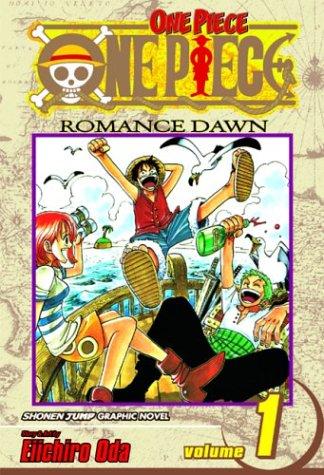
Almost everything solidly known about how a One Piece chapter gets made comes from Oda himself, in interviews Viz published for Shonen Jump readers. Put together, they describe a method built on three fixed points: one pair of hands on the characters, a stockpile of ideas kept since childhood, and an ending held in his head while everything between here and there stays negotiable.
THE HANDS
Who draws whatAt Jump Festa 2018, Viz asked him directly, and the answer is the clearest process statement he has given: "I start with the storyboards and send them to my editor. Once he says that they are good, I blow those up and place them on manga paper. I add in where the text will go and start the penciling and then the inking. I draw the characters, and then the backgrounds are added in." The division is deliberate: "I try to have the least number of people possible touching the work. If too many people are involved, I often end up not being satisfied with the final product." Assistants build the world. Anything that moves in it is Oda.
THE STOCKPILE AND THE READER OF ONE
Where it comes fromHis ideas are not improvised weekly. "I have a book with all the ideas crammed in there," he told Viz. "So I just open it up when I need something new." The stockpile exists because, in his account, everything in his life connects to the manga; meeting a stranger in town becomes raw material on the spot. New plots, he told Shonen Jump Alpha, arrive when he is tired: "humans can only come up with truly new ideas when they reach their limit. So every time I am done with my manuscript, I am completely exhausted."
And the audience for all of it is a single person. "Whenever I draw manga, I have only one reader in my mind: myself as a 15 year old." He works to soundtracks of his own making, building a playlist for each new arc and looping it while he draws. Even the page itself bends toward readers he will never meet: he changed the shape of his speech balloons because vertical Japanese balloons squeeze horizontal English text, a rare case of the export edition reaching back into the original art.
THE LONG GAME
Planted early, paid off late"I only have the ending of One Piece in my mind, and nothing else," he told Shonen Jump Alpha. "But knowing the end point, I weave the story and make story arcs that build up to it." In practice that means seeds planted with no schedule. He told Manga Tengoku that when he drew a whale named Laboon early in the series, he already knew a skeleton musician would one day explain it, and simply had no design and no date: "I just think of the rough story as these broken up tales, and as far as what order I tell them in or how long I spend on each, well that's just something where I go with whatever works best." The Fish Men were meant for chapter 3, got cut, and waited in his head until the Arlong arc. Returning villains are a system, not an accident: the defeated are usually alive, so, as he puts it, every character has the chance to return.
THE WEEK
As reported, 2015The famous schedule comes from a magazine profile reported by SoraNews24 in 2015, and this page labels it as reported rather than sworn: Monday to Wednesday, layout planning and dialogue; Thursday to Saturday, drawing and inking; Sunday, colouring and other tasks, inside a working day that the profile put at 5 in the morning to 2 the next morning, with days off rare enough to be spent talking about manga with old assistants. Read it as the shape of the routine in that era, not as a current timetable. What is documented at Tier 1 is the output it produced: a chapter, nearly every week, for twenty-nine years.