
How does Masami Kurumada draw Saint Seiya?
Hot blood, chrome armour, and a plot invented one deadline at a time.
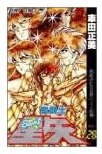
Kurumada’s route to Saint Seiya is documented in his own interviews. He first pitched a karate manga, a young fighter named Seiya, inspired by The Karate Kid (1984); the publisher refused it. Believing judo and karate lacked visual novelty, he rebuilt the idea on Greek mythology and constellations, and went looking for armour that would look like nothing in Jump. After the abrupt cancellation of his 1984 series Otoko Zaka, the aesthetic was the point: no plain school uniforms this time.
THE INGREDIENTS
What the style is made ofSorayama’s robots
The Cloths’ gleaming, segmented look was inspired by Hajime Sorayama’s 1983 illustration book Sexy Robot: chrome bodies as sculpture. Kurumada adapted the shine to Greek armour, and the practical benefit came free, armour lets a fighter survive the explosions his fights run on.
Ring ni Kakero’s bones
The mythological tournament framework was adapted from his own 1977 boxing hit Ring ni Kakero, and Seiya’s face is that series’ hero Ryuji Takane redrawn: Kurumada works in the Tezuka Star System tradition, recasting a trusted company of faces.
Impact over polish
Critics note the drawing is rough where Araki’s anime is smooth, but the composition is pure force: speed lines, double-page meteor fists, bodies at the edge of the panel. Jason Thompson’s verdict stands for many: a combat manga drawn by a man who genuinely loves combat manga’s grammar of friendship and sacrifice.
Improvised at the desk
Kurumada has said he did not pre-plan much of the story: Shun as Hades’ vessel, Hyoga against his master Camus, the dead Gold Saints returning as traitors, all arrived during serialisation, driven by fan response. Saint Seiya’s architecture feels mythic partly because it was discovered, not designed.
THE NAME ON THE COVER
Seiya, Rin, and arrowsFrom Rin to Seiya
The hero began as Rin of Ginga no Rin. The name became Seiya, first written “holy arrow”, then settled as “star arrow”, and the title Saint Seiya followed once the Saints themselves were fixed. Even the Pegasus Meteor Fist was there from the first sketches: a meteor shower you could draw.