
How is the Dragon Ball manga collected?
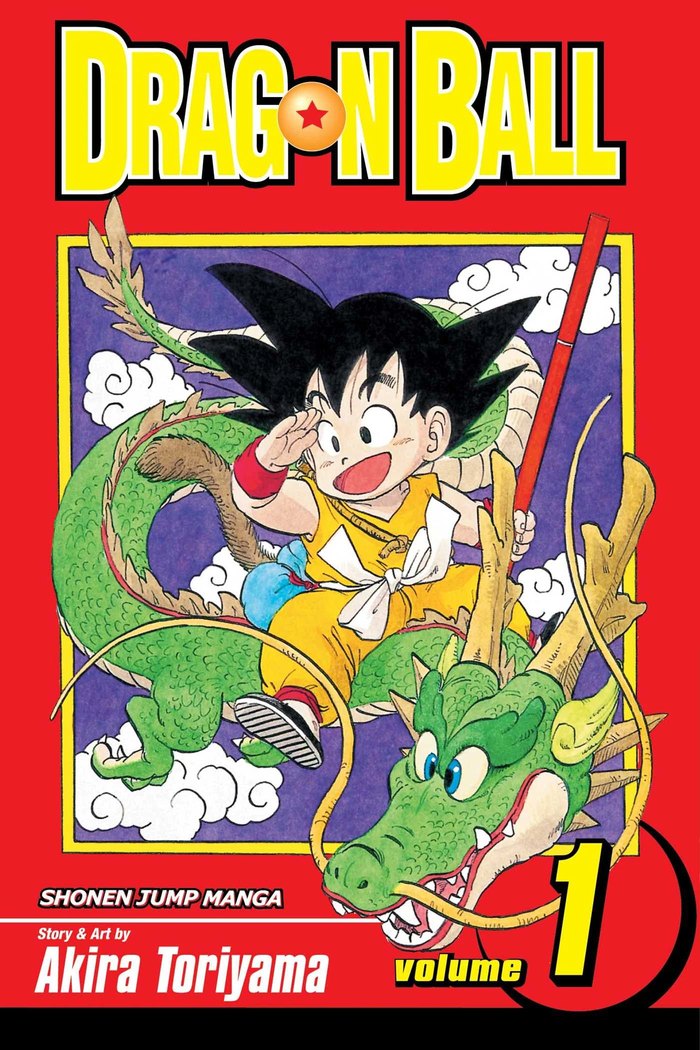
The story never changes its name at home. From November 20, 1984 to May 23, 1995, Akira Toriyama's 519 chapters ran in Weekly Shonen Jump, and Shueisha collected them in 42 tankobon volumes between September 1985 and August 1995. Those small paperbacks are the original collected shape: mostly black and white, with the magazine's color pages reduced to grey, and they are the edition the sales records describe, at 160 million copies in Japan and 260 million worldwide.
The second shape is the one collectors treat as definitive. Between December 4, 2002 and April 2, 2004, Shueisha reissued the whole run as a kanzenban, or Perfect Edition: 34 larger A5 volumes of about fifteen chapters each, on better paper, with every color page from the magazine run restored, restored artwork, and brand new cover illustrations drawn by Toriyama, each with an insert poster of its cover. The kanzenban also carries a slightly rewritten ending, the only place where Toriyama went back and revised the story itself. First printings added a stranger treasure: seventeen Dragon Ball Children pamphlets, tribute art and essays from the generation of manga artists who had grown up reading the series, Eiichiro Oda in volume 1, Masashi Kishimoto in volume 3, Tite Kubo in volume 11. No English edition of the kanzenban exists.
The third shape colors what was never colored. Dragon Ball Full Color, released from February 4, 2013, digitally colors the entire manga and reorganizes it by story arc instead of by the old volume breaks: 20 volumes covering chapters 195 to 519, the stretch television called Z, came first, and 12 more volumes covering chapters 1 to 194 followed in 2016, for 32 in all. Viz published the Full Color line in English by arc, which is why an English Full Color shelf has several different volume ones. The fourth shape is the archaeologist's: the Soshūhen Chō Gōku Den edition of 2016 to 2017, 18 large volumes printed at magazine size to recreate the Weekly Shonen Jump experience itself, color pages, promotional text, next chapter previews and foldout posters included.
America added a fifth shape that Japan never had. Viz Media split its English edition at the television border, publishing volumes 1 to 16 as Dragon Ball and volumes 17 to 42 as Dragon Ball Z, a split this Library documents on its own page. So the same 519 chapters sit on shelves as 42, 34, 32, or 18 books in Japan, and as two differently titled series in English. The manga is one thing. Its collected forms are a small library of their own.