
How to identify the genuine first printing of Weekly Shonen Jump 2018 No.14
The debut is Weekly Shonen Jump 2018 No.14, published by Shueisha. Shueisha's own series page for Jujutsu Kaisen records the serialization start as 2018 No.14, and Dengeki Online, reporting the series finale in 2024, dates that issue's release to March 5, 2018. The cover is dated March 19. Jump issues carry a cover date ahead of the day they go on sale, so a genuine copy shows both dates and neither one is a mistake.
Inside, chapter 1 is "Ryomen Sukuna," printed first in the issue in opening colour, across 54 pages as the cover itself promises. The identification work is therefore concrete: match the issue, match the cover, match the contents. The one thing this page will not invent is a first printing mark, because no source documents one. The honest limit is set out at the bottom.
THE MARKERS
What to check on the coverThe debut issue, and the book that is not it
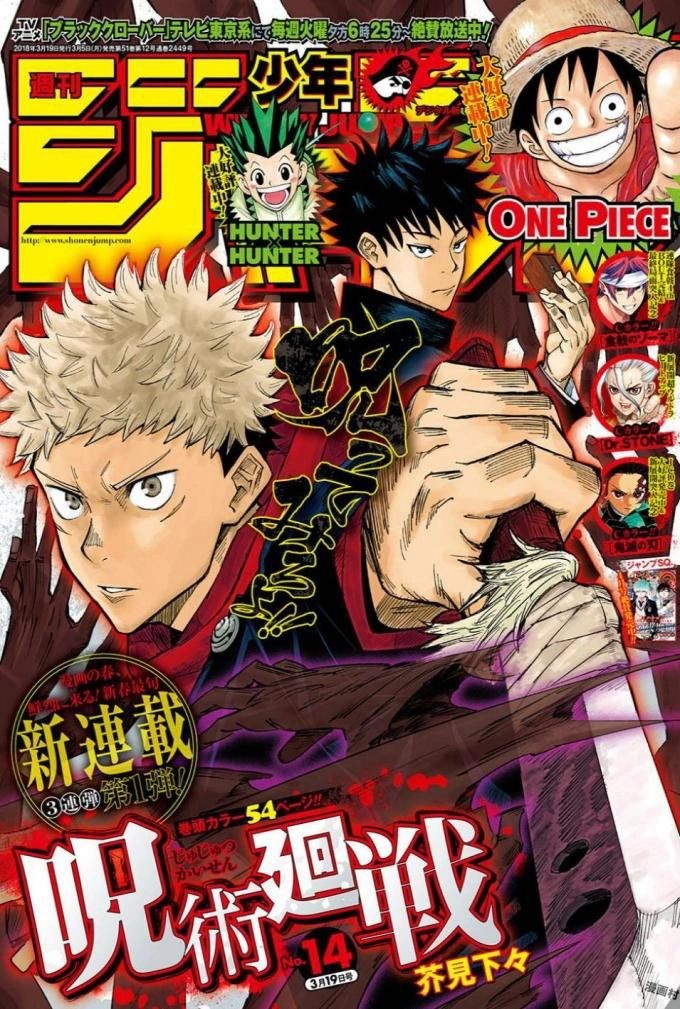
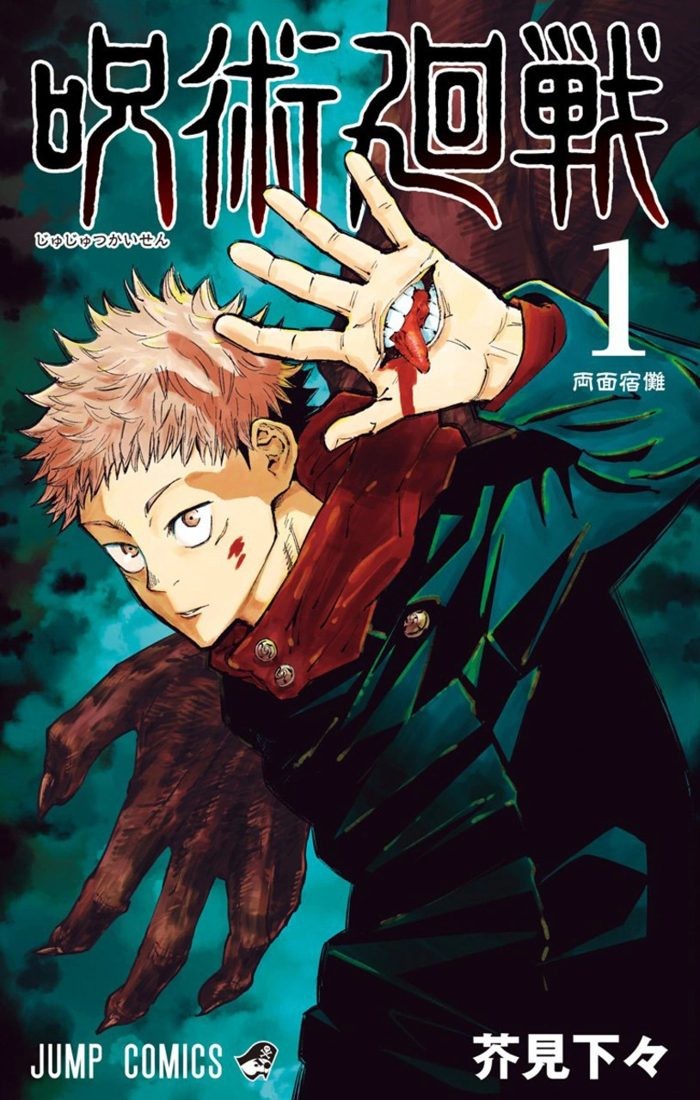
Checklist: the yellow Jump masthead; No.14 and the March 19 issue line printed at the lower right, beside the author credit for Gege Akutami; the red and gold badge at the lower left announcing a new serialization, the first of a run of three; the line promising opening colour, 54 pages; and Yuji and Megumi as the cover figures, with One Piece and Hunter x Hunter sharing the top of the cover. The paper edition's cover price was 265 yen, recorded in Fujisan's back number listing for the March 19 issue, released March 5. Cross-check inside: the chapter sits first in the issue's contents order, titled "Ryomen Sukuna," flagged as a new serialization in opening colour.
THE COMPANY IT KEEPS
What else this issue carries, per ShueishaPAPER AND PIXELS
The documented digital differencesShueisha also sells this issue digitally, through Shonen Jump Plus, and its own page for the issue documents how the two objects differ. The digital edition omits some of the bound-in supplements and serial codes, and some of the prize offers printed in the issue are paper edition promotions that digital readers cannot enter in full. In the other direction, the digital edition adds one bonus the paper issue does not have: a full colour version of Yuuna and the Haunted Hot Springs, billed on the same page as a digital edition exclusive.
So a screen copy can prove what the issue contains, but it cannot be the collectible object. The genuine first printing is a paper magazine: B5, 265 yen, with its supplements and printed offers in place.
THE HONEST LIMIT
What "first printing" can and cannot mean hereWeekly magazines are not collected volumes. A tankobon carries its printing history on its copyright page, and later printings of a volume can be told from the first. For this magazine issue, no Shueisha facsimile or reprint edition surfaced in this research, and no publisher source documents a second printing of the issue or any mark that would distinguish one. Until such a source appears, treat any claimed reprint edition as unverified.
That cuts both ways, and it is good news for a buyer: a genuine paper copy of 2018 No.14 is the original printing, because no other printing is documented to exist. When a seller adds "first print" to a listing for this issue, they are describing the issue itself, not a variant. The real traps are elsewhere. The tankobon volume 1 is a different object with different art. The digital edition is not a physical copy at all. And the number repeats: Jump publishes a No.14 every year, and 2023 No.14 also carries a Jujutsu Kaisen feature cover. Always check the year that travels with the number.