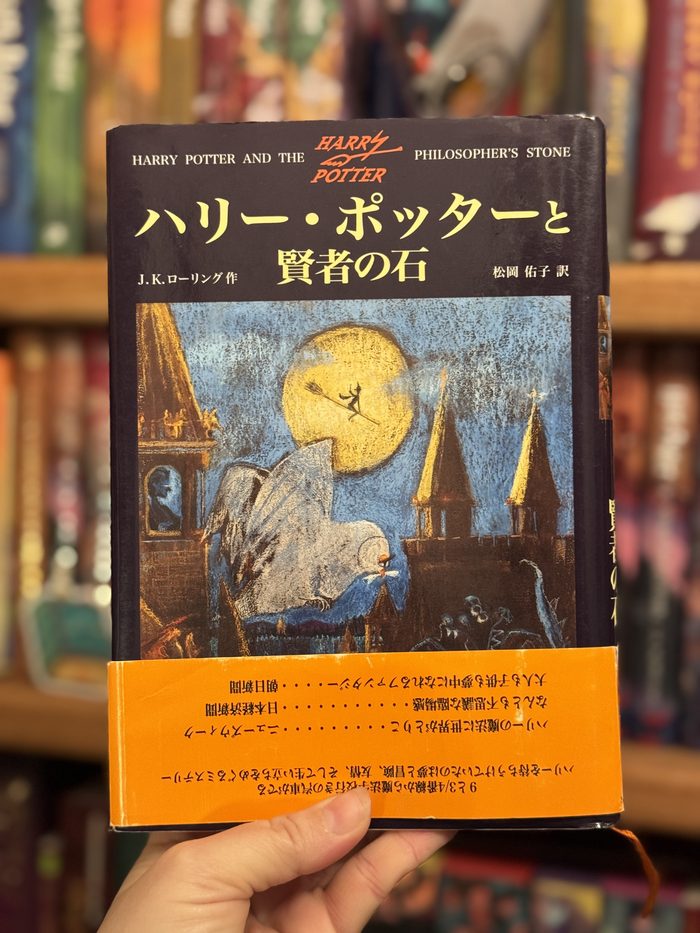
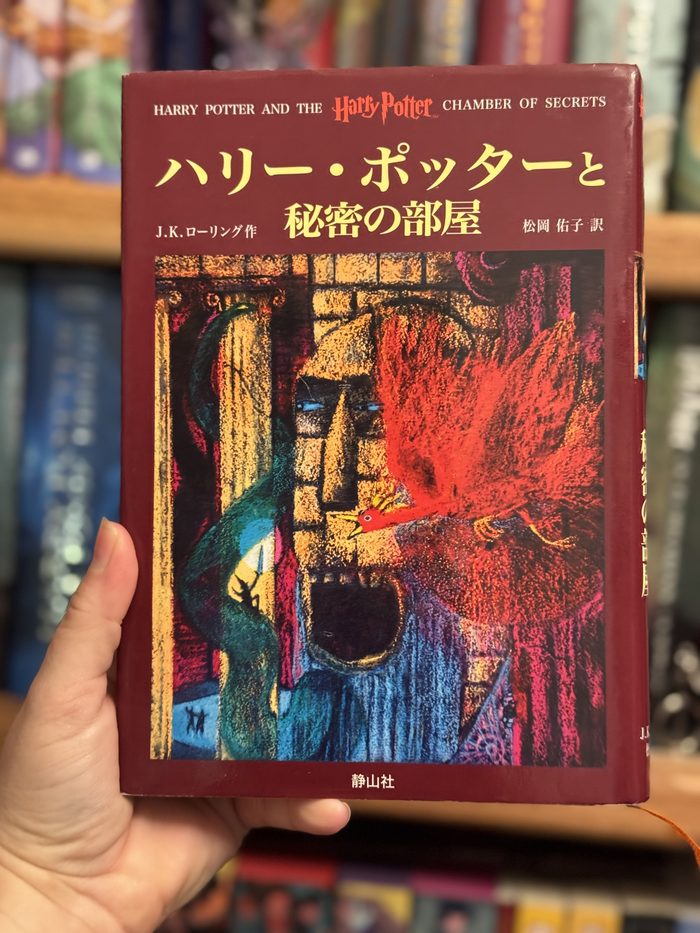
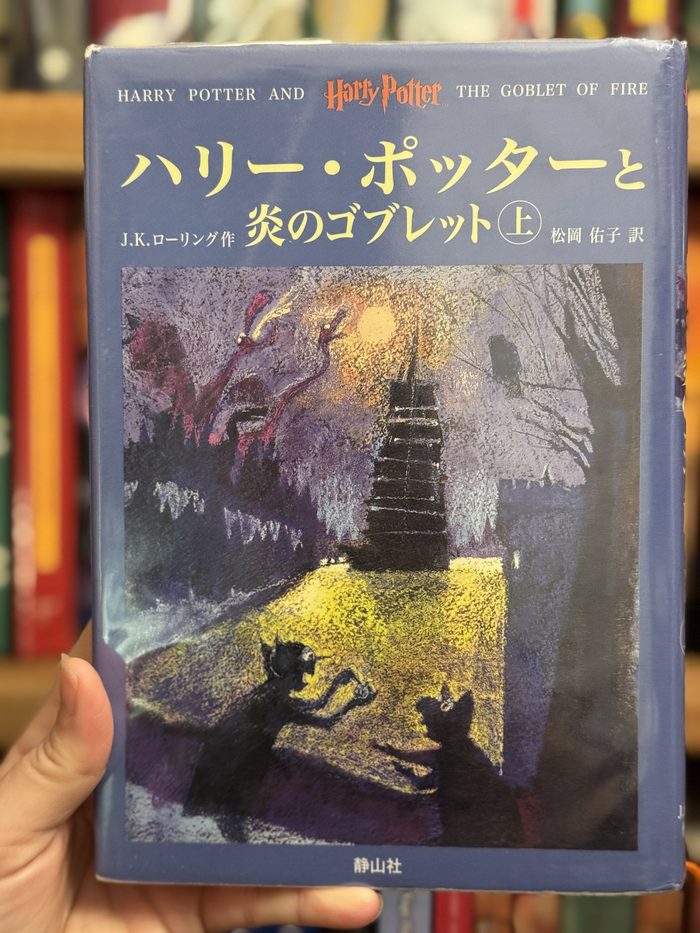
How to identify the Japanese first edition of Philosopher's Stone
Japanese books carry their own birth certificate. At the back of a Japanese hardcover sits the colophon, the okudzuke: a small printed block that names the publisher, the translator, the issue date, and, crucially, the printing. A true first printing of the Say-zan-sha Philosopher's Stone announces itself there. You do not need to guess from the cover, the obi, or a seller's description: you open the back and read the printing line.
The edition to look for is specific. Publisher: Say-zan-sha of Tokyo. Translator: Yuko Matsuoka, whose Japanese rendering became the standard text. Format: an A5 hardcover of 464 pages, listed at 1,900 yen. ISBN: 978-4-915512-37-7. Publication: December 1999. Copies meeting every one of those points, with a first printing line in the colophon, are the first edition.
One honesty note belongs on this page. This is an identification exercise, not a rarity claim. Harry Potter was a phenomenon in Japan as everywhere else, and the print runs were enormous: Philosopher's Stone sold in the millions in Japan, and the first printing of Prisoner of Azkaban alone ran to some 800,000 copies. A verified Japanese first printing is a documented, collectible object. It is not a scarce one, and any seller pricing it as if only a handful exist is selling a story the colophon does not support.
THE FORMAT, IN HAND
What the first edition looks like