How was the Hokuto no Ken anime censored?
The Toei television series (1984 to 1988, 152 episodes across its two runs) adapted a manga whose signature was men bursting from within, for broadcast on Fuji TV. The compromise is visible in every episode: the violence was toned down considerably, the gore desaturated and discolored, deaths rendered as silhouettes and black-and-white flashes, and the manga’s dead children quietly rewritten so Kenshiro arrives in time. It drew complaints from moral guardians in Japan anyway, and in France, where the series became a children’s phenomenon, it was a genuine public controversy: the politician Ségolène Royal attacked it by name in her book Le Ras-le-Bol des Bébés Zappeurs.
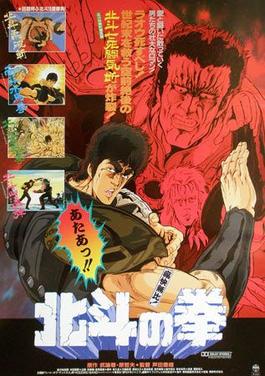
The 1986 animated film went the other way, keeping the manga’s ultra-violence intact, and the complaints followed it home: Toei censored most of the violence for later video releases in most territories, leaving the uncensored Italian VHS as the collectors’ exception, the release fans still cite when reconstructing what the film originally showed.
The long view is gentler: the full television series eventually reached North America uncut and complete, Manga Entertainment’s English dub of the first 36 episodes in the 1990s, then Discotek Media’s full-series SD Blu-ray in 2017, and the series joined Crunchyroll in 2025, forty-one years after the first broadcast, pressure points and all.