From the Library: covers, censuses, and editions, documented. Browse the Library →
SOJ Lupin III · Cagliostro · 1979
← Back to the Library

The Castle of Cagliostro

Seven and a half months of production, a quiet release, and then a forty-year coronation.

Lupin III: The Castle of Cagliostro was released on December 15, 1979, directed and co-written by Hayao Miyazaki: his first feature film, after co-directing episodes of Part I. The schedule was brutal even by the era’s standards. The project began in May 1979, storyboards ran concurrently with animation from July, and production wrapped at the end of November: seven and a half months from start to premiere, on a budget of ¥500 million (about $2.3 million at the time).

The plot is a fairy tale wearing a caper’s clothes: counterfeit “goat bills” lead Lupin to a tiny duchy, a princess named Clarisse, and a treasure under a lake that turns out to be Roman ruins rather than gold. It underperformed on release, then climbed steadily into canon: Japan’s Agency for Cultural Affairs put it fifth on its best-anime list, and its fingerprints are on everything from John Lasseter’s Pixar to Disney’s Renaissance-era adventure films.

MADE AT SPEED

May to December 1979

The 1979 poster

Miyazaki’s first feature · released December 15, 1979
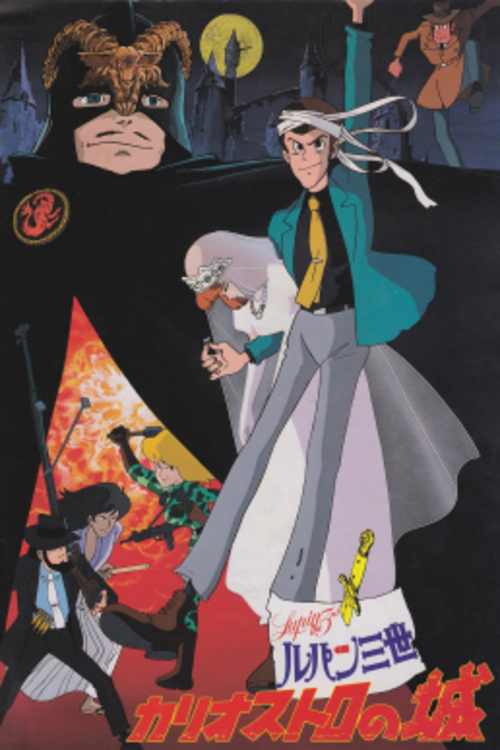
The Castle of Cagliostro Japanese theatrical poster
Toho · 1979The theatrical poster: Lupin over the clock tower, the image that introduced Miyazaki’s Lupin to the world.
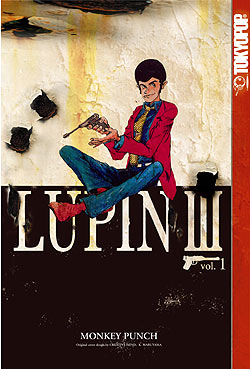
Lupin III volume 1 Tokyopop cover, Monkey Punch art
The source · 1967Monkey Punch’s Lupin as English readers first met him in print: the scheming original that Miyazaki deliberately softened into a hero.

The distance between these two images is the film’s whole story: the same character, redrawn by affection. Critics at the time debated the change; history settled it. Miyazaki’s Lupin “grew up,” and the gentler thief became the franchise’s public face.

Personal machines
Lupin’s Fiat 500 was head animator Yasuo Ōtsuka’s own car; Clarisse’s Citroën 2CV in the opening chase was Miyazaki’s first car. The film’s most famous vehicles are autobiography.
Borrowed architecture
The castle and its clock-tower machinery draw on Paul Grimault’s The King and the Mockingbird and Edogawa Ranpo’s Ghost Tower; the lake-hidden treasure descends from Leblanc’s own The Green-Eyed Lady.
The softened thief
Miyazaki’s Lupin protects rather than plunders, a change some early critics resisted. The film answers them in-story: this Lupin once tried the same castle as a young thief and failed; the hero is the criminal, ten years on.

THE LONG CLIMB

1991 to today
America, at last
The film reached US theaters on April 3, 1991, over a decade late, in Streamline Pictures’ dub; home video followed in 1992, and Manga Entertainment’s redub came in 2000. A third English dub arrived with Discotek’s 2025 edition.
The template
The 2019 CGI feature Lupin III: The First openly models its plot structure on Cagliostro: the franchise now remakes its own classic the way studios remake founding myths.
Lupin III: The First →
What was Cliff Hanger? →
MORE FROM THE LUPIN III ARCHIVE →
One shelf of the Library. Browse them all →

THE FIRST WORD

New pages and new pieces, first.