From the Library: covers, censuses, and editions, documented. Browse the Library →
SOJMonster Hunter · Generations
← Back to the Library

What were Hunting Styles and Hunter Arts?

Generations let you rebuild your own hunter: four fighting styles and a super move for every one of the fourteen weapons.

Monster Hunter Generations arrived in Japan as Monster Hunter X (‘Cross’) on November 28, 2015, reaching the West the following July. The X was a thesis, as producer Shintaro Kojima explained: cross divides a space into four, so the game offered four Hunting Styles, four flagship monsters, and four villages, three of them returning hometowns from earlier games.

The Hunting Styles rewired every weapon: Guild, the classic style; Striker, simplified and aggressive; Aerial, built around vaulting off monsters; and Adept, rewarding perfect dodges with counter-attacks. Hunter Arts added charged super moves, and Prowler mode let you play as a Felyne outright. The expanded XX (2017) and its Switch edition, Generations Ultimate (August 28, 2018), pushed the bestiary to the largest the classic formula ever held, and Ultimate’s 5.4 million copies made it the biggest game of the pre-World era.

THE FATED FOUR

Four flagships, four biomes
Astalos · the thunder wyvern
A green, lightning-charged wyvern that stores electricity in its wings, tail, and crest, crackling visibly as the fight builds.
Gammoth · the mountain
A woolly, mammoth-like giantess whose legs arrive snow-caked and weaponised. The largest fanged beast of her generation.
Mizutsune · the bubble fox
A leviathan that fights with dances and slicks the field with bubbles, blinding and slipping hunters. All grace, no mercy.
Glavenus · the sword tail
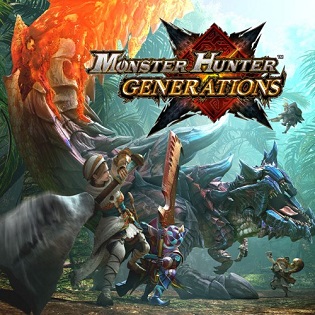
A brute wyvern that sharpens its own tail-blade in its teeth and breathes fire down the edge. The cover monster, and the era’s fan favourite.

THE COVER

Key art
Monster Hunter Generations key art, 2016
Generations · Key art · 2016
Glavenus breathes fire down its own tail-blade while Mizutsune coils at the frame’s edge: the Fated Four era in one crowded canvas.
Four flagships, one frame
Generations bends the single-portrait rule to match its thesis: four flagships, four styles, four villages, all in one composition.
The Prowler, present
A Felyne ally stands in the party’s front rank: Prowler mode, advertised in the cover art itself.

More from the Library

MORE FROM THE MONSTER HUNTER ARCHIVE →
One shelf of the Library. Browse them all →

The First Word

New pieces reach subscribers first, before they are listed anywhere. One short letter, only when there is something worth your time.