
Nintendo Explains the Ocarina Remake: A Jump Button, a Fixed Water Temple, and Voices at Last
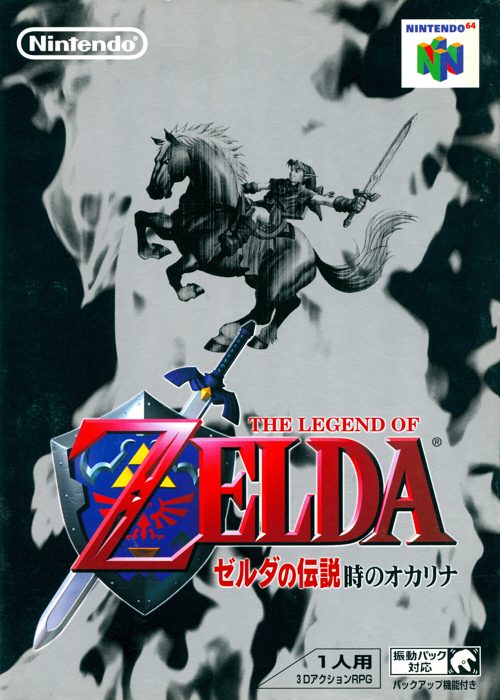
Nintendo closed out its Ask the Developer Vol. 24 interview series today, publishing parts three and four on November 3, two days before The Legend of Zelda: Ocarina of Time launches on Switch 2 on Thursday, November 5 at $59.99. Parts one and two arrived on November 2.
The credits question is settled. The remake was built in-house by Nintendo EPD Production Group No. 3, the team behind Breath of the Wild and Tears of the Kingdom, not by an outside studio. HokWai Ng directs, his first directing credit at Nintendo, with series producer Eiji Aonuma and Hidemaro Fujibayashi producing, Aya Shida on art direction, Hiroki Taguchi on programming, and Masato Ohashi leading the music. Aonuma says he set the project up as a lesson: rebuilding the 1998 game would teach the current Zelda team how it was made, and the insights would carry into future games in the series' 40th anniversary year.
The art direction follows the same thinking. The team considered a richly detailed, realistic world, then chose a handmade look instead, guided by puppet theatre and the practical effects of older films. Nintendo also brought back the illustrator of the Nintendo 64 version to draw a new map for the remake. One modern idea did not survive: Aonuma asked for Breath of the Wild style warp points, the team built them, and he had every one removed after testing, because fast travel skipped the discoveries the game is built around. Hyrule keeps its separate area maps rather than going seamless.
Part three covers how the game plays. Link can now jump freely with a button, where the original jumped automatically at ledges, and Young Link and Adult Link jump different distances, which meant reworking terrain across the game. Holding the roll button becomes a dash. The Jump Attack works both ways, the original single button press and the newer jump, then attack. Aonuma, who designed the original Water Temple, calls fixing it his overdue homework: the Iron Boots now sit on a D-pad shortcut instead of a menu, and some solid dungeon walls are now lattice, so players can see into the next room and hold their bearings. Even Gohma teaches better, covering its weak point with its arms whenever it cannot be hurt.
Part four is sound. The remake carries more than 150 pieces of background music, recorded with a full orchestra where the track earns it and kept to small arrangements where it does not. The cutscenes are fully voiced, a first for Ocarina of Time. Casting ran as blind auditions in Japan, names hidden, and one actor the team picked turned out to have voiced the same character in the Nintendo 64 original. Navi's "Listen!" was never going to change. The ocarina itself sounds different depending on where Link plays it, and players can hum a learned melody into the Switch 2 microphone and have Link play it back. A new Threads of Time feature lays the story out as an illustrated tapestry that fills in as you progress.
Nintendo kept this remake in-house and treated it as training for the team that makes Zelda now, which marks it as a flagship release rather than a contract remaster. For collectors, Thursday starts a new physical era for the most collected game in the series, and launch week is when the 1998 original, its guides, and its first printings get their loudest anniversary attention. The disciplined move is the same as it was for Terranigma: watch the window, do not chase it.
On the shelf: our launch coverage, The Ocarina of Time Remake Launches Thursday, and the Zelda shelf in the Library.
Source: Nintendo, Ask the Developer Vol. 24, parts 1 and 2 published November 2, 2026, and parts 3 and 4 published November 3, 2026; team details also reported by Nintendo Life and IGN, November 2, 2026.