From the Library: covers, censuses, and editions, documented. Browse the Library →
SOJ Sweet Home · The Gallery
← Back to the Library

The Sweet Home Gallery

One film, one game, one haunted house, and a single painting that sold them both.

This gallery holds the physical evidence of Capcom's 1989 horror RPG: the Famicom box, the theatrical poster for Kiyoshi Kurosawa's film of the same name, and the paper and plastic that survive with them.

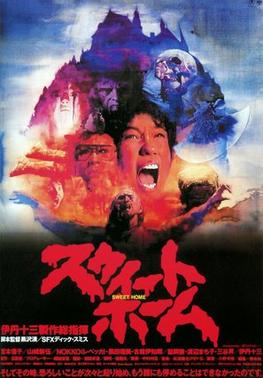
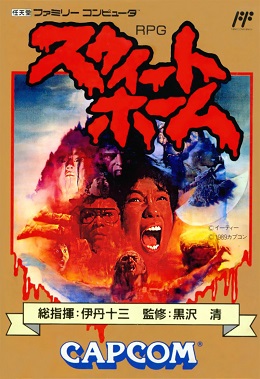
Sweet Home was made twice at once, as a film released in January 1989 and as a game released that December, and the art proves it. The game's cover is the film's poster, and the game's box credits the film's producer and director by name.

THE PAIR

Poster and box, side by side

One painting, two covers

Same collage · two objects · eleven months apart
Sweet Home Japanese theatrical poster, 1989
The film poster · January 1989Toho's theatrical poster for Kiyoshi Kurosawa's film: the crew's faces inside a painted collage of the Mamiya mansion, the title in dripping red.
Sweet Home Japanese Famicom box art, 1989
The game box · December 1989Capcom's Famicom box reuses the poster's collage, adds the RPG header, and prints a credit banner across the bottom: general supervisor Juzo Itami, supervisor Kiyoshi Kurosawa.

The game did not borrow the film's poster so much as inherit it. Capcom's box is the Toho poster reworked for a cartridge: the same painted faces, the same burning house, the same blood-red title lettering. Even the credits cross over. The banner on the game box names the film's producer and director before it names anything about the game, because in 1989 the two were sold as one project in two forms.

THE OBJECTS

What survives of Sweet Home
Sweet Home Famicom box, Capcom 1989
The Famicom box
Capcom · December 15, 1989. Sold for 6,500 yen before tax. The box is the rarest part of a complete copy today.
Sweet Home theatrical poster, Toho 1989
The theatrical poster
Toho · January 21, 1989. The painting the game's box art was adapted from.
The cartridge
Catalogue code CAP-EH. A 2 megabit cartridge with battery-backed save memory, so the mansion remembers who is still alive. After more than three decades, an unserviced battery is a maintenance question, not a guarantee.
The manual
Forty pages, ending with two pages of playing tips. Fan archivists have scanned and transcribed the whole manual, with an English translation, which is how most Western players have ever read it.

READING THE ART

What the collage tells you
Photographs, not sprites
The box art is a photographic collage of the film's actors composited into a painted mansion. No 8-bit game could look like this, and that was the point: the box sells the film's dread, not the cartridge's pixels.
The title lettering
The katakana title is drawn as dripping blood on both poster and box, one of the most recognisable pieces of horror lettering on the Famicom.
The faces
The collage centres on the film's cast, including Nobuko Miyamoto as Akiko, the crew's director and the story's heroine in both versions.
The History of Sweet HomeMovie or game first?How did Sweet Home lead to Resident Evil?
MORE FROM THE SWEET HOME ARCHIVE →
One shelf of the Library. Browse them all →

THE FIRST WORD

New pages and new pieces, first.