The History of Alien Soldier
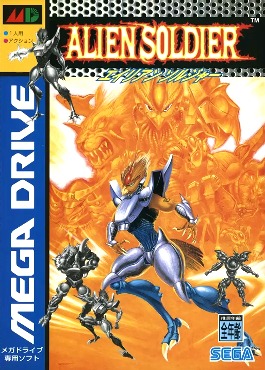
Alien Soldier (Mega Drive, February 24, 1995 in Japan) is Treasure's boss focused run and gun, led by Hideyuki Suganami. Epsilon-Eagle fights through 25 short stages and 26 bosses to retake his organization and avenge his near death.
THE MAKING
One man, then reinforcementsAfter Gunstar Heroes, Treasure split into four teams; Alien Soldier was Hideyuki Suganami's. He began as sole designer and programmer, wanting to see if one person could build the whole game, for the 16-bit Mega Drive on purpose even as 32-bit machines arrived. The plan was enormous: a huge backstory, and at one point 100 bosses. The deadline was January 3, 1995. Suganami worked through the New Year holidays, staff were added when it became clear one man could not finish, most of the backstory was cut to a single opening text scroll, and about half the original ideas shipped. Treasure later pushed back on the incomplete label: what was cut was ambition that was never built, not a finished design left in pieces.
The game announces its audience on its own title screen: for Mega Drivers custom, beside the slogan Visualshock! Speedshock! Soundshock! The difficulty settings are named Supereasy and Superhard, and Superhard removes passwords and unlimited continues.
THE DESIGN
Twenty five stages that are really twenty six bossesThe structure inverts Gunstar: 25 short stages and 26 bosses, the levels serving as downtime between fights. Epsilon-Eagle carries four of six weapons at once, dashes, hovers, double jumps, turns enemy bullets into health with a timed counter, and at full health the dash becomes the Phoenix Force attack. Seven Force, Gunstar's transforming boss, returns among the fights. There is no two player mode at all: this is a solo examination.
Composer Norio Hanzawa scored it, and retrospective reviewers single out the soundtrack alongside the graphics and intensity.
THE RELEASE AND RECEPTION
No American cartridge, then a 200 dollar cartJapan February 24, 1995; Europe May 26, 1995. North America got no cartridge at all: the game arrived only through the Sega Channel cable service, which is why the American physical record is a gap, not a box. Low production and strong word of mouth made the Japanese and PAL cartridges rare and expensive, over 20,000 yen, about 200 US dollars, in Japanese used game stores by 2006. The first re-release was the PlayStation 2 Treasure Box in 2006, followed by the Wii Virtual Console worldwide in 2007.
Famitsu was cool at 24/40. Mean Machines Sega gave 85 and called it a real gameplayer's game and a modern classic. The Virtual Console reviews settled the reputation: GameSpot 8, IGN 8, Eurogamer 8, Nintendo Life 8, each praising the intensity while warning about the learning curve.
THE GAME ON THE SHELF
Alien Soldier · Mega Drive