
The History of Ape Escape
Ape Escape, Saru Get You at home, reached North America and PAL regions on June 22, 1999 and Japan on June 24, 1999. Developed by Sony Computer Entertainment Japan under director Masamichi Seki, with producers Susumu Takatsuka and Takafumi Fujisawa and music by Soichi Terada, it was the first game that required the DualShock controller: no twin-stick pad, no game. It scored a 90 on Metacritic and earned a Platinum and Greatest Hits reissue in the West and a Best Of edition in Japan.
THE TWO COVERS
The monkeys are the cover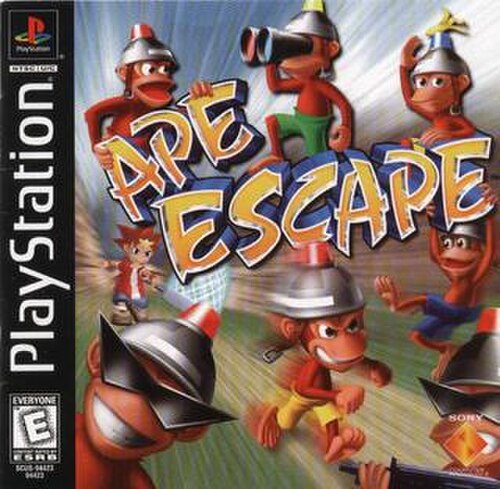
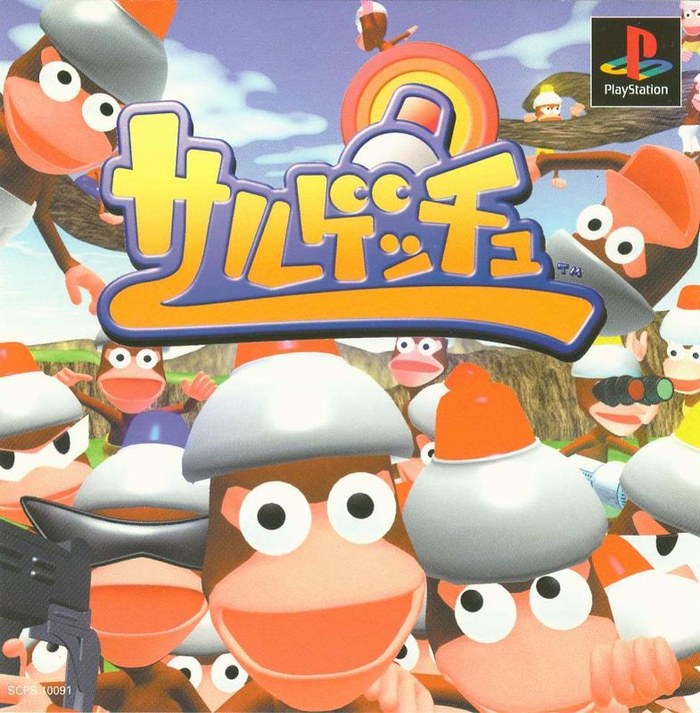
THE MAKING
Three people, then twenty-fiveThe game began with a three-person prototype team: Takatsuka, formerly of Sega's AM2, with Yuji Yamada and Takamitsu Iijima, setting out to make an open-field 3D game in the spirit of what Super Mario 64 had proven. The team grew to about twenty-five people over two and a half years. Shuhei Yoshida joined as executive producer and Kenji Kaido came aboard, and the decisive meeting was not about levels at all: it was the DualShock development meeting, after which the game was rebuilt around the new controller. Controls became the project's greatest challenge and its whole identity.
The design problem was navigation: in open 3D fields, players get lost, so the team gave them animals to chase, visible and readable at distance. The field narrowed to monkeys on the strength of Iijima's Pipo monkey design, and the monkeys got helmet sirens that broadcast their state, blue relaxed, yellow alert, red alarmed, with shorts colours marking personality. Every monkey has a name and a personality of its own, a small decision that turned catching them into collecting characters and powered the game's replay value.
THE MUSIC
Breakbeats at running speedSoichi Terada composed the score on an Akai S1000 sampler after a director heard his track Sumo Jungle and hired him on the spot. The music runs at high speed because the game does: it is chase music, all breakbeats and bright electronics, and it reacts to play, dropping its drums and bass when Spike drops into a sneak. The soundtrack's reputation long outlived the disc; it was finally released as Ape Escape Originape Soundtracks on November 18, 2011, on Terada's own Far East Recording label.
Reviews at launch praised the controls, the graphics, and the music, with the voice acting as the standing complaint, GameSpot calling it uniformly atrocious in an otherwise warm 8.8. IGN scored it 9.5 and Famitsu a straight set of 8s. The control scheme's real test came later and sideways: the PSP remake, On the Loose, had no second stick to swing the net with, and its Metacritic score fell to 66 against the original's 90. The two sticks were not a gimmick. They were the game. That story has its own page on this shelf.