
From the Library: covers, censuses, and editions, documented. Browse the Library →
SOJ Ape Escape · The Two Sticks
← Back to the Library

Why did Ape Escape need two analog sticks?

Because one stick walks, and the other one catches.

Ape Escape was the first game ever to require Sony's DualShock controller, the twin-stick pad that became the template for nearly every controller since. The division of labour is the whole design: the left stick moves Spike, and the right stick operates his gadgets, swinging the monkey net in whatever direction the player flicks. Catching a running animal with a separate hand, while your other hand runs, is the game. Remove a stick and you have removed the verb.

THE TWO COVERS

One hunt, two names
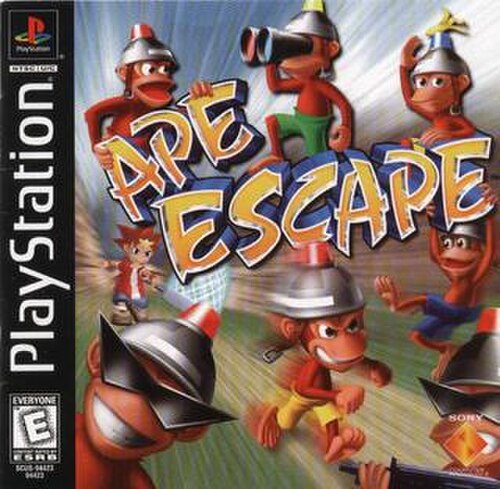
Ape Escape American PlayStation box art, 1999
America · 1999
The American box sells the quarry, not the hunter: the monkeys and their siren helmets fill the frame.
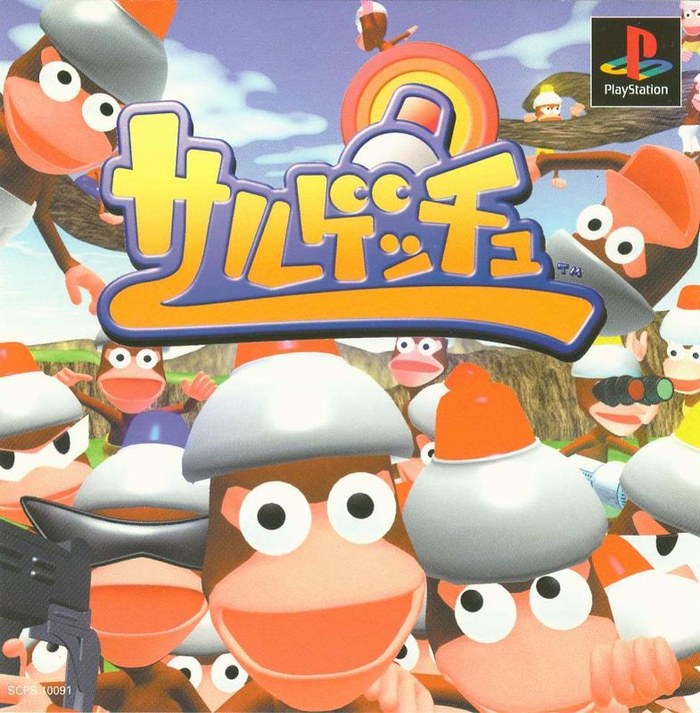
Ape Escape Japanese PlayStation box art, Saru Get You, 1999
Japan · 1999 · Saru Get You
In Japan the same crowd stares out under the name Saru Get You. The helmet light colours, blue, yellow, red, tell a player each monkey's mood at a glance.

THE SCHEME

Convention, deliberately broken
The Left Hand
Locomotion only. The left stick runs Spike through open 3D fields, the job every platformer of the era gave its one stick.
The Right Hand
Tools only. Flick the right stick and the gadget acts in that direction: the net sweeps, the club swings, the hula hoop spins. Direction is aim, and aim is physical.
The Jump That Moved
With both sticks spoken for, jumping left the face buttons entirely and moved to the R1 and R2 shoulder buttons, while the shape buttons cycled the gadget inventory. Players called it strange for an hour and natural for a decade.
The Requirement
This was not a recommendation printed on the box. The game was designed around the DualShock from the prototype stage, after its team attended Sony's DualShock development meeting, and it would not play on the original digital pad.

THE PROOF

The remake that lost a stick

History ran the control experiment. In 2005 the PSP remake, Ape Escape: On the Loose, brought the game to a handheld with a single analog nub. The net had to be rethought around buttons, the finely tuned feel of the original went with the second stick, and the score gap is the receipt: the original holds a 90 on Metacritic, the remake a 66, with GameSpot's review lamenting exactly the lost control.

Read that way, Ape Escape is a hardware argument that happened to be a hit. Twin sticks are now so standard that the scheme reads as obvious, but in 1999 Sony Japan bet a flagship game on a peripheral many players did not yet own, and the bet is why the game exists in its final shape. The monkeys, after all, are not hard to outrun. They are hard to catch with one hand.

The full story: The History of Ape Escape →More from the Library →
MORE FROM THE 3D PLATFORMERS ARCHIVE →
One shelf of eighty-two in the Library. Browse them all →

THE FIRST WORD

New pages and new pieces, first.