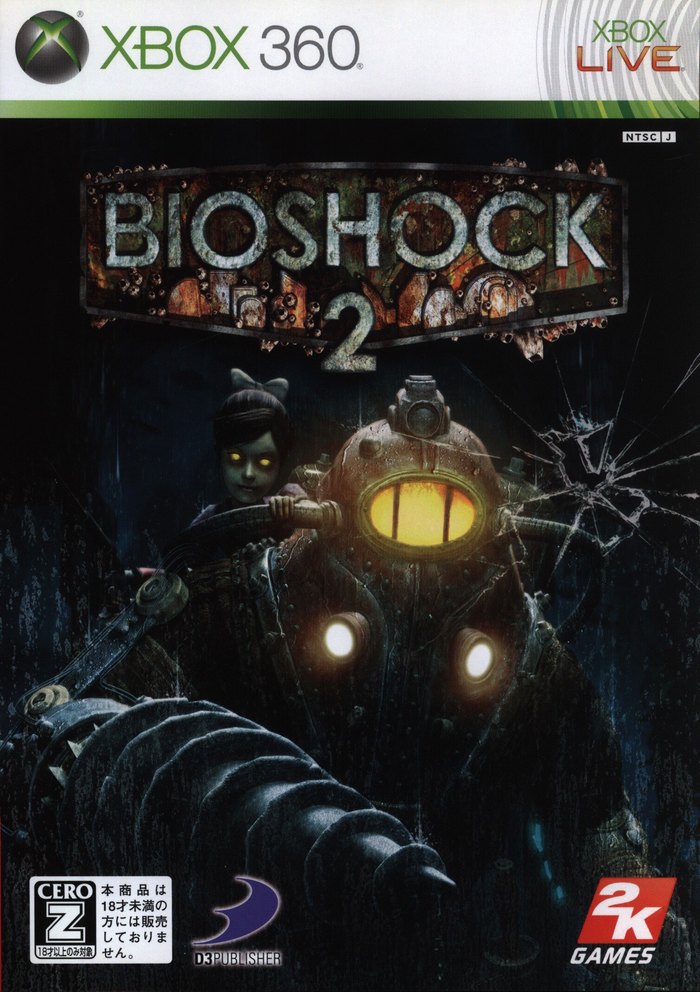
The History of BioShock 2
BioShock 2 (February 9, 2010) returns to Rapture eight years on, with the player inside the diving suit this time, as Subject Delta, the first Big Daddy. It scored 88 on Metacritic and sold more than 3 million copies, a success its publisher still called below expectations.
THE MAKING
A studio founded to make it, 2007 to 2010After the first game, 2K asked Ken Levine's studio to make the sequel. They passed. Instead, several ex-BioShock developers formed a new studio in Novato, California in late 2007, 2K Marin, and began with a core team of eight, growing to 78 more staff at peak, across five countries. They worked under three mandates: ship on PlayStation 3 from day one, include a multiplayer mode, and deliver within two and a half years. Jordan Thomas, who had built the first game's Fort Frolic level, directed; Garry Schyman returned to compose, widening the palette toward blues and religious music.
The design brief was a change of vantage. The first game made you a stranger stumbling into Rapture; the sequel makes you an insider, a Big Daddy bonded to one Little Sister, Eleanor, and dying if the bond stays broken. Thomas framed the theme as the mirror of the first game: where BioShock examined extreme individualism, BioShock 2 examines its collectivist opposite, in Sofia Lamb's Rapture Family. The story changed heavily in development, including an early version with a single, undefeatable Big Sister.
THE GAME
Delta, Lamb, and the sistersOn New Year's Eve 1958, psychiatrist Sofia Lamb forces Subject Delta to shoot himself in front of the Little Sister he is bonded to, her daughter Eleanor. He wakes in 1968, resurrected, with the bond killing him by inches until he reaches her. The sequel's systems serve that premise: Delta wields a weapon and a plasmid at the same time, adopts Little Sisters and defends them while they gather ADAM, and is hunted in turn by the fast, fragile Big Sisters. The story-driven multiplayer, built by Digital Extremes, steps back before the fall, into Rapture's civil war.
MINERVA'S DEN
The expansion that outlived the argument, 2010The final piece of downloadable content, Minerva's Den (August 31, 2010), is a self-contained campaign by a small 2K Marin team led by Steve Gaynor. As Subject Sigma, another Alpha Series Big Daddy, the player crosses Rapture's central computer district in a story about the machine that runs the city and the men who built it. It was received as the sequel's finest hours: reviewers at Kotaku and Paste have counted it among the best video game expansions ever made, and its reputation has only grown since.
THE EDITIONS
One street date, a new Japanese houseTHE RECEPTION
Praise, with the dissent keptTHE LEGACY
The reappraised sequelBioShock 2's reputation has risen steadily since release. Retrospective reviews are warmer than the launch coverage, and some critics now call it the best game in the series, pointing to its combat, its endings, and Minerva's Den. It also carried the series through its one change of hands, proving Rapture could be built by a studio other than the one that invented it, a fact the franchise's later history kept using.
THE GAME ON THE SHELF
BioShock 2 · Japan