
The History of Bloody Roar
In the summer of 1997, Japanese arcades got a 3D fighting game with a hook nobody else had. Its fighters did not just hit harder as a match went on. At the press of a button, once a meter had filled, they turned into animals: a wolf, a tiger, a lion, a rabbit, each form faster and stronger than the human underneath, with new moves and a portion of lost health restored.
The game was Bloody Roar, developed by Raizing, the studio that would become Eighting, and published by Hudson Soft. It moved to the PlayStation within months, earned some of the strongest fighting game reviews of its season, and started a five game series. This is how it was made, how it was received, and what it left behind.
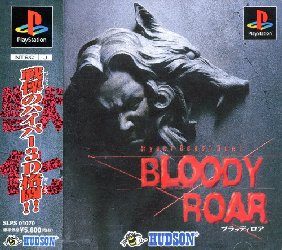
THE TWO COVERS
Same game, two sales pitches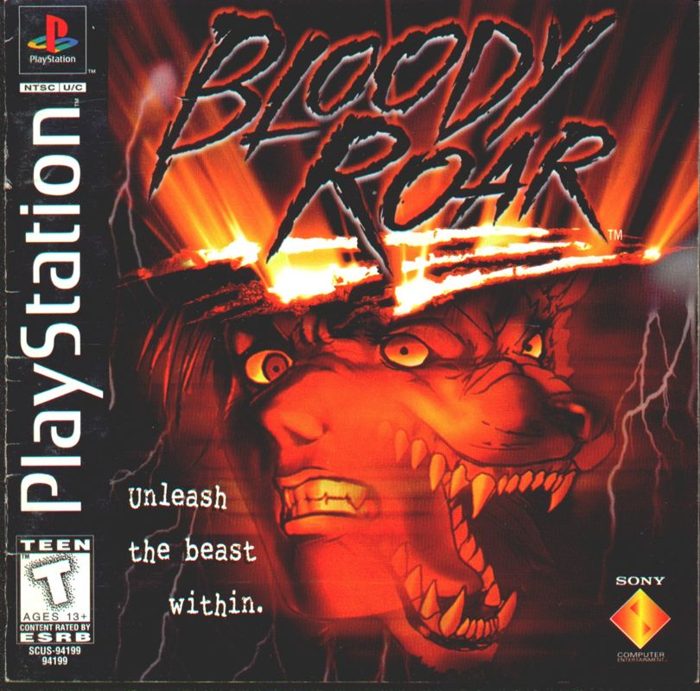
HOW IT WAS MADE
Raizing, Hudson Soft, and one good ideaTHE RELEASE
Beastorizer in the arcade, Bloody Roar at homeThe arcade game launched in Japan in July 1997. In North American arcades it carried a different name, Beastorizer, and the PlayStation version was shown at E3 1997 under that title before the Bloody Roar name won out at home. In Japan and Europe the home game kept a longer title, Bloody Roar: Hyper Beast Duel.
The PlayStation version reached Japan on November 6, 1997, Europe on January 16, 1998 through Virgin Interactive, and North America on March 5, 1998 through Sony Computer Entertainment. Eight fighters made the roster: Yugo the wolf, Alice the rabbit, Long the tiger, Gado the lion, Bakuryu the mole, Fox the fox, Mitsuko the boar and Greg the gorilla, with the chimera Uriko waiting as the final boss.
HOW IT WAS RECEIVED
Fast, fluid, and a little short on fightersWHAT IT LEFT BEHIND
A short series with a long shadowBloody Roar did something no major rival was doing: it made transformation itself the strategy. The Beast meter, the health recovered in beast form, and the risk of being beaten back into human shape gave every round a second decision underneath the fighting, and the series spent four sequels refining it.
The sequels came quickly: Bloody Roar 2 in arcades in 1998, Bloody Roar 3 in 2000, Bloody Roar Extreme for GameCube and Xbox in 2002, and Bloody Roar 4 in 2003. The first two games returned as PS one Classics downloads in 2008 to 2010. The idea at the center of the series, a fighter who becomes an animal mid match, still has no true successor, which is a large part of why the original keeps its cult standing.