
The History of Breath of Fire IV
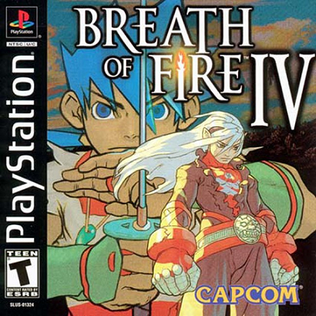
Breath of Fire IV (PlayStation, 2000), subtitled Utsurowazaru Mono, "the unfading ones," is the series' most ambitious piece of storytelling: a god summoned imperfectly and split between two bodies, the ancient emperor Fou-Lu and the amnesiac boy Ryu, whose stories the player alternates until they collide. It was built by Capcom Development Studio 3, largely the team that had made the third game, and it is the last Breath of Fire built on the classical model.
THE MAKING
Studio 3, one month after the PlayStation 2Development sat with the same core as Breath of Fire III: Makoto Ikehara directing, Hironobu Takeshita producing, Tatsuya Yoshikawa on character and graphic design. Composer Akari Kaida had left, and Yoshino Aoki wrote the score alone, trading the third game's jazz for Asian musical traditions. The game launched in Japan on April 27, 2000, one month after the PlayStation 2, into a market already looking at the next machine.
Yoshikawa has since described the road not taken: he wanted the whole game, backgrounds included, drawn in pixel art, as a culmination of Capcom's sprite craft. Management required 3D environments and polygonal bosses and dragons instead, and the finished game is the treaty between the two positions: sprite characters and enemies in hand-drawn detail, polygons reserved for the largest things in the world.
THE DESIGN
Two storylines, six fighters, one combo chainThe structure is the experiment. The game opens with Nina and Cray searching for Nina's missing sister Elina, finds Ryu naked in a desert crater with nothing but his name, and then begins cutting away to Fou-Lu, awake in his tomb after centuries, reasserting himself over the empire he founded. Fou-Lu is playable, and overpowered by design: the antagonist's chapters are played from inside his grievance.
Battles run six party members in two lines, three in front and three behind, with the lines swappable once a turn, and the new Combo System lets spells and skills cast in sequence fuse into stronger effects. The Master apprenticeships of the third game return, and Ryu's dragon transformations, fully polygonal, are the series' most elaborate.
THE BOX
THE EDITIONS
PlayStation, Windows, PSN, and a 2025 returnTHE RECEPTION
The strongest scores of the seriesThe contemporary complaint was timing rather than quality: arriving a month after the PlayStation 2, the series' most polished traditional entry was easy to miss, and much of its reputation was assembled afterward.
THE LEGACY
The classical line ends hereBreath of Fire IV is the last entry to carry a numeral in the West and the last built on the series' classical structure. Its world proved the most durable of the five: it received the mobile spin-offs, the fishing game's expansion, and the series' one full manga adaptation. The fifth game, shelved beside this one, kept the staff and discarded nearly everything else.