
The History of Dragon Force
Dragon Force (Sega Saturn, 1996) is a strategy RPG in the literal sense: half battlefield spectacle, half administration. Eight rulers of the continent of Legendra each lead a full campaign, their generals commanding up to a hundred soldiers apiece, so that a single clash puts as many as two hundred troops on screen in real time. The contemporary press reached for Braveheart as the comparison, and EGM named it both the Saturn game and the strategy game of 1996.
THE MAKING
J-Force and Sega, to March 1996Dragon Force was developed by J-Force with Sega, directed by Tomoyuki Ito, with art by Koh Tanaka, writing by Makoto Goya, and music by Tatsuyuki Maeda. It released in Japan on March 29, 1996. The American edition came from Working Designs on December 12, 1996, and Sega Europe, publishing the game in August 1997, used the Working Designs translation under license, an arrangement that tells you how the era's localization economy worked: one English text, licensed back across the Atlantic.
THE DESIGN
War on the field, rule in the weekEach of the eight rulers, from the knight Wein to the sorcerer Goldark, plays a complete campaign across the same continent, and two campaigns, Goldark's and Reinhart's, unlock only after others are finished. Battles open with a choice, Talk, Attack, or Retreat, and negotiation can end a war before it starts. Between campaigns of conquest comes the administration phase, a weekly rhythm of awarding medals to generals, persuading captured enemy officers to defect, fortifying castles, and recruiting. The design's argument is that ruling is a mechanic, not a cutscene: the map you govern between battles is the same map you fight over.
THE EDITIONS
Two covers, two moodsThe rulers, painted twice
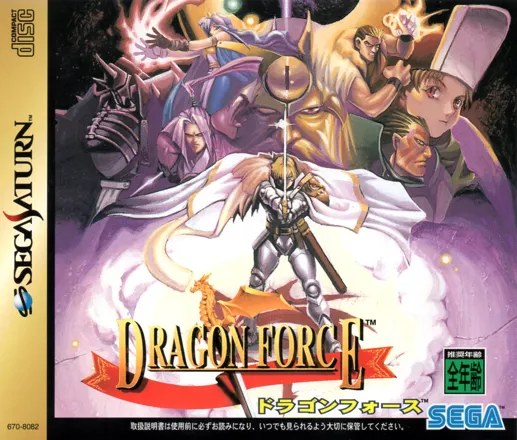
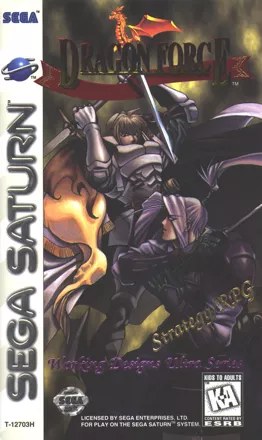
Europe followed on August 28, 1997, using the Working Designs English text under license from Sega.
THE RECEPTION
EGM's game of the year, twice overNext Generation praised a story "so well integrated that the game almost feels secondary," calling it a seamless welding of wargaming and RPG elements; Edge gave 8 of 10, Game Informer 8.75, and RPGFan 96 percent. The dissent is one honest voice: Matt Yeo in the UK Sega Saturn Magazine scored it 87 percent, called it well constructed, and doubted British players would give its battles and administration the attention span they demand. Sales backed the believers: over 150,000 copies in North America and 272,166 in Japan, more than 422,000 combined, a serious number for a strategy game on the Saturn.
THE LEGACY
The administration gameEGM placed Dragon Force at number 55 on its 100 Best Games of All Time in 1997, and GameSpot carried it onto its greatest games list in 2003. Its deeper legacy is structural: the weekly rhythm of ruling between real time battles is an early, confident version of the loop that grand strategy RPGs still run on. The sequel and the remake never crossed the Pacific, which leaves the Working Designs Saturn disc as the complete English artifact of one of the system's best reviewed games.