The History of Dragon Quest
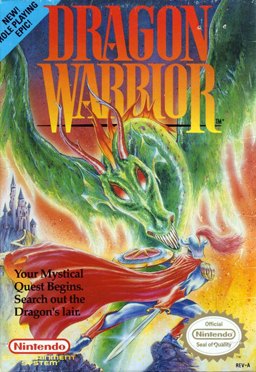
Dragon Quest reached the Famicom on May 27, 1986, published by Enix and developed by Chunsoft. One hero, one kingdom, one Dragonlord: a Western computer genre rebuilt small enough, and kind enough, for a television and a control pad. It sold 1.5 million copies in Japan. Three years later it crossed the Pacific under a different name, Dragon Warrior, and sold half a million more.
THE MAKING
Horii, Toriyama, SugiyamaThe designer was Yuji Horii, a writer who had already made the adventure game The Portopia Serial Murder Case in 1983. Horii built Dragon Quest from the role-playing games he admired, Wizardry and Ultima chief among them, and said plainly what he wanted: an introductory RPG for a wide audience, with storytelling and emotional involvement up front and the interface simplified until a first time player could start without a manual's worth of study.
Horii did not work alone, and the two collaborators he found defined the series for decades. Manga artist Akira Toriyama, then in the middle of Dragon Ball, drew the characters and monsters. Composer Koichi Sugiyama, a television veteran in his fifties, wrote a score with classical manners that nobody else was putting in a video game. Koichi Nakamura of Chunsoft directed and programmed.
THE DESIGN
One hero, first person battles, a kingdom as a syllabusEverything is reduced to the essential. The hero walks a kingdom whose monsters grow stronger the farther he strays from Tantegel Castle, so the map itself teaches the game. Battles are one against one, shown from the first person, with four commands: fight, run, spell, item. Death costs half your gold and a walk back to the king, a punishment gentle enough to keep a new player playing.
The story is a scaffold of older tales used with intent: the stolen Ball of Light, the kidnapped princess a player is never actually required to rescue, and a final offer from the Dragonlord to rule half the world at his side. Accept, and the game simply ends. The template looks simple now because this is the game that set it: towns, inns, churches, levels, and a world that opens as the hero grows became the grammar of the Japanese console RPG.
THE EDITIONS
The versions, documentedTHE RECEPTION
Scores, sales, and the dissentThat split verdict, a phenomenon at home and a curiosity abroad, is the honest shape of the first Dragon Quest. Japan got the game the moment its audience was ready for it. America got it late, renamed, and dressed in older clothes.
THE LEGACY
What it left behindDragon Quest is credited with establishing the basic template for Japanese console role-playing games, and its makers stayed with the series for decades: Horii on every main game, Toriyama and Sugiyama on nearly all of them until their deaths. Its mascot, the smiling blue Slime Toriyama drew for it, became the face of the franchise.
The name itself tells the two market story. North America knew the series as Dragon Warrior until 2005, because Square Enix did not register the Dragon Quest trademark in the United States until 2002. The 2025 HD-2D remake of this game and its sequel was the first time the original adventure topped a worldwide launch under its real name, thirty nine years on.
THE GAME ON THE SHELF
Dragon Quest · NES