
The History of Ehrgeiz
Ehrgeiz: God Bless the Ring is a 1998 3D fighting game developed by DreamFactory and published by Namco for arcades, then ported to the PlayStation and published by Square. It is the strangest corporate handshake of its era: the Tobal team, working under Square, building a game for the arcade board of Namco, the company behind Tekken.
The arcade game was already unusual, a wrestling influenced fighter with free 3D movement and multitiered arenas. The PlayStation version is the one history kept, because Square loaded it with extras the arcade never had: six playable Final Fantasy VII characters, four minigames, and a complete dungeon crawling RPG mode called Brand New Quest: The Forsaken Dungeon.
HOW IT WAS MADE
A Square game on Namco's boardTHE RELEASE
Arcade first, then a bigger boxEhrgeiz launched in Japanese arcades in March 1998, and Game Machine magazine listed it as the sixth most successful arcade game of the month in its April 15, 1998 issue. The PlayStation port followed in Japan on December 17, 1998, then North America in 1999 and Europe on February 8, 2000, with an unusual publishing split: Square released it internationally while Sony Computer Entertainment published it in Japan, the reverse of the companies' usual arrangement.
Square promoted the home version hard in the United States, sponsoring the Ehrgeiz Championship Tour from July 10, 1999, with contests at Electronics Boutique and Babbage's stores. The port was more than the arcade game: it added Final Fantasy VII characters, four minigames and a full RPG mode. Japan got a Square Millennium Collection re-release on September 28, 2000 with a collectible digital clock and character diorama, and the game joined Japan's PlayStation Network on July 9, 2008.
THE TWO COVERS
Same game, two shelves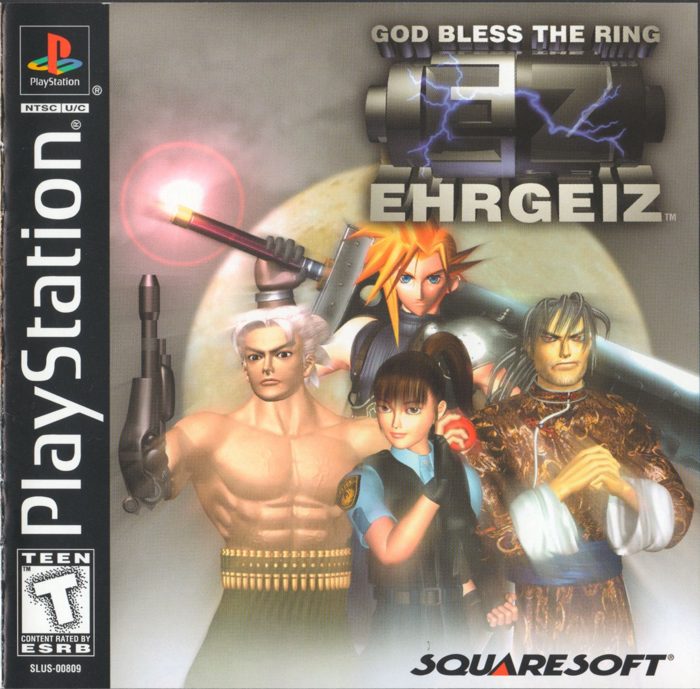
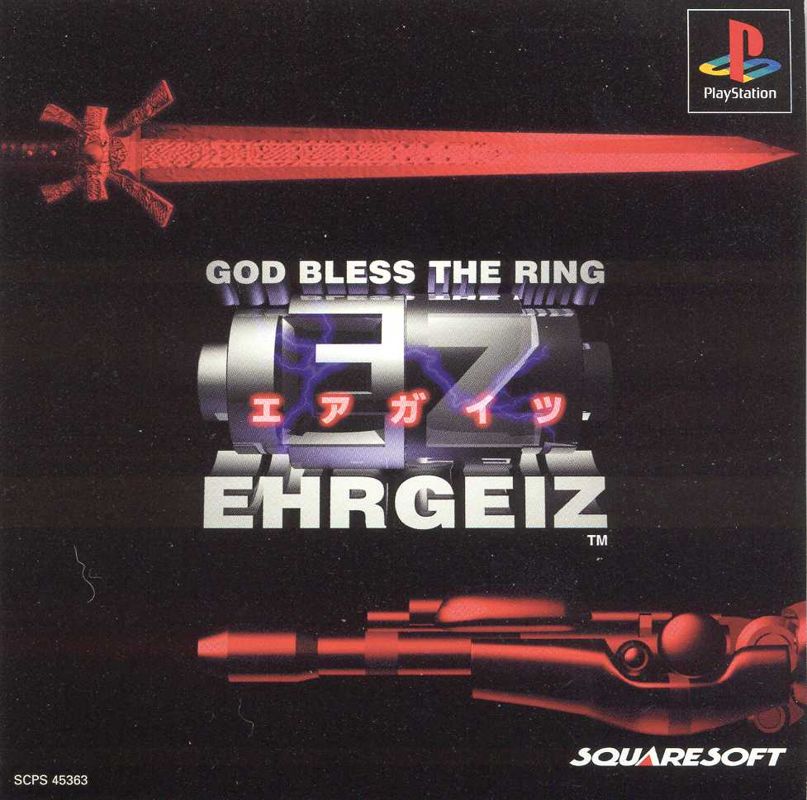
HOW IT WAS RECEIVED
Loved in Japan, argued over elsewhereWHAT IT LEFT BEHIND
The Final Fantasy fighting gameHistory filed Ehrgeiz under a name its makers never gave it. Hardcore Gaming 101 records that it became known as the Final Fantasy fighting game, even though the Final Fantasy VII characters were additions to an original cast, added, in its assessment, to lure RPG fans in. The original fighters, Godhand, Han, Jo, Doza and the rest, were overshadowed by their own guests.
There was no Ehrgeiz 2. What survived is the template the game proved out: a Square fighter built on free 3D movement, carrying a second, full RPG inside the same box. The Forsaken Dungeon outlived the tournament for many of the people who played it, and it is the reason this game still gets written about.